


Ratiometric co-delivery of doxorubicin and docetaxel by covalently conjugating with mPEG-poly(β-malic acid) for enhanced synergistic breast tumor therapy
Literature Information
Publication Date
2020-09-28
DOI
10.1039/D0PY01130D
Impact Factor
5.582
Authors
Zhe Yu, Hua Li, Yiyang Jia, Youbei Qiao, Chaoli Wang, Qing Zhou, Xin He, Shibin Yu, Tiehong Yang, Hong Wu
View Original
Abstract
Codelivery of chemotherapeutic drugs using polymer–drug carriers represents a promising strategy to achieve ratiometric delivery and a synergistic effect in targeted tissues and cells, which will improve the therapeutic index and reduce the side effects as compared to traditional cancer combination chemotherapy. In this study, a novel biodegradable methoxy poly(ethylene glycol)-poly(β-malic acid) (mPEG-PLMA) nanoparticle is developed for the precise codelivery of two established drugs (doxorubicin and docetaxel) and hypothesized to act synergistically to improve the anticancer efficacy of the two drugs. Doxorubicin (DOX) and docetaxel (DTX) were covalently bound to mPEG-PMLA through a one-step coupling reaction with distinct linkers, resulting in mPEG-PMLA-DOX/DTX conjugates. The conjugates exhibited a significant synergistic inhibitory effect on human breast cancer cells MDA-MB-231 when the molar ratio of conjugated DOX/DTX was 1 : 1, with an IC50 value of about 0.62 μg mL−1 for DOX and 0.91 μg mL−1 for DTX, only accounting for 40% and 7% of the IC50 for free DOX and DTX, respectively. The results of the pharmacokinetic study show that the conjugates were capable of increasing the half-life (DOX with 1.7-fold and DTX with 3.3-fold) and AUC (DOX with 2.2-fold and DTX with 4.5-fold) and maintaining the synergistic drug ratio at the tumor site for over 24 h. Furthermore, the conjugate displayed more potent anti-tumor efficacy and lower systemic toxicity than the free drug combination in vivo. These results confirmed that the combinatorial delivery system could exhibit a fascinating prospect for the synergistic delivery of drugs with diverse physicochemical properties in cancer treatment integrating efficiency and safety considerations.
Recommended Journals

Acta Metallurgica Sinica-English Letters

Cellulose

Colloid Journal

Atomization and Sprays

Bioorganic & Medicinal Chemistry Letters

Journal of Asian Natural Products Research

Critical Reviews in Solid State and Materials Sciences

Bioorganic & Medicinal Chemistry

Journal of the Indian Institute of Science

Electroanalysis
Related Literature
Direct injection analysis of bisphenol A in serum by combination of isotope imprinting with liquid chromatography-mass spectrometry
Kaori Hoshina, Ken Hosoya, Jun Haginaka
2004-12-01
Communication
DOI: 10.1039/B412641F
Mechanistic insights for regulating the site occupancy, valence states and optical transitions of Mn ions in yttrium–aluminum garnets via codoping
Chong-Geng Ma
2023-06-21
Paper
DOI: 10.1039/D3CP01548C
Development of an integrated optic oxygen sensor using a novel, generic platform
Conor S. Burke, Orla McGaughey, Jean-Marc Sabattié, Henry Barry, Aisling K. McEvoy, Colette McDonagh, Brian D. MacCraith
2004-11-12
Paper
DOI: 10.1039/B409814P
In-tube solid-phase microextraction with poly(methacrylic acid-ethylene glycol dimethacrylate) monolithic capillary for direct high-performance liquid chromatographic determination of ketamine in urine samples
Yi Fan, Yu-Qi Feng, Shi-Lu Da, Xiao-Ping Gao
2004-10-06
Paper
DOI: 10.1039/B410785C
Chiral recognition and separation of β2-amino acids using non-covalently molecularly imprinted polymers
Yong-Ho Shim, Ecevit Yilmaz, Solange Lavielle, Karsten Haupt
2004-10-13
Paper
DOI: 10.1039/B409836F
Applicability of some mass spectrometric criteria for the confirmation of pesticide residues
Eugenia Soboleva, Karam Ahad, Árpád Ambrus
2004-08-13
Paper
DOI: 10.1039/B405024J
Flexible MA2Z4 (M = Mo, W; A = Si, Ge and Z = N, P, As) monolayers with outstanding mechanical, dynamical, electronic, and piezoelectric properties and anomalous dynamic polarization
Xinxin Wang, Weiwei Ju, Dandan Wang, Xiaohong Li, Jianguo Wan
2023-06-21
Paper
DOI: 10.1039/D3CP01452E
Effects of semicore electrons on stopping power in helium-irradiated aluminum nanosheets
Su-Na Pang, Feng Wang, Ya-Ting Sun, Fei Mao, Cong-Zhang Gao
2023-06-22
Paper
DOI: 10.1039/D3CP01506H
Recent advances in the anti-counterfeiting applications of long persistent phosphors
Qingqing Kuang, Xiaochun Hou, Chengxue Du, Xiaojun Wang, Dangli Gao
2023-06-12
Perspective
DOI: 10.1039/D3CP01818K
You might also like
Compound Q&A
What are the main uses of 1H-Indazole-6-carbonitrile (CAS: 141290-59-7)?
1H-Indazole-6-carbonitrile finds applications in pharmaceuticals, where it serve...
141290-59-71H-Indazole-6-carbon...
Compound Q&A
How should waste containing Dioctyl (2E)-2-butenedioate (CAS: 2997-85-5) be handled?
Waste containing Dioctyl (2E)-2-butenedioate (CAS: 2997-85-5) should be collecte...
2997-85-5Dioctyl (2E)-2-buten...
Compound Q&A
What industries use Sodium [(1,2-benzoxazol-3-ylmethyl)sulfonyl]azanide (CAS: 68291-98-5)?
Sodium [(1,2-benzoxazol-3-ylmethyl)sulfonyl]azanide is primarily used in pharmac...
68291-98-5Sodium [(1,2-benzoxa...
Compound Q&A
Are there alternatives to Dimethyl 4-(4,4,5,5-tetramethyl-1,3,2-dioxaborolan-2-yl)-2,6-pyridinedicarboxylate (CAS: 741709-66-0) in synthesis?
Dimethyl 4-(4,4,5,5-tetramethyl-1,3,2-dioxaborolan-2-yl)-2,6-pyridinedicarboxyla...
741709-66-0Dimethyl 4-(4,4,5,5-...
Compound Q&A
How should waste containing 2-Fluoro-6-hydrazinopyridine (CAS: 80714-39-2) be handled?
Waste containing 2-Fluoro-6-hydrazinopyridine (CAS: 80714-39-2) should be manage...
80714-39-22-Fluoro-6-hydrazino...
Compound Q&A
What is 6-Formyl-2-pyridinecarboxylic acid (CAS: 499214-11-8)?
6-Formyl-2-pyridinecarboxylic acid is an organic compound with the molecular for...
499214-11-86-Formyl-2-pyridinec...
Compound Q&A
What is the market or research trend for 3-(3,4-dimethoxyphenyl)-2,5-dimethyl-N-(2-morpholin-4-ylethyl)pyrazolo[1,5-a]pyrimidin-7-amine (CAS: 900874-91-1)?
Research trends for this compound indicate a focus on its potential applications...
900874-91-13-(3,4-dimethoxyphen...
Compound Q&A
How is 9H-Tribenzo[b,d,f]azepine (CAS: 29875-73-8) typically synthesized?
9H-Tribenzo[b,d,f]azepine is typically synthesized via a multi-step process invo...
29875-73-89H-Tribenzo[b,d,f]az...
Compound Q&A
How is 1-Cyclopropyl-7-ethoxy-6-fluoro-8-methoxy-4-oxo-1,4-dihydro-3-quinolinecarboxylic acid (CAS: 1797982-51-4) typically synthesized?
1-Cyclopropyl-7-ethoxy-6-fluoro-8-methoxy-4-oxo-1,4-dihydro-3-quinolinecarboxyli...
1797982-51-41-Cyclopropyl-7-etho...
Compound Q&A
How should waste containing Methyl 3-oxo-1,2,3,4-tetrahydro-6-quinoxalinecarboxylate (CAS: 671820-52-3) be handled?
Waste containing Methyl 3-oxo-1,2,3,4-tetrahydro-6-quinoxalinecarboxylate (CAS: ...
671820-52-3Methyl 3-oxo-1,2,3,4...
Source Journal
Polymer Chemistry

CiteScore:
8.6
Self-citation Rate:
7.3%
Articles per Year:
457
Polymer Chemistry welcomes submissions in all areas of polymer science that have a strong focus on macromolecular chemistry. Manuscripts may cover a broad range of fields, yet no direct application focus is required.
Recommended Compounds
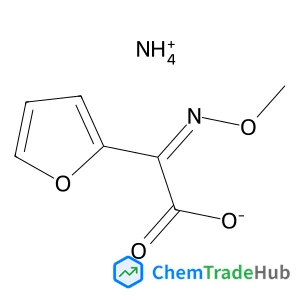
Ammonium (Z)-2-(furan-2-yl)-2-(methoxyimino)acetate
CAS Number:
97148-39-5
Molecular Formula:
C7H10N2O4
Recommended Suppliers




Disclaimer
This page provides academic journal information for reference and research purposes only. We are not affiliated with any journal publishers and do not handle publication submissions. For publication-related inquiries, please contact the respective journal publishers directly.
If you notice any inaccuracies in the information displayed, please contact us at support@chemtradehub.com. We will promptly review and address your concerns.