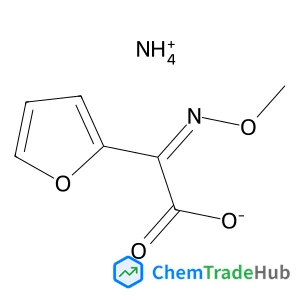
Ammonium (Z)-2-(furan-2-yl)-2-(methoxyimino)acetate
CAS Number:
97148-39-5
Molecular Formula:
C7H10N2O4
Yong-Ho Shim, Ecevit Yilmaz, Solange Lavielle, Karsten Haupt
Non-covalently molecularly imprinted polymers (MIPs) for β2-amino acids were prepared for the first time. N-(2-chlorobenzyloxycarbonyl)-(R)-β2-homophenylalanine (N-2-ClZ-(R)-β2-HPhe) was imprinted with methacrylic acid (MAA) and/or 4-vinylpyridine (4-VPy) as the functional monomers, with ethylene glycol dimethacrylate (EDMA) as the cross-linker. The MIPs made with different ratios of MAA ∶ 4-VPy were studied in HPLC mode. The results show that MIPs made with 4-VPy yielded the best chiral separation factor (α = 1.86) for the template molecule. The importance for an efficient separation of pi-stacking interactions between the MIPs and the template molecule is demonstrated. Racemates of Z-α-amino acids and β-amino acid analogues of the template were either not or poorly resolved by the MIPs, thus demonstrating the close three-dimensional complementarity of the MIPs' recognition sites with the template.
Ludmila B. Boinovich, Alexandre M. Emelyanenko, Kirill A. Emelyanenko, Konstantin I. Maslakov
DOI: 10.1039/C5CP06988B
Rui Xu, Haohua Li, Wenwen Zhang, Zepeng Yang, Guiwu Liu, Ziwei Xu, Haicheng Shao
DOI: 10.1039/C5CP05833C
Yang Zhang, Dang-Qi Fang, Sheng-Li Zhang, Rao Huang, Yu-Hua Wen
DOI: 10.1039/C5CP06564J
Monica Marinescu, Teng Zhang, Gregory J. Offer
DOI: 10.1039/C5CP05755H
Yi-Yang Sun, Shengbai Zhang
DOI: 10.1039/C5CP07109G
Cathal Smyth, Daniel G. Oblinsky, Gregory D. Scholes
DOI: 10.1039/C5CP00295H
Vijay Beniwal, Shashi K. Shukla, Anil Kumar
DOI: 10.1039/C5CP05921F
Sergey A. Kislenko, Victoria A. Nikitina, Renat R. Nazmutdinov
DOI: 10.1039/C5CP04566E
Szilvia Nagy, János Pipek
DOI: 10.1039/C5CP01214G
P. Anees, M. C. Valsakumar, B. K. Panigrahi
DOI: 10.1039/C5CP06111C
1H-Indazole-6-carbonitrile finds applications in pharmaceuticals, where it serve...
Waste containing Dioctyl (2E)-2-butenedioate (CAS: 2997-85-5) should be collecte...
Sodium [(1,2-benzoxazol-3-ylmethyl)sulfonyl]azanide is primarily used in pharmac...
Dimethyl 4-(4,4,5,5-tetramethyl-1,3,2-dioxaborolan-2-yl)-2,6-pyridinedicarboxyla...
Waste containing 2-Fluoro-6-hydrazinopyridine (CAS: 80714-39-2) should be manage...
6-Formyl-2-pyridinecarboxylic acid is an organic compound with the molecular for...
Research trends for this compound indicate a focus on its potential applications...
9H-Tribenzo[b,d,f]azepine is typically synthesized via a multi-step process invo...
1-Cyclopropyl-7-ethoxy-6-fluoro-8-methoxy-4-oxo-1,4-dihydro-3-quinolinecarboxyli...
Waste containing Methyl 3-oxo-1,2,3,4-tetrahydro-6-quinoxalinecarboxylate (CAS: ...

Analyst publishes analytical and bioanalytical research that reports premier fundamental discoveries and inventions, and the applications of those discoveries, unconfined by traditional discipline barriers.