


Photoregulated reversible addition–fragmentation chain transfer (RAFT) polymerization
Literature Information
Publication Date
2020-02-25
DOI
10.1039/D0PY00054J
Impact Factor
5.582
Authors
Shenzhen Li, Guang Han
View Original
Abstract
The past two decades have witnessed the significant progress of regulated reversible addition–fragmentation chain transfer (RAFT) polymerization, and different strategies, especially those with light, were designed, such as direct photoexcitation of RAFT agents, using photoinitiators and recyclable/degradable photocatalysts. More recently, photosensitive azobenzenes as external photoadditives have also been utilized to switch on/off the RAFT polymerization, in which photoelectron transfer (PET) between free radicals and azobenzenes was involved. This minireview summarizes these recently developed techniques for photoregulated RAFT polymerization and their possible applications.
Recommended Journals

Current Opinion in Solid State & Materials Science

Current Opinion in Colloid & Interface Science

Russian Chemical Bulletin

Saudi Pharmaceutical Journal

Russian Journal of Applied Chemistry

Chemistry Education Research and Practice

Russian Journal of General Chemistry

Drug Discovery Today

Russian Journal of Coordination Chemistry

Journal of Saudi Chemical Society
Related Literature
A tetraphenylmethane based dendritic tolan–anthracene dyad: synthesis and energy transfer properties
Saumitra Sengupta, Pradipta Purkayastha
2002-12-09
Paper
DOI: 10.1039/B209186K
Total synthesis of (±)-chondrosterin I using a desymmetric aldol reaction
Yuichiro Kawamoto, Daiki Ozone, Toyoharu Kobayashi, Hisanaka Ito
2018-10-24
Communication
DOI: 10.1039/C8OB02557F
The importance of N-heterocyclic carbene basicity in organocatalysis
Ning Wang, Jiahui Xu, Jeehiun K. Lee
2018-09-07
Review Article
DOI: 10.1039/C8OB01667D
Enantioselective biocatalytic formal α-amination of hexanoic acid to l-norleucine
Alexander Dennig, Somayyeh Gandomkar, Emmanuel Cigan, Tamara C. Reiter, Thomas Haas, Mélanie Hall, Kurt Faber
2018-10-05
Communication
DOI: 10.1039/C8OB02212G
First synthesis of 2′,3′-epimino-carbocyclic nucleosides
Minoru Ishikura, Atsushi Murakami, Nobuya Katagiri
2003-01-07
Communication
DOI: 10.1039/B210963H
From central to planar chirality, the first example of atropenantioselective cycloetherification
Gabriela Islas-Gonzalez, Michèle Bois-Choussy, Jieping Zhu
2002-11-08
Communication
DOI: 10.1039/B208905J
Epicoccamide, a novel secondary metabolite from a jellyfish-derived culture of Epicoccum purpurascens
Anthony D. Wright, Claudia Osterhage, Gabriele M. König
2003-01-14
Paper
DOI: 10.1039/B208588G
Mechanism of the oxidation of aromatic sulfides catalysed by a water soluble iron porphyrin
Enrico Baciocchi, Maria Francesca Gerini, Osvaldo Lanzalunga, Andrea Lapi, Maria Grazia Lo Piparo
2002-12-16
Paper
DOI: 10.1039/B209004J
Nitrile biotransformations for the synthesis of enantiomerically enriched Baylis–Hillman adducts
Mei-Xiang Wang, Yan Wu
2002-12-23
Paper
DOI: 10.1039/B209791E
You might also like
Compound Q&A
Is 4-Benzyl-2,2-dimethylmorpholine (CAS: 84761-04-6) safe?
4-Benzyl-2,2-dimethylmorpholine is generally considered safe when handled under ...
84761-04-64-Benzyl-2,2-dimethy...
Compound Q&A
What is (5,6-Dimethoxy-3-pyridinyl)boronic acid (CAS: 1346526-61-1)?
(5,6-Dimethoxy-3-pyridinyl)boronic acid is a chemical compound with the molecula...
1346526-61-1(5,6-Dimethoxy-3-pyr...
Compound Q&A
How is 1,1,3,3-Tetramethyl-1,3-bis(2-methyl-2-propanyl)disiloxane (CAS: 67875-55-2) typically synthesized?
1,1,3,3-Tetramethyl-1,3-bis(2-methyl-2-propanyl)disiloxane is synthesized throug...
67875-55-21,1,3,3-Tetramethyl-...
Compound Q&A
What are the main uses of (2R,4S)-1-Boc-4-methylpyrrolidine-2-carboxylic acid (CAS: 1018818-04-6)?
(2R,4S)-1-Boc-4-methylpyrrolidine-2-carboxylic acid is primarily used as a build...
1018818-04-6(2R,4S)-1-Boc-4-meth...
Compound Q&A
What precautions should be taken when handling 2,3-Dichloroacrylonitrile (CAS: 22410-58-8)?
When handling 2,3-Dichloroacrylonitrile, it is crucial to wear appropriate perso...
22410-58-82,3-Dichloroacryloni...
Compound Q&A
How should (S)-1-(o-Tolyl)ethanamine hydrochloride (CAS: 1332832-16-2) be stored?
(S)-1-(o-Tolyl)ethanamine hydrochloride should be stored in a cool, dry place to...
1332832-16-2(S)-1-(o-Tolyl)ethan...
Compound Q&A
What are the physical and chemical properties of Benzyl [1-(hydroxyamino)-1-imino-2-methyl-2-propanyl]carbamate (CAS: 518047-98-8)?
Benzyl [1-(hydroxyamino)-1-imino-2-methyl-2-propanyl]carbamate (CAS: 518047-98-8...
518047-98-8Benzyl [1-(hydroxyam...
Compound Q&A
What industries use 2-Methyloxazole-5-carbaldehyde (CAS: 885273-42-7)?
2-Methyloxazole-5-carbaldehyde is used in the pharmaceutical industry for the sy...
885273-42-72-Methyloxazole-5-ca...
Compound Q&A
What is the market or research trend for 2-Methyl-2-propanyl 4-[(1S)-1-hydroxyethyl]-1-piperidinecarboxylate (CAS: 389889-82-1)?
The market for 2-Methyl-2-propanyl 4-[(1S)-1-hydroxyethyl]-1-piperidinecarboxyla...
389889-82-12-Methyl-2-propanyl ...
Compound Q&A
Is 1-Butyl-3-methylpyridinium bromide (CAS: 26576-85-2) safe?
1-Butyl-3-methylpyridinium bromide is generally considered safe for laboratory u...
26576-85-21-Butyl-3-methylpyri...
Source Journal
Polymer Chemistry

CiteScore:
8.6
Self-citation Rate:
7.3%
Articles per Year:
457
Polymer Chemistry welcomes submissions in all areas of polymer science that have a strong focus on macromolecular chemistry. Manuscripts may cover a broad range of fields, yet no direct application focus is required.
Recommended Compounds
![2-benzyl-2,6-diazaspiro[3.3]heptane structure](https://static.chemtradehub.com/structs/119/1194508-28-5-ef9e.webp "2-benzyl-2,6-diazaspiro[3.3]heptane structure")
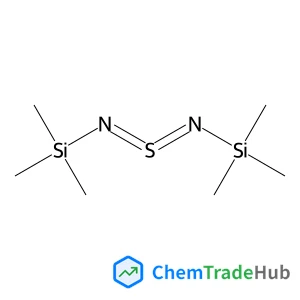
1,3-Bis(trimethylsilyl)-2lambda~4~-diazathia-1,2-diene
CAS Number:
18156-25-7
Molecular Formula:
C6H18N2SSi2
Recommended Suppliers




Disclaimer
This page provides academic journal information for reference and research purposes only. We are not affiliated with any journal publishers and do not handle publication submissions. For publication-related inquiries, please contact the respective journal publishers directly.
If you notice any inaccuracies in the information displayed, please contact us at support@chemtradehub.com. We will promptly review and address your concerns.