











Nitrile biotransformations for the synthesis of enantiomerically enriched Baylis–Hillman adducts
Literature Information
Publication Date
2002-12-23
DOI
10.1039/B209791E
Impact Factor
3.876
Authors
Mei-Xiang Wang, Yan Wu
View Original
Abstract
Catalysed by the nitrile hydratase/amidase-containing Rhodococcus sp. AJ270 cells, a number of β-aryl- and β-alkyl- β-hydroxy-α-methylenepropiononitriles (the Baylis–Hillman nitriles) 1 underwent hydrolysis under mild conditions to produce the corresponding enantiomerically enriched Baylis–Hillman amides 2 and acids 3. The enantioselectivity of the biotransformations was strongly determined by the steric effect of the substituents at the β-position of the substrates. The protection of the free hydroxy of β-phenyl-β-hydroxy-α-methylenepropiononitrile 1a by methylation led to the enhancement of enantiocontrol of the biohydrolysis.
Related Literature
Sustainable chromatography (an oxymoron?)
Emily A. Peterson, Barry Dillon, Izzat Raheem, Paul Richardson, Daniel Richter, Rachel Schmidt, Helen F. Sneddon
2014-07-15
Perspective
DOI: 10.1039/C4GC00615A
Regioselective acetylation of carbohydrates and diols catalyzed by tetramethyl-ammonium hydroxide in water
Yuchao Lu, Peng Wei, Yuxin Pei, Hengfu Xu, Xiaoting Xin
2014-07-31
Communication
DOI: 10.1039/C4GC00770K
Efficient one-step preparation of γ-aminobutyric acid from glucose without an exogenous cofactor by the designed Corynebacterium glutamicum
Taowei Yang, Hongmei Sun, Meijuan Xu, Xian Zhang, Zhenghong Xu, Shangtian Yang
2014-06-23
Paper
DOI: 10.1039/C4GC00607K
Cobalt catalysts: very efficient for hydrogenation of biomass-derived ethyl levulinate to gamma-valerolactone under mild conditions
Huacong Zhou, Jinliang Song, Honglei Fan, Binbin Zhang, Yingying Yang, Jiayin Hu, Qinggong Zhu, Buxing Han
2014-06-05
Paper
DOI: 10.1039/C4GC00482E
A convenient palladium-catalyzed carbonylative synthesis of 4(3H)-quinazolinones from 2-bromoformanilides and organo nitros with Mo(CO)6 as a multiple promoter
Lin He, Helfried Neumann, Matthias Beller
2014-06-26
Communication
DOI: 10.1039/C4GC00801D
Imidazolium ionic liquid-tagged palladium complex: an efficient catalyst for the Heck and Suzuki reactions in aqueous media
Pankaj Nehra, Bharti Khungar, Kasiviswanadharaju Pericherla, S. C. Sivasubramanian, Anil Kumar
2014-06-12
Paper
DOI: 10.1039/C4GC00525B
Tunable thermomorphism and applications of ionic liquid analogues of Girard's reagents
Marijana Blesic, H. Q. Nimal Gunaratne, Johan Jacquemin, Peter Nockemann, Sonia Olejarz, Kenneth R. Seddon, Christopher R. Strauss
2014-08-06
Communication
DOI: 10.1039/C4GC01159G
Catalytic bio–chemo and bio–bio tandem oxidation reactions for amide and carboxylic acid synthesis
Beatrice Bechi, Susanne Herter, Shane McKenna, Christopher Riley, Silke Leimkühler, Nicholas J. Turner, Andrew J. Carnell
2014-08-18
Communication
DOI: 10.1039/C4GC01321B
Continuous production of sugars from pyrolysis of acid-infused lignocellulosic biomass
2014-06-17
Paper
DOI: 10.1039/C4GC00602J
You might also like
Compound Q&A
How should 2-Methylbenzene-1,4-diamine dihydrochloride (CAS: 615-45-2) be stored?
2-Methylbenzene-1,4-diamine dihydrochloride (CAS: 615-45-2) should be stored in ...
615-45-22-Methylbenzene-1,4-...
Compound Q&A
Is (1S,4S)-2,5-Diazabicyclo[2.2.1]heptane dihydrobromide (CAS: 132747-20-7) safe?
(1S,4S)-2,5-Diazabicyclo[2.2.1]heptane dihydrobromide is generally considered sa...
132747-20-7(1S,4S)-2,5-Diazabic...
Compound Q&A
What industries use (6-Chloropyridazin-3-YL)methanamine (CAS: 871826-15-2)?
(6-Chloropyridazin-3-YL)methanamine finds applications in the pharmaceutical ind...
871826-15-2(6-Chloropyridazin-3...
Compound Q&A
What are the main uses of 2-Fluoro-3-methylphenol (CAS: 77772-72-6)?
2-Fluoro-3-methylphenol is primarily used in the synthesis of pharmaceuticals, p...
77772-72-62-Fluoro-3-methylphe...
Compound Q&A
What precautions should be taken when handling 3-Methoxy-4-nitrobenzonitrile (CAS: 177476-75-4)?
When handling 3-Methoxy-4-nitrobenzonitrile, it is important to wear appropriate...
177476-75-43-Methoxy-4-nitroben...
Compound Q&A
What precautions should be taken when handling 1,3-Oxazolo[4,5-b]pyridine-2(3H)-thione (CAS: 211949-57-4)?
When handling 1,3-Oxazolo[4,5-b]pyridine-2(3H)-thione (CAS: 211949-57-4), it is ...
211949-57-4[1,3]Oxazolo[4,5-b]p...
Compound Q&A
What regulatory guidelines apply to 4-Ethynylbenzamide (CAS: 90347-86-7)?
4-Ethynylbenzamide (CAS: 90347-86-7) falls under various regulatory guidelines i...
90347-86-74-Ethynylbenzamide
Compound Q&A
What are the main uses of 3-(2-Ethylphenyl)-2-thioxo-4-imidazolidinone (CAS: 186822-57-1)?
3-(2-Ethylphenyl)-2-thioxo-4-imidazolidinone is primarily used as an intermediat...
186822-57-13-(2-Ethylphenyl)-2-...
Compound Q&A
What is (2-Fluoro-6-methoxyphenyl)acetic acid (CAS: 500912-19-6)?
(2-Fluoro-6-methoxyphenyl)acetic acid, also known as 4-fluoro-3-methoxybenzoic a...
500912-19-6(2-Fluoro-6-methoxyp...
Compound Q&A
What is the market or research trend for 2-[4-(Hydroxymethyl)phenoxy]ethanol (CAS: 102196-18-9)?
Market trends for 2-[4-(Hydroxymethyl)phenoxy]ethanol (CAS: 102196-18-9) indicat...
102196-18-92-[4-(Hydroxymethyl)...
Source Journal
Organic & Biomolecular Chemistry

CiteScore:
3.4
Self-citation Rate:
10.3%
Articles per Year:
1041
Organic & Biomolecular Chemistry (OBC) publishes original and high impact research and reviews in organic chemistry. We welcome research that shows new or significantly improved protocols or methodologies in total synthesis, synthetic methodology or physical and theoretical organic chemistry as well as research that shows a significant advance in the organic chemistry or molecular design aspects of chemical biology, catalysis, supramolecular and macromolecular chemistry, theoretical chemistry, mechanism-oriented physical organic chemistry, medicinal chemistry or natural products. Articles published in the journal should report new work which makes a highly-significant impact in the field. Routine and incremental work is generally not suitable for publication in the journal. More details about key areas of our scope are below. In all cases authors should include in their article clear rationale for why their research has been carried out.
Recommended Compounds
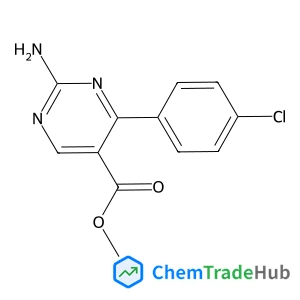
Methyl 2-amino-4-(4-chlorophenyl)-5-pyrimidinecarboxylate
CAS Number:
1133115-56-6
Molecular Formula:
C12H10ClN3O2
Recommended Suppliers




Disclaimer
This page provides academic journal information for reference and research purposes only. We are not affiliated with any journal publishers and do not handle publication submissions. For publication-related inquiries, please contact the respective journal publishers directly.
If you notice any inaccuracies in the information displayed, please contact us at support@chemtradehub.com. We will promptly review and address your concerns.