












Enantioselective biocatalytic formal α-amination of hexanoic acid to l-norleucine
Literature Information
Publication Date
2018-10-05
DOI
10.1039/C8OB02212G
Impact Factor
3.876
Authors
Alexander Dennig, Somayyeh Gandomkar, Emmanuel Cigan, Tamara C. Reiter, Thomas Haas, Mélanie Hall, Kurt Faber
View Original
Abstract
A three-step one-pot biocatalytic cascade was designed for the enantioselective formal α-amination of hexanoic acid to L-norleucine. Regioselective hydroxylation by P450CLA peroxygenase to 2-hydroxyhexanoic acid was followed by oxidation to the ketoacid by two stereocomplementary dehydrogenases. Combination with final stereoselective reductive amination by amino acid dehydrogenase furnished L-norleucine in >97% ee.
Related Literature
Fermentation of hydrolysate detoxified by pervaporation through block copolymer membranes
Douglas R. Greer, Thalita P. Basso, Ana B. Ibanez, Stefan Bauer, Jeffrey M. Skerker, A. Evren Ozcam, Dacia Leon, Chaeyoung Shin, Adam P. Arkin
2014-07-11
Paper
DOI: 10.1039/C4GC00756E
Molybdenum carbide nanoparticles within carbon nanotubes as superior catalysts for γ-valerolactone production via levulinic acid hydrogenation
Estevão F. Mai, Marta A. Machado, Thomas E. Davies, Jose A. Lopez-Sanchez, Victor Teixeira da Silva
2014-07-10
Communication
DOI: 10.1039/C4GC00920G
Selective isomerization–carbonylation of a terpene trisubstituted double bond
Hanna Busch, Florian Stempfle, Sandra Heß, Etienne Grau, Stefan Mecking
2014-09-03
Communication
DOI: 10.1039/C4GC01233J
Expanding the scope of enzymatic carboligation reactions in flow-mode: production of optically active tertiary alcohols with packed-bed micro-bioreactors
P. P. Giovannini, O. Bortolini, A. Cavazzini, R. Greco, G. Fantin, A. Massi
2014-06-09
Paper
DOI: 10.1039/C4GC00838C
Selective conversion of lignin in corncob residue to monophenols with high yield and selectivity
Zhicheng Jiang, Ting He, Jianmei Li, Changwei Hu
2014-06-30
Paper
DOI: 10.1039/C4GC00620H
Highly active, water-compatible and easily separable magnetic mesoporous Lewis acid catalyst for the Mukaiyama–Aldol reaction in water
Fang Zhang, Xiaotao Wu, Chao Liang, Xiaoyan Li, Zhen Wang, Hexing Li
2014-03-27
Paper
DOI: 10.1039/C4GC00178H
Evaluating water miscible deep eutectic solvents (DESs) and ionic liquids as potential lubricants
Andrew P. Abbott, Robert C. Harris, Karl S. Ryder
2014-06-18
Paper
DOI: 10.1039/C4GC00952E
Catalytic bio–chemo and bio–bio tandem oxidation reactions for amide and carboxylic acid synthesis
Beatrice Bechi, Susanne Herter, Shane McKenna, Christopher Riley, Silke Leimkühler, Nicholas J. Turner, Andrew J. Carnell
2014-08-18
Communication
DOI: 10.1039/C4GC01321B
Cobalt catalysts: very efficient for hydrogenation of biomass-derived ethyl levulinate to gamma-valerolactone under mild conditions
Huacong Zhou, Jinliang Song, Honglei Fan, Binbin Zhang, Yingying Yang, Jiayin Hu, Qinggong Zhu, Buxing Han
2014-06-05
Paper
DOI: 10.1039/C4GC00482E
Efficient photocatalytic Suzuki cross-coupling reactions on Au–Pd alloy nanoparticles under visible light irradiation
Qi Xiao, Sarina Sarina, Esa Jaatinen, Jianfeng Jia, Dennis P. Arnold, Hongwei Liu, Huaiyong Zhu
2014-06-26
Paper
DOI: 10.1039/C4GC00588K
You might also like
Compound Q&A
How should 2-Methylbenzene-1,4-diamine dihydrochloride (CAS: 615-45-2) be stored?
2-Methylbenzene-1,4-diamine dihydrochloride (CAS: 615-45-2) should be stored in ...
615-45-22-Methylbenzene-1,4-...
Compound Q&A
Is (1S,4S)-2,5-Diazabicyclo[2.2.1]heptane dihydrobromide (CAS: 132747-20-7) safe?
(1S,4S)-2,5-Diazabicyclo[2.2.1]heptane dihydrobromide is generally considered sa...
132747-20-7(1S,4S)-2,5-Diazabic...
Compound Q&A
What industries use (6-Chloropyridazin-3-YL)methanamine (CAS: 871826-15-2)?
(6-Chloropyridazin-3-YL)methanamine finds applications in the pharmaceutical ind...
871826-15-2(6-Chloropyridazin-3...
Compound Q&A
What are the main uses of 2-Fluoro-3-methylphenol (CAS: 77772-72-6)?
2-Fluoro-3-methylphenol is primarily used in the synthesis of pharmaceuticals, p...
77772-72-62-Fluoro-3-methylphe...
Compound Q&A
What precautions should be taken when handling 3-Methoxy-4-nitrobenzonitrile (CAS: 177476-75-4)?
When handling 3-Methoxy-4-nitrobenzonitrile, it is important to wear appropriate...
177476-75-43-Methoxy-4-nitroben...
Compound Q&A
What precautions should be taken when handling 1,3-Oxazolo[4,5-b]pyridine-2(3H)-thione (CAS: 211949-57-4)?
When handling 1,3-Oxazolo[4,5-b]pyridine-2(3H)-thione (CAS: 211949-57-4), it is ...
211949-57-4[1,3]Oxazolo[4,5-b]p...
Compound Q&A
What regulatory guidelines apply to 4-Ethynylbenzamide (CAS: 90347-86-7)?
4-Ethynylbenzamide (CAS: 90347-86-7) falls under various regulatory guidelines i...
90347-86-74-Ethynylbenzamide
Compound Q&A
What are the main uses of 3-(2-Ethylphenyl)-2-thioxo-4-imidazolidinone (CAS: 186822-57-1)?
3-(2-Ethylphenyl)-2-thioxo-4-imidazolidinone is primarily used as an intermediat...
186822-57-13-(2-Ethylphenyl)-2-...
Compound Q&A
What is (2-Fluoro-6-methoxyphenyl)acetic acid (CAS: 500912-19-6)?
(2-Fluoro-6-methoxyphenyl)acetic acid, also known as 4-fluoro-3-methoxybenzoic a...
500912-19-6(2-Fluoro-6-methoxyp...
Compound Q&A
What is the market or research trend for 2-[4-(Hydroxymethyl)phenoxy]ethanol (CAS: 102196-18-9)?
Market trends for 2-[4-(Hydroxymethyl)phenoxy]ethanol (CAS: 102196-18-9) indicat...
102196-18-92-[4-(Hydroxymethyl)...
Source Journal
Organic & Biomolecular Chemistry

CiteScore:
3.4
Self-citation Rate:
10.3%
Articles per Year:
1041
Organic & Biomolecular Chemistry (OBC) publishes original and high impact research and reviews in organic chemistry. We welcome research that shows new or significantly improved protocols or methodologies in total synthesis, synthetic methodology or physical and theoretical organic chemistry as well as research that shows a significant advance in the organic chemistry or molecular design aspects of chemical biology, catalysis, supramolecular and macromolecular chemistry, theoretical chemistry, mechanism-oriented physical organic chemistry, medicinal chemistry or natural products. Articles published in the journal should report new work which makes a highly-significant impact in the field. Routine and incremental work is generally not suitable for publication in the journal. More details about key areas of our scope are below. In all cases authors should include in their article clear rationale for why their research has been carried out.
Recommended Compounds
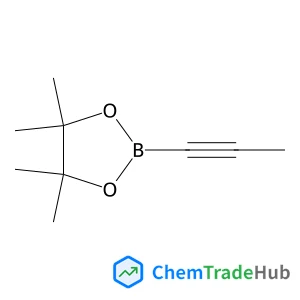
4,4,5,5-Tetramethyl-2-(1-propyn-1-YL)-1,3,2-dioxaborolane
CAS Number:
347389-75-7
Molecular Formula:
C9H15BO2
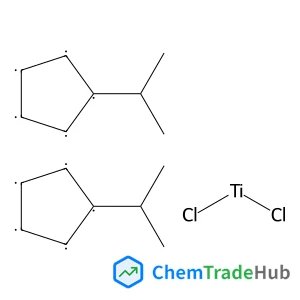
BIS(I-PROPYLCYCLOPENTADIENYL)TITANIUM DICHLORIDE
CAS Number:
12130-65-3
Molecular Formula:
C16H22Cl2Ti
Recommended Suppliers






Disclaimer
This page provides academic journal information for reference and research purposes only. We are not affiliated with any journal publishers and do not handle publication submissions. For publication-related inquiries, please contact the respective journal publishers directly.
If you notice any inaccuracies in the information displayed, please contact us at support@chemtradehub.com. We will promptly review and address your concerns.