


![Bis[(1,2,3,4,5-eta)-1-(diphenylphosphino)cyclopentadienyl]iron structure](https://static.chemtradehub.com/structs/121/12150-46-8-ecd2.webp "Bis[(1,2,3,4,5-eta)-1-(diphenylphosphino)cyclopentadienyl]iron structure")
Bis[(1,2,3,4,5-eta)-1-(diphenylphosphino)cyclopentadienyl]iron
CAS Number:
12150-46-8
Molecular Formula:
C34H28FeP2
Bernd Herzog, Jochen Giesinger, Volker Settels
Sunscreens are used to protect human skin against harmful UV radiation. Today there is a trend towards high sun protection factors (SPF) and good UVA protection. Methods for the assessment of SPF and UVA protection involve irradiation of the product, and the photostability properties of the sunscreen have an influence on its performance. Sunscreens often contain more than one UV filter. Some photolabile UV absorbers may be stabilized by the presence of other photostable UV-absorbers. Stabilization can be achieved just by a certain optical density due to the presence of such UV-filter substances. However, photostabilization may also be caused by quenching mechanisms, such as singlet–singlet or triplet–triplet energy transfer. Investigation of butyl methoxy dibenzoylmethane and ethylhexyl methoxycinnamate as photolabile sunscreens in the presence of either octocrylene or bis ethylhexyloxyphenol methoxyphenyl triazine showed that both mechanisms may apply. With the systems butyl methoxy dibenzoylmethane plus octocrylene and ethylhexyl methoxycinnamate plus bis ethylhexyloxyphenol methoxyphenyl triazine the quenching mechanism appears to be predominant.

Faraday Discussions

Journal of Medical Biochemistry

Mini-Reviews in Medicinal Chemistry

Molecules

Molecular Diversity

Journal of Enzyme inhibition and Medicinal Chemistry

Physical Chemistry Chemical Physics

Photochemical & Photobiological Sciences

Nature Reviews Drug Discovery

Angewandte Chemie International Edition
Arjan W. Kleij, Martin Lutz, Anthony L. Spek, Piet W. N. M. van Leeuwen, Joost N. H. Reek
DOI: 10.1039/B503708E
John C. Stires, IV, Emily J. McLaurin, Clifford P. Kubiak
DOI: 10.1039/B504416B
DOI: 10.1039/B504446B
Bo Tang, Linhai Zhuo, Jiechao Ge, Guangli Wang, Zhiqiang Shi, Jinye Niu
DOI: 10.1039/B500708A
Guo-hong Tao, Ling He, Ning Sun, Yuan Kou
DOI: 10.1039/B504256A
Arjun Mendiratta, Joshua S. Figueroa, Christopher C. Cummins
DOI: 10.1039/B504492H
Baoxiu Mi, Yongqiang Dong, Zhen Li, Jacky W. Y. Lam, Matthias Häußler, Herman H. Y. Sung, Hoi Sing Kwok, Yuping Dong, Ian D. Williams, Yunqi Liu, Yi Luo, Zhigang Shuai, Daoben Zhu
DOI: 10.1039/B505683G
Masaaki Suzuki, Atsuhiro Osuka
DOI: 10.1039/B506586K
Gonzalo de Gonzalo, Gianluca Ottolina, Giacomo Carrea, Marco W. Fraaije
DOI: 10.1039/B504921K
Kasper Nørgaard, Thomas Bjørnholm
DOI: 10.1039/B417526N
Ethyl 3-cyclohexylpropanoate is a clear, colorless to light yellow liquid with a...
Waste containing 2-(Hydroxymethyl)-5-(methoxycarbonyl)-6-methyl-4-(2-nitrophenyl...
Waste containing 2,4,6-Tris(pentafluoroethyl)-1,3,5-triazine (CAS: 858-46-8) sho...
When handling Chloroac-nle-oh (CAS: 56787-36-1), it is essential to wear appropr...
Ethyl 6-phenylimidazo[2,1-b][1,3]thiazole-3-carboxylate is primarily used in the...
Alternatives to alpha-(2-Bromophenyl)benzylamine (CAS: 55095-15-3) in synthesis ...
Waste containing 2-Chloro-5-methoxypyridine (CAS: 139585-48-1) should be managed...
1-(4-Methoxyphenyl)-2,5-dimethyl-1H-pyrrole (CAS: 5044-27-9) is used in various ...
There are alternative reagents and compounds that can be used in the synthesis o...
Tungsten(IV) oxide, also known as tungsten dioxide, is a chemical compound with ...
Photochemical & Photobiological Sciences (PPS) is a monthly journal for the publication of original research papers (Full papers), Reviews, Perspectives, Communications and Technical notes of current interest in the areas of photochemistry and photobiology. The journal also contains a Forum section. PPS is published by Springer and is the official journal of the European Society for Photobiology (ESP) and the European Photochemistry Association (EPA). The journal publishes articles on the interaction of light with molecules, supramolecular systems or biological matter. Topics include, but are not limited to the following. Applied photochemistry Atmospheric photochemistry Bioluminescence Chronobiology DNA repair Energy transfer Environmental photobiology Environmental photochemistry Excited state properties Laser photochemistry Luminescence Mechanistic photochemistry Organic and inorganic photochemistry Photocarcinogenesis Photochemical kinetics Photochemistry of biomolecules Photochemotherapy Photochromism Photodegradation Photodermatology Photoelectrochemistry Photoimaging Photoimmunology Photomedicine Photomorphogenesis Photomovement Photoprotection Photoreception Photosensitisation Photosynthesis Phototechnology Phototherapy Phototoxicity Solar energy utilisation Spectroscopy Spectroscopy of biological systems Supramolecular photochemistry Synthetic photochemistry Theoretical photochemistry UV and visible radiation effects and vision
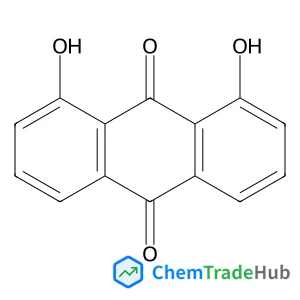


![3-[(4-Nitrobenzyl)oxy]-3-oxopropanoic Acid structure](https://static.chemtradehub.com/structs/773/77359-11-6-0d04.webp "3-[(4-Nitrobenzyl)oxy]-3-oxopropanoic Acid structure")





