












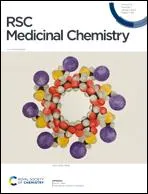

Elevated serum antibody responses to synthetic mycobacterial lipid antigens among UK farmers: an indication of exposure to environmental mycobacteria?
Literature Information
Publication Date
2020-11-26
DOI
10.1039/D0MD00325E
Impact Factor
0
Authors
Alison Jones, Carys A. Davies, Samuel Fitch, Juma'a R. Al Dulayymi, James Gibbons, A. Prysor Williams, Mark S. Baird
View Original
Abstract
Background: mycobacterial cells contain complex mixtures of mycolic acid esters. These can be used as antigens recognised by antibodies in the serum of individuals with active tuberculosis, caused by Mycobacterium tuberculosis. In high burden populations, a significant number of false positives are observed; possibly these antigens are also recognised by antibodies generated by other mycobacterial infections, particularly ubiquitous ‘environmental mycobacteria’. This suggests similar responses may be observed in a low burden TB population, particularly in groups regularly exposed to mycobacteria. Methods: ELISA using single synthetic trehalose mycolates corresponding to major classes in many mycobacteria was used to detect antibodies in serum of individuals with no known mycobacterial infection, comprising farmers, abattoir workers, and rural and urban populations. Results: serum from four Welsh or Scottish cohorts showed lower (with some antigens significantly lower) median responses than those reported for TB negatives from high-burden TB populations, and significantly lower responses than those with active TB. A small fraction, particularly older farmers, showed strong responses. A second study examined BCG vaccinated and non-vaccinated farmers and non-farmers. Farmers gave significantly higher median responses than non-farmers with three of five antigens, while there was no significant difference between vaccinated or non-vaccinated for either farmer or non-farmer groups. Conclusions: this initial study shows that serodiagnosis with mycobacterial lipid antigens can detect antibodies in a population sub-group that is significantly exposed to mycobacteria, in an assay that is not interfered with by vaccination. Given the links between mycobacterial exposure and a range of immune system diseases, further understanding such responses may provide a new opportunity for monitoring public health and directing treatment.
Related Literature
The theoretical account of the ligand field bonding regime and magnetic anisotropy in the DySc2N@C80 single ion magnet endohedral fullerene
Fanica Cimpoesu, Nita Dragoe, Harry Ramanantoanina, Werner Urland, Claude Daul
2014-04-07
Paper
DOI: 10.1039/C4CP00953C
Molecular insight into nanoscale water films dewetting on modified silica surfaces
Yefei Wang
2014-11-05
Paper
DOI: 10.1039/C4CP04554H
Evidence of short-range electron transfer of a redox enzyme on graphene oxide electrodes
Marccus V. A. Martins, Andressa R. Pereira, Roberto A. S. Luz, Rodrigo M. Iost, Frank N. Crespilho
2014-03-13
Paper
DOI: 10.1039/C4CP00452C
Why genetic modification of lignin leads to low-recalcitrance biomass
Paul Langan, Loukas Petridis
2014-11-11
Paper
DOI: 10.1039/C4CP05004E
The effect of nitrogen doping on mercury oxidation/chemical adsorption on the CuCo2O4(110) surface: a molecular-level description
Zhijian Mei, Ruiqing Zhang, Zhemin Shen, Wenhua Wang
2014-05-23
Paper
DOI: 10.1039/C4CP01362J
Conformational studies of poly(vinylidene fluoride), poly(trifluoroethylene) and poly(vinylidene fluoride-co-trifluoroethylene) using density functional theory
Martin Bohlén, Kim Bolton
2014-05-15
Paper
DOI: 10.1039/C4CP01012D
A backside fluorine-functionalized graphene layer for ammonia detection
V. I. Sysoev, A. V. Gusel'nikov
2014-10-27
Paper
DOI: 10.1039/C4CP03552F
The UV absorption spectrum of the simplest Criegee intermediate CH2OO
Wei-Lun Ting, Ying-Hsuan Chen
2014-04-14
Communication
DOI: 10.1039/C4CP00877D
You might also like
Compound Q&A
What are the main uses of 1-(3-Aminophenyl)-3-[(3R)-1-(3,3-dimethyl-2-oxobutyl)-2-oxo-5-(2-pyridinyl)-2,3-dihydro-1H-1,4-benzodiazepin-3-yl]urea (CAS: 155412-88-7)?
This compound is mainly used as an intermediate in the synthesis of antipsychoti...
155412-88-71-(3-Aminophenyl)-3-...
Compound Q&A
How should waste containing 1-(D-Ribofuranosyl)-1,4-dihydro-3-pyridinecarboxamide (CAS: 19132-12-8) be handled?
Waste containing 1-(D-Ribofuranosyl)-1,4-dihydro-3-pyridinecarboxamide (CAS: 191...
19132-12-81-(D-Ribofuranosyl)-...
Compound Q&A
What regulatory guidelines apply to 2-Methyl-2-propanyl 3-bromo-3-(hydroxymethyl)-1-azetidinecarboxylate (CAS: 2007919-81-3)?
2-Methyl-2-propanyl 3-bromo-3-(hydroxymethyl)-1-azetidinecarboxylate (CAS: 20079...
2007919-81-32-Methyl-2-propanyl ...
Compound Q&A
What is N-(4-Chloro-2-pyridinyl)acetamide (CAS: 245056-66-0)?
N-(4-Chloro-2-pyridinyl)acetamide (CAS: 245056-66-0) is a chemical compound with...
245056-66-0N-(4-Chloro-2-pyridi...
Compound Q&A
What is 5-Chloro-2-hydroxybenzoic acid (CAS: 321-14-2)?
5-Chloro-2-hydroxybenzoic acid, also known as 5-chlorosalicylic acid, is an arom...
321-14-25-Chloro-2-hydroxybe...
Compound Q&A
What precautions should be taken when handling 1,1-Dichloro-1-fluoroethane (CAS: 1717-00-6)?
When handling 1,1-Dichloro-1-fluoroethane (CAS: 1717-00-6), it is important to u...
1717-00-61,1-Dichloro-1-fluor...
Compound Q&A
What are the physical and chemical properties of Fmoc-(2S,3R)-3-phenylpyrrolidine-2-carboxylic acid (CAS: 281655-32-1)?
Fmoc-(2S,3R)-3-phenylpyrrolidine-2-carboxylic acid is a white crystalline solid ...
281655-32-1Fmoc-(2S,3R)-3-pheny...
Compound Q&A
What are the main uses of 4-Amino-5-bromo-2-pyridinecarboxylic acid (CAS: 1363381-01-4)?
4-Amino-5-bromo-2-pyridinecarboxylic acid is primarily used as a precursor in th...
1363381-01-44-Amino-5-bromo-2-py...
Compound Q&A
What precautions should be taken when handling (S)-tert-butyl 2-((2-(4-bromophenyl)-2-oxoethyl)carbamoyl)pyrrolidine-1-carboxylate (CAS: 1007881-98-2)?
Handling this compound should be done with personal protective equipment (PPE) i...
1007881-98-2(S)-tert-butyl 2-((2...
Compound Q&A
What precautions should be taken when handling 8-bromo-2,2-dimethyl-3,4-dihydro-2H-1,4-benzoxazin-3-one (CAS: 688363-73-7)?
When handling 8-bromo-2,2-dimethyl-3,4-dihydro-2H-1,4-benzoxazin-3-one, use prop...
688363-73-78-bromo-2,2-dimethyl...
Source Journal
Recommended Compounds
![1-[3-(4-Morpholinylsulfonyl)phenyl]methanamine structure](https://static.chemtradehub.com/structs/933/933989-32-3-51af.webp "1-[3-(4-Morpholinylsulfonyl)phenyl]methanamine structure")
![Pyrazolo[1,5-a]pyridine-3-carbothioamide structure](https://static.chemtradehub.com/structs/885/885275-44-5-aae0.webp "Pyrazolo[1,5-a]pyridine-3-carbothioamide structure")
Recommended Suppliers






Disclaimer
This page provides academic journal information for reference and research purposes only. We are not affiliated with any journal publishers and do not handle publication submissions. For publication-related inquiries, please contact the respective journal publishers directly.
If you notice any inaccuracies in the information displayed, please contact us at support@chemtradehub.com. We will promptly review and address your concerns.