












Why genetic modification of lignin leads to low-recalcitrance biomass
Literature Information
Publication Date
2014-11-11
DOI
10.1039/C4CP05004E
Impact Factor
3.676
Authors
Paul Langan, Loukas Petridis
View Original
Abstract
Genetic modification of plants via down-regulation of cinnamyl alcohol dehydrogenase leads to incorporation of aldehyde groups in the lignin polymer. The resulting lignocellulosic biomass has increased bioethanol yield. However, a molecular-scale explanation of this finding is currently lacking. Here, we perform molecular dynamics simulation of the copolymer with hemicellulose of wild type and the genetically modified lignin, in aqueous solution. We find that the non-covalent association with hemicellulose of lignin containing aldehyde groups is reduced compared to the wild-type. This phase separation may increase the cell wall porosity in the mutant plants, thus explaining their easier deconstruction to biofuels. The thermodynamic origin of the reduced lignin-hemicellulose association is found to be a more favorable self-interaction energy and less favorable interaction with hemicellulose for the mutant lignin. Furthermore, reduced hydration water density fluctuations are found for the mutant lignin, implying a more hydrophobic lignin surface. The results provide a detailed description of how aldehyde incorporation makes lignin more hydrophobic and reduces its association with hemicellulose, thus suggesting that increased lignin hydrophobicity may be an optimal characteristic required for improved biofuel production.
Related Literature
Including dispersion in density functional theory for adsorption on flat oxide surfaces, in metal–organic frameworks and in acidic zeolites
Florian R. Rehak, GiovanniMaria Piccini, Maristella Alessio, Joachim Sauer
2020-03-30
Paper
DOI: 10.1039/D0CP00394H
The interaction of defects in a mayenite structure
Sergey N. Shkerin, Ekaterina S. Ulyanova, Sergey V. Naumov
2020-11-27
Paper
DOI: 10.1039/D0CP05107A
Ru–polyoxometalate as a single-atom electrocatalyst for N2 reduction to NH3 with high selectivity at applied voltage: a perspective from DFT studies
Linghui Lin, Liye Gao, Ke Xie, Rong Jiang, Sen Lin
2020-03-02
Paper
DOI: 10.1039/D0CP00698J
Clarifying the impacts of surface hydroxyls on CO oxidation on CeO2(100) surfaces: a DFT+U study
Hui Zhou, Dong Wang, Xue-Qing Gong
2020-03-09
Paper
DOI: 10.1039/D0CP00204F
Orientation independent vibrational dynamics of lipid-bound interfacial water
Malte Deiseroth, Mischa Bonn
2020-04-02
Paper
DOI: 10.1039/D0CP01099E
Solar-driven plasmonic heterostructure Ti/TiO2−x with gradient doping for sustainable plasmon-enhanced catalysis
Chaoqun Cheng, Muhammad Nadeem Akram, Ola Nilsen, Nini Pryds, Kaiying Wang
2020-03-16
Paper
DOI: 10.1039/D0CP00672F
Tuning of ORR activity through the stabilization of the adsorbates by hydrogen bonding with substituent groups
Nagaprasad Reddy Samala, Ilya Grinberg
2020-11-04
Paper
DOI: 10.1039/D0CP04478D
Can glycine betaine denature proteins?
Arusha Acharyya, Dayoung Shin, Thomas Troxler, Feng Gai
2020-03-30
Paper
DOI: 10.1039/D0CP00397B
Active stereo-control of the Cl + CH4(ν3 = 1) reaction: a three-dimensional perspective
2020-04-23
Paper
DOI: 10.1039/D0CP01502D
You might also like
Compound Q&A
What are the main uses of 1-(3-Aminophenyl)-3-[(3R)-1-(3,3-dimethyl-2-oxobutyl)-2-oxo-5-(2-pyridinyl)-2,3-dihydro-1H-1,4-benzodiazepin-3-yl]urea (CAS: 155412-88-7)?
This compound is mainly used as an intermediate in the synthesis of antipsychoti...
155412-88-71-(3-Aminophenyl)-3-...
Compound Q&A
How should waste containing 1-(D-Ribofuranosyl)-1,4-dihydro-3-pyridinecarboxamide (CAS: 19132-12-8) be handled?
Waste containing 1-(D-Ribofuranosyl)-1,4-dihydro-3-pyridinecarboxamide (CAS: 191...
19132-12-81-(D-Ribofuranosyl)-...
Compound Q&A
What regulatory guidelines apply to 2-Methyl-2-propanyl 3-bromo-3-(hydroxymethyl)-1-azetidinecarboxylate (CAS: 2007919-81-3)?
2-Methyl-2-propanyl 3-bromo-3-(hydroxymethyl)-1-azetidinecarboxylate (CAS: 20079...
2007919-81-32-Methyl-2-propanyl ...
Compound Q&A
What is N-(4-Chloro-2-pyridinyl)acetamide (CAS: 245056-66-0)?
N-(4-Chloro-2-pyridinyl)acetamide (CAS: 245056-66-0) is a chemical compound with...
245056-66-0N-(4-Chloro-2-pyridi...
Compound Q&A
What is 5-Chloro-2-hydroxybenzoic acid (CAS: 321-14-2)?
5-Chloro-2-hydroxybenzoic acid, also known as 5-chlorosalicylic acid, is an arom...
321-14-25-Chloro-2-hydroxybe...
Compound Q&A
What precautions should be taken when handling 1,1-Dichloro-1-fluoroethane (CAS: 1717-00-6)?
When handling 1,1-Dichloro-1-fluoroethane (CAS: 1717-00-6), it is important to u...
1717-00-61,1-Dichloro-1-fluor...
Compound Q&A
What are the physical and chemical properties of Fmoc-(2S,3R)-3-phenylpyrrolidine-2-carboxylic acid (CAS: 281655-32-1)?
Fmoc-(2S,3R)-3-phenylpyrrolidine-2-carboxylic acid is a white crystalline solid ...
281655-32-1Fmoc-(2S,3R)-3-pheny...
Compound Q&A
What are the main uses of 4-Amino-5-bromo-2-pyridinecarboxylic acid (CAS: 1363381-01-4)?
4-Amino-5-bromo-2-pyridinecarboxylic acid is primarily used as a precursor in th...
1363381-01-44-Amino-5-bromo-2-py...
Compound Q&A
What precautions should be taken when handling (S)-tert-butyl 2-((2-(4-bromophenyl)-2-oxoethyl)carbamoyl)pyrrolidine-1-carboxylate (CAS: 1007881-98-2)?
Handling this compound should be done with personal protective equipment (PPE) i...
1007881-98-2(S)-tert-butyl 2-((2...
Compound Q&A
What precautions should be taken when handling 8-bromo-2,2-dimethyl-3,4-dihydro-2H-1,4-benzoxazin-3-one (CAS: 688363-73-7)?
When handling 8-bromo-2,2-dimethyl-3,4-dihydro-2H-1,4-benzoxazin-3-one, use prop...
688363-73-78-bromo-2,2-dimethyl...
Source Journal
Physical Chemistry Chemical Physics

CiteScore:
5.5
Self-citation Rate:
10.3%
Articles per Year:
3036
Physical Chemistry Chemical Physics (PCCP) is an international journal co-owned by 19 physical chemistry and physics societies from around the world. This journal publishes original, cutting-edge research in physical chemistry, chemical physics and biophysical chemistry. To be suitable for publication in PCCP, articles must include significant innovation and/or insight into physical chemistry; this is the most important criterion that reviewers and Editors will judge against when evaluating submissions. The journal has a broad scope and welcomes contributions spanning experiment, theory, computation and data science. Topical coverage includes spectroscopy, dynamics, kinetics, statistical mechanics, thermodynamics, electrochemistry, catalysis, surface science, quantum mechanics, quantum computing and machine learning. Interdisciplinary research areas such as polymers and soft matter, materials, nanoscience, energy, surfaces/interfaces, and biophysical chemistry are welcomed if they demonstrate significant innovation and/or insight into physical chemistry. Joined experimental/theoretical studies are particularly appreciated when complementary and based on up-to-date approaches.
Recommended Compounds

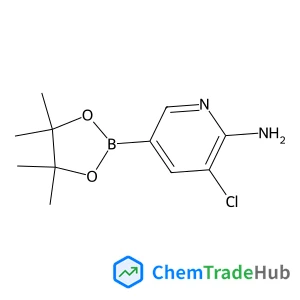
3-Chloro-5-(4,4,5,5-tetramethyl-1,3,2-dioxaborolan-2-yl)-2-pyridinamine
CAS Number:
1032758-99-8
Molecular Formula:
C11H16BClN2O2
Recommended Suppliers





Disclaimer
This page provides academic journal information for reference and research purposes only. We are not affiliated with any journal publishers and do not handle publication submissions. For publication-related inquiries, please contact the respective journal publishers directly.
If you notice any inaccuracies in the information displayed, please contact us at support@chemtradehub.com. We will promptly review and address your concerns.