













Collective structural properties of embedded molecular motors in functionalized metal–organic frameworks
Literature Information
Publication Date
2021-01-26
DOI
10.1039/D0CP06263D
Impact Factor
3.676
Authors
View Original
Abstract
Photo-responsive molecular motors incorporated in soft porous materials enable the amplification of the motion of individual motor units by employing their collective and cooperative behavior. Metal–organic frameworks (MOFs) provide in this regard, due to their structural diversity and modular assembly, a unique matrix to construct well-defined and systematically tunable molecular environments for the embedding of molecular motors. However, despite advances in the development of such photo-responsive functional materials, a thorough understanding of the governing interactions at the atomic scale has been missing so far, limiting the possibility of predicting and fully exploring the potential of these assembled machineries. Here, we present a conformational study to unravel the collective structural behavior and elucidate the impact of motor–motor interactions on the local and global properties of the scaffold. In particular, our work highlights the impact of full conversion of the embedded molecular motors on the overall network topology of the MotorMOF and thus acts as a benchmark for future studies to further explore the correlation of responsive building units with the resulting functionality of these hierarchical systems.
Related Literature
Hysteresis and the role of nucleation and growth in the hydrogenation of Mg nanolayers
Lennard Mooij, Bernard Dam
2013-01-08
Paper
DOI: 10.1039/C3CP44441D
Dissociative electron attachment to acetaldehyde, CH3CHO. A laboratory study using the velocity map imaging technique
Vaibhav S. Prabhudesai, E. Krishnakumar
2012-11-14
Paper
DOI: 10.1039/C2CP42966G
Formation and infrared absorption of protonated naphthalenes (1-C10H9+ and 2-C10H9+) and their neutral counterparts in solid para-hydrogen
Mohammed Bahou, Yu-Jong Wu
2012-12-03
Paper
DOI: 10.1039/C2CP43143B
Effect of nuclear vibrations, temperature, co-adsorbed water, and dye orientation on light absorption, charge injection and recombination conditions in organic dyes on TiO2
Sergei Manzhos, Hiroshi Segawa, Koichi Yamashita
2012-11-23
Paper
DOI: 10.1039/C2CP43448B
Enhancing catalytic selectivity of supported metal nanoparticles with capping ligands
Kai Chen, Haotian Wu, Qing Hua, Sujie Chang, Weixin Huang
2012-12-19
Communication
DOI: 10.1039/C2CP44571A
CO2 capture in poly(ionic liquid) membranes: atomistic insight into the role of anions
Weijie Fang, Zhonglin Luo, Jianwen Jiang
2012-11-27
Paper
DOI: 10.1039/C2CP42837G
Trimetallic deltahedral Zintl ions [Sn9−m−nGemBin](4−n)− for n = 1–4 and m = 0–(9 − n): a theoretical survey with prediction and rationalization of the possible structures
Alvaro Muñoz-Castro, Slavi C. Sevov
2012-11-19
Paper
DOI: 10.1039/C2CP43196C
Is ballistic transportation or quantum confinement responsible for changes in the electrical properties of thin polymer films?
Jean-Pierre Veder, Kunal Patel, Junqiao Lee, Muhammad Tanzirul Alam, Andrew Nelson, Roland De Marco
2012-11-26
Communication
DOI: 10.1039/C2CP43333H
Size-controlled synthesis of silver micro/nanowires as enabled by HCL oxidative etching
Caio C. S. de Oliveira, Rômulo A. Ando, Pedro H. C. Camargo
2012-11-30
Paper
DOI: 10.1039/C2CP43108D
Proton transfer chains in cold plasmas of H2 with small amounts of N2. The prevalence of NH4+
Esther Carrasco, Isabel Tanarro, Víctor J. Herrero, José Cernicharo
2012-11-30
Paper
DOI: 10.1039/C2CP43438E
You might also like
Compound Q&A
Is 6-(3-Fluorophenyl)picolinic acid (CAS: 887982-40-3) safe?
6-(3-Fluorophenyl)picolinic acid is generally considered safe for laboratory use...
887982-40-36-(3-Fluorophenyl)pi...
Compound Q&A
What industries use (3R)-3-Pyrrolidinol (CAS: 2799-21-5)?
(3R)-3-Pyrrolidinol is used in the pharmaceutical industry as a precursor for dr...
2799-21-5(3R)-3-Pyrrolidinol
Compound Q&A
What precautions should be taken when handling (4R,5R)-4,5-Diethoxycarbonyl-2,2-dimethyldioxolane (CAS: 59779-75-8)?
When handling (4R,5R)-4,5-Diethoxycarbonyl-2,2-dimethyldioxolane (CAS: 59779-75-...
59779-75-8(4R,5R)-4,5-Diethoxy...
Compound Q&A
How is 1-(6-Chloroimidazo[1,2-b]pyridazin-3-yl)ethanone (CAS: 90734-71-7) typically synthesized?
1-(6-Chloroimidazo[1,2-b]pyridazin-3-yl)ethanone is often synthesized via a mult...
90734-71-71-(6-Chloroimidazo[1...
Compound Q&A
What is the market or research trend for N-Ethyl-3,4-dimethylbenzylamine (CAS: 39180-83-1)?
The market for N-Ethyl-3,4-dimethylbenzylamine (CAS: 39180-83-1) remains steady,...
39180-83-1N-Ethyl-3,4-dimethyl...
Compound Q&A
What is Tert-butyl 3-(pyrrolidin-1-yl)azetidine-1-carboxylate (CAS: 1019008-21-9)?
Tert-butyl 3-(pyrrolidin-1-yl)azetidine-1-carboxylate is a chemical compound wit...
1019008-21-9Tert-butyl 3-(pyrrol...
Compound Q&A
What regulatory guidelines apply to 1-Bromo-3-chloro-2,4-dimethoxybenzene (CAS: 1228956-93-1)?
1-Bromo-3-chloro-2,4-dimethoxybenzene (CAS: 1228956-93-1) falls under the classi...
1228956-93-11-Bromo-3-chloro-2,4...
Compound Q&A
Is 8-Bromo-2-methyl-3,4-dihydroisoquinolin-1(2H)-one (CAS: 1368622-07-4) safe?
The safety of 8-Bromo-2-methyl-3,4-dihydroisoquinolin-1(2H)-one (CAS: 1368622-07...
1368622-07-48-Bromo-2-methyl-3,4...
Compound Q&A
Is Benzyl [(3S)-2,6-dioxo-3-piperidinyl]carbamate (CAS: 22785-43-9) safe?
Benzyl [(3S)-2,6-dioxo-3-piperidinyl]carbamate is generally safe when handled wi...
22785-43-9Benzyl [(3S)-2,6-dio...
Compound Q&A
How should 1-{[4-(4,4,5,5-Tetramethyl-1,3,2-dioxaborolan-2-yl)phenyl]sulfonyl}pyrrolidine (CAS: 928657-21-0) be stored?
1-{[4-(4,4,5,5-Tetramethyl-1,3,2-dioxaborolan-2-yl)phenyl]sulfonyl}pyrrolidine s...
928657-21-01-{[4-(4,4,5,5-Tetra...
Source Journal
Physical Chemistry Chemical Physics

CiteScore:
5.5
Self-citation Rate:
10.3%
Articles per Year:
3036
Physical Chemistry Chemical Physics (PCCP) is an international journal co-owned by 19 physical chemistry and physics societies from around the world. This journal publishes original, cutting-edge research in physical chemistry, chemical physics and biophysical chemistry. To be suitable for publication in PCCP, articles must include significant innovation and/or insight into physical chemistry; this is the most important criterion that reviewers and Editors will judge against when evaluating submissions. The journal has a broad scope and welcomes contributions spanning experiment, theory, computation and data science. Topical coverage includes spectroscopy, dynamics, kinetics, statistical mechanics, thermodynamics, electrochemistry, catalysis, surface science, quantum mechanics, quantum computing and machine learning. Interdisciplinary research areas such as polymers and soft matter, materials, nanoscience, energy, surfaces/interfaces, and biophysical chemistry are welcomed if they demonstrate significant innovation and/or insight into physical chemistry. Joined experimental/theoretical studies are particularly appreciated when complementary and based on up-to-date approaches.
Recommended Compounds

4-Cyclohexene-1,2-dicarboxylic acid, 1,2-dimethyl ester, (1R,2R)-rel-
CAS Number:
17673-68-6
Molecular Formula:
C10H14O4

(R)-2-(Methylamino)propanoic acid hydrochloride
CAS Number:
1155878-14-0
Molecular Formula:
C4H10ClNO2
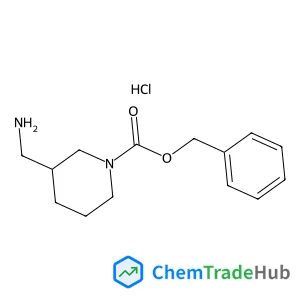
Benzyl 3-(aminomethyl)piperidine-1-carboxylate hydrochloride
CAS Number:
1186663-23-9
Molecular Formula:
C14H21ClN2O2
Recommended Suppliers






Disclaimer
This page provides academic journal information for reference and research purposes only. We are not affiliated with any journal publishers and do not handle publication submissions. For publication-related inquiries, please contact the respective journal publishers directly.
If you notice any inaccuracies in the information displayed, please contact us at support@chemtradehub.com. We will promptly review and address your concerns.