












CO2 capture in poly(ionic liquid) membranes: atomistic insight into the role of anions
Literature Information
Publication Date
2012-11-27
DOI
10.1039/C2CP42837G
Impact Factor
3.676
Authors
Weijie Fang, Zhonglin Luo, Jianwen Jiang
View Original
Abstract
We report the first atomistic simulation study to characterize poly(ionic liquid) (PIL) membranes and examine their capability for post-combustion CO2 capture. Four PILs based on 1-vinyl-3-butylimidazolium ([VBIM]+) are examined with four different anions, namely bis(trifluoromethylsulfonyl)imide ([TF2N]−), thiocyanate ([SCN]−), hexafluorophosphate ([PF6]−) and chloride ([Cl]−). Gas molecules (CO2 and N2) in [VBIM]+-based PILs interact with polycations more strongly than with anions. Therefore, the role of anions in gas solubility is insignificant, which is in remarkable contrast to monomeric ILs. The solubilities predicted in the four PILs are close and in good agreement with available experimental data. The sorption, diffusion and permeation selectivities of CO2/N2 predicted from simulation are consistent with experiment. Particularly, the diffusion selectivities are approximately equal to one, implying that CO2/N2 separation is governed by sorption. This study provides atomistic insight into the mechanisms of gas sorption, diffusion and permeation in [VBIM]+-based PILs and reveals that polycations play a dominant role in determining gas–membrane interaction and separation.
Related Literature
Nitrogen-rich diaminotriazine-based porous organic polymers for small gas storage and selective uptake
Wei-Chao Song, Xiao-Kang Xu, Qiang Chen, Zhan-Zhong Zhuang, Xian-He Bu
2013-06-13
Paper
DOI: 10.1039/C3PY00590A
Selective CO2 capture in an imine linked porphyrin porous polymer
Venkata S. Pavan K. Neti, Xiaofei Wu, Shuguang Deng, Luis Echegoyen
2013-07-03
Communication
DOI: 10.1039/C3PY00798G
Construction of aromatic-ring-layered structures using a terphenylene-layered polymer as the scaffold
Yuichi Tsuji, Yasuhiro Morisaki, Yoshiki Chujo
2013-06-21
Paper
DOI: 10.1039/C3PY00607G
RAFT copolymerization of alginate-derived macromonomers – synthesis of a well-defined poly(HEMAm)-graft-(1→4)-α-l-guluronan copolymer capable of ionotropic gelation
Ali Ghadban, Eric Reynaud, Marguerite Rinaudo, Luca Albertin
2013-07-01
Communication
DOI: 10.1039/C3PY00730H
A versatile post-polymerization modification method for polyglutamic acid: synthesis of orthogonal reactive polyglutamates and their use in “click chemistry”
Aroa Duro-Castano, María J. Vicent
2013-04-12
Paper
DOI: 10.1039/C3PY00189J
Cationic glyco-nanogels for epidermal growth factor receptor (EGFR) specific siRNA delivery in ovarian cancer cells
Marya Ahmed, Phanphen Wattanaarsakit, Ravin Narain
2013-04-19
Paper
DOI: 10.1039/C3PY00425B
Amphiphilic supramolecular A(B)2A quasi-triblock copolymers
2013-03-13
Communication
DOI: 10.1039/C3PY00216K
A rapid and sensitive detection of ferritin at a nanomolar level and disruption of amyloid β fibrils using fluorescent conjugated polymer
B. Muthuraj, Sameer Hussain, Parameswar Krishnan Iyer
2013-06-27
Paper
DOI: 10.1039/C3PY00680H
The reactivity of N-vinylcarbazole in RAFT polymerization: trithiocarbonates deliver optimal control for the synthesis of homopolymers and block copolymers
Carlos Guerrero-Sanchez, Graeme Moad
2013-04-30
Paper
DOI: 10.1039/C3PY00487B
You might also like
Compound Q&A
Is 6-(3-Fluorophenyl)picolinic acid (CAS: 887982-40-3) safe?
6-(3-Fluorophenyl)picolinic acid is generally considered safe for laboratory use...
887982-40-36-(3-Fluorophenyl)pi...
Compound Q&A
What industries use (3R)-3-Pyrrolidinol (CAS: 2799-21-5)?
(3R)-3-Pyrrolidinol is used in the pharmaceutical industry as a precursor for dr...
2799-21-5(3R)-3-Pyrrolidinol
Compound Q&A
What precautions should be taken when handling (4R,5R)-4,5-Diethoxycarbonyl-2,2-dimethyldioxolane (CAS: 59779-75-8)?
When handling (4R,5R)-4,5-Diethoxycarbonyl-2,2-dimethyldioxolane (CAS: 59779-75-...
59779-75-8(4R,5R)-4,5-Diethoxy...
Compound Q&A
How is 1-(6-Chloroimidazo[1,2-b]pyridazin-3-yl)ethanone (CAS: 90734-71-7) typically synthesized?
1-(6-Chloroimidazo[1,2-b]pyridazin-3-yl)ethanone is often synthesized via a mult...
90734-71-71-(6-Chloroimidazo[1...
Compound Q&A
What is the market or research trend for N-Ethyl-3,4-dimethylbenzylamine (CAS: 39180-83-1)?
The market for N-Ethyl-3,4-dimethylbenzylamine (CAS: 39180-83-1) remains steady,...
39180-83-1N-Ethyl-3,4-dimethyl...
Compound Q&A
What is Tert-butyl 3-(pyrrolidin-1-yl)azetidine-1-carboxylate (CAS: 1019008-21-9)?
Tert-butyl 3-(pyrrolidin-1-yl)azetidine-1-carboxylate is a chemical compound wit...
1019008-21-9Tert-butyl 3-(pyrrol...
Compound Q&A
What regulatory guidelines apply to 1-Bromo-3-chloro-2,4-dimethoxybenzene (CAS: 1228956-93-1)?
1-Bromo-3-chloro-2,4-dimethoxybenzene (CAS: 1228956-93-1) falls under the classi...
1228956-93-11-Bromo-3-chloro-2,4...
Compound Q&A
Is 8-Bromo-2-methyl-3,4-dihydroisoquinolin-1(2H)-one (CAS: 1368622-07-4) safe?
The safety of 8-Bromo-2-methyl-3,4-dihydroisoquinolin-1(2H)-one (CAS: 1368622-07...
1368622-07-48-Bromo-2-methyl-3,4...
Compound Q&A
Is Benzyl [(3S)-2,6-dioxo-3-piperidinyl]carbamate (CAS: 22785-43-9) safe?
Benzyl [(3S)-2,6-dioxo-3-piperidinyl]carbamate is generally safe when handled wi...
22785-43-9Benzyl [(3S)-2,6-dio...
Compound Q&A
How should 1-{[4-(4,4,5,5-Tetramethyl-1,3,2-dioxaborolan-2-yl)phenyl]sulfonyl}pyrrolidine (CAS: 928657-21-0) be stored?
1-{[4-(4,4,5,5-Tetramethyl-1,3,2-dioxaborolan-2-yl)phenyl]sulfonyl}pyrrolidine s...
928657-21-01-{[4-(4,4,5,5-Tetra...
Source Journal
Physical Chemistry Chemical Physics

CiteScore:
5.5
Self-citation Rate:
10.3%
Articles per Year:
3036
Physical Chemistry Chemical Physics (PCCP) is an international journal co-owned by 19 physical chemistry and physics societies from around the world. This journal publishes original, cutting-edge research in physical chemistry, chemical physics and biophysical chemistry. To be suitable for publication in PCCP, articles must include significant innovation and/or insight into physical chemistry; this is the most important criterion that reviewers and Editors will judge against when evaluating submissions. The journal has a broad scope and welcomes contributions spanning experiment, theory, computation and data science. Topical coverage includes spectroscopy, dynamics, kinetics, statistical mechanics, thermodynamics, electrochemistry, catalysis, surface science, quantum mechanics, quantum computing and machine learning. Interdisciplinary research areas such as polymers and soft matter, materials, nanoscience, energy, surfaces/interfaces, and biophysical chemistry are welcomed if they demonstrate significant innovation and/or insight into physical chemistry. Joined experimental/theoretical studies are particularly appreciated when complementary and based on up-to-date approaches.
Recommended Compounds
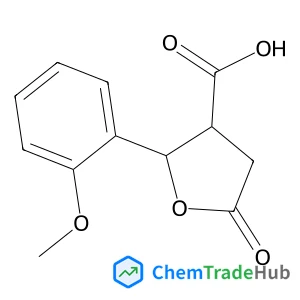
trans-2-(2-Methoxyphenyl)-5-oxotetrahydrofuran-3-carboxylic acid
CAS Number:
99226-02-5
Molecular Formula:
C12H12O5
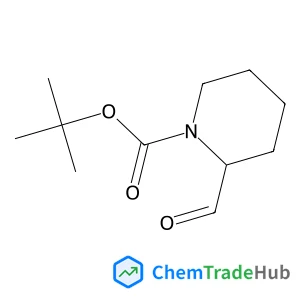
2-Methyl-2-propanyl (2R)-2-formyl-1-piperidinecarboxylate
CAS Number:
134526-69-5
Molecular Formula:
C11H19NO3
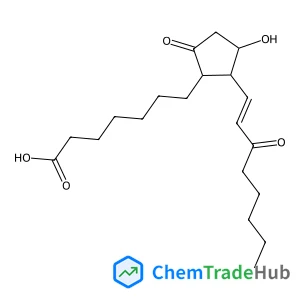
(11alpha,13E)-11-Hydroxy-9,15-dioxoprost-13-en-1-oic acid
CAS Number:
22973-19-9
Molecular Formula:
C20H32O5
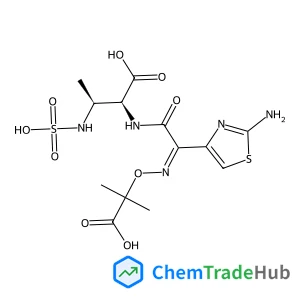
Aztreonam USP Related Compound A (Open-ring Aztreonam)
CAS Number:
87500-74-1
Molecular Formula:
C13H19N5O9S2
Recommended Suppliers




Disclaimer
This page provides academic journal information for reference and research purposes only. We are not affiliated with any journal publishers and do not handle publication submissions. For publication-related inquiries, please contact the respective journal publishers directly.
If you notice any inaccuracies in the information displayed, please contact us at support@chemtradehub.com. We will promptly review and address your concerns.