


Effects of different manganese precursors as promoters on catalytic performance of CuO–MnOx/TiO2 catalysts for NO removal by CO
Literature Information
Publication Date
2015-05-15
DOI
10.1039/C5CP02158H
Impact Factor
3.676
Authors
Chuanzhi Sun, Yingjie Tang, Fei Gao, Jingfang Sun, Kaili Ma, Changjin Tang
View Original
Abstract
Two different precursors, manganese nitrate (MN) and manganese acetate (MA), were employed to prepare two series of catalysts, i.e., xCuyMn(N)/TiO2 and xCuyMn(A)/TiO2, by a co-impregnation method. The catalysts were characterized by XRD, LRS, CO-TPR, XPS and EPR spectroscopy. The results suggest that: (1) both xCuyMn(N)/TiO2 and xCuyMn(A)/TiO2 catalysts exhibit much higher catalytic activities than an unmodified Cu/TiO2 catalyst in the NO + CO reaction. Furthermore, the activities of catalysts modified with the same amount of manganese are closely dependent on manganese precursors. (2) The enhancement of activities for Mn-modified catalysts should be attributed to the formation of the surface synergetic oxygen vacancy (SSOV) Cu+–□–Mny+ in the reaction process. Moreover, since the formation of the SSOV (Cu+–□–Mn3+) in the xCuyMn(N)/TiO2 catalyst is easier than that (Cu+–□–Mn2+) in the xCuyMn(A)/TiO2 catalyst, the activity of the xCuyMn(N)/TiO2 catalyst is higher than that of the xCuyMn(A)/TiO2 catalyst. This conclusion is well supported by the XPS and EPR results.
Recommended Journals

Journal of Catalysis

Journal of Organometallic Chemistry

European Journal of Wood and Wood Products

Organic Preparations and Procedures International

Journal of Physics and Chemistry of Solids

Proceedings of the National Academy of Sciences of the United States of America

Molecular Pharmacology

Helvetica Chimica Acta

Kinetics and Catalysis

Nature
Related Literature
New insights into UTSA-16
Alessio Masala, Jenny G. Vitillo, Francesca Bonino, Maela Manzoli, Carlos A. Grande, Silvia Bordiga
2015-11-12
Paper
DOI: 10.1039/C5CP05905D
The van der Waals interactions in rare-gas dimers: the role of interparticle interactions
Yu-Ting Chen, Kerwin Hui
2015-12-17
Paper
DOI: 10.1039/C5CP06317E
Photon management properties of rare-earth (Nd,Yb,Sm)-doped CeO2 films prepared by pulsed laser deposition
Matteo Balestrieri, Silviu Colis, Mathieu Gallart, Guy Schmerber, Paul Bazylewski, Gap Soo Chang, Marc Ziegler, Pierre Gilliot, Abdelilah Slaoui, Aziz Dinia
2015-12-07
Paper
DOI: 10.1039/C5CP04961J
Understanding the interfacial behavior in isopycnic Lennard-Jones mixtures by computer simulations
José Matías Garrido, Manuel M. Piñeiro, Andrés Mejía, Felipe J. Blas
2015-11-26
Paper
DOI: 10.1039/C5CP06562C
Structural motifs of 2-(2-fluoro-phenyl)-ethylamine conformers
Nitzan Mayorkas, Hanan Sachs, Markus Schütz, Shun-ichi Ishiuchi, Masaaki Fujii, Otto Dopfer, Ilana Bar
2015-11-19
Paper
DOI: 10.1039/C5CP06131H
Molecular recognition of naphthalene diimide ligands by telomeric quadruplex-DNA: the importance of the protonation state and mediated hydrogen bonds
J. Grunenberg
2015-12-16
Paper
DOI: 10.1039/C5CP05576H
High adsorption capacity of heavy metals on two-dimensional MXenes: an ab initio study with molecular dynamics simulation
Xun Guo, Shijun Zhao, Qing Huang
2015-11-12
Paper
DOI: 10.1039/C5CP06078H
Charge mobility induced by Brownian fluctuations in π-conjugated polymers in solution
2015-12-21
Paper
DOI: 10.1039/C5CP06842H
Solution combustion synthesis of strontium aluminate, SrAl2O4, powders: single-fuel versus fuel-mixture approach
Robert Ianoş, Roxana Istratie, Cornelia Păcurariu, Radu Lazău
2015-11-27
Paper
DOI: 10.1039/C5CP06240C
Excited-state annihilation reduces power dependence of single-molecule FRET experiments
Daniel Nettels, Dominik Haenni, Sacha Maillot, Moussa Gueye, Anders Barth, Verena Hirschfeld, Christian G. Hübner, Jérémie Léonard, Benjamin Schuler
2015-11-05
Paper
DOI: 10.1039/C5CP05321H
You might also like
Compound Q&A
How should waste containing 6-Chloro-5-(2'-hydroxy-3'-methoxy-4-biphenylyl)-3-(3-methoxyphenyl)-1H-pyrrolo[3,2-d]pyrimidine-2,4(3H,5H)-dione (CAS: 1346607-05-3) be handled?
Waste containing 6-Chloro-5-(2'-hydroxy-3'-methoxy-4-biphenylyl)-3-(3-methoxyphe...
1346607-05-36-Chloro-5-(2'-hydro...
Compound Q&A
What are the main uses of (3alpha,5alpha)-3-Hydroxypregnane-11,20-dione (CAS: 23930-19-0)?
(3alpha,5alpha)-3-Hydroxypregnane-11,20-dione is primarily used in the pharmaceu...
23930-19-0(3alpha,5alpha)-3-Hy...
Compound Q&A
What is the market or research trend for 4-Amino-6-chloro-2-pyridinecarboxylic acid (CAS: 546141-56-4)?
The market for 4-Amino-6-chloro-2-pyridinecarboxylic acid (CAS: 546141-56-4) is ...
546141-56-44-Amino-6-chloro-2-p...
Compound Q&A
Are there alternatives to (2-Benzoylethyl)trimethylammonium chloride (CAS: 24472-88-6) in synthesis?
Alternatives to (2-Benzoylethyl)trimethylammonium chloride (CAS: 24472-88-6) in ...
24472-88-6(2-Benzoylethyl)trim...
Compound Q&A
Is N-[4-Nitro-3-(trifluoromethyl)phenyl]acetamide (CAS: 393-12-4) safe?
N-[4-Nitro-3-(trifluoromethyl)phenyl]acetamide (CAS: 393-12-4) is generally safe...
393-12-4N-[4-Nitro-3-(triflu...
Compound Q&A
Are there alternatives to [(4R,5R,6S)-5-hydroxy-10-imino-3,7-dioxa-1,9-diazatricyclo[6.4.0.02,6]dodeca-8,11-dien-4-yl]methyl dihydrogen phosphate (CAS: 39679-56-6) in synthesis?
Alternative reagents such as other phosphates or similar functional groups can b...
39679-56-6[(4R,5R,6S)-5-hydrox...
Compound Q&A
Are there alternatives to N,N'-Bis(3-aminopropyl)-1,3-propanediamine (CAS: 4605-14-5) in synthesis?
There are alternatives to N,N'-Bis(3-aminopropyl)-1,3-propanediamine (CAS: 4605-...
4605-14-5N,N'-Bis(3-aminoprop...
Compound Q&A
What precautions should be taken when handling Aluminium trihexadecanoate (CAS: 555-35-1)?
When handling Aluminium trihexadecanoate, it is important to use appropriate per...
555-35-1Aluminium trihexadec...
Compound Q&A
What is (1,1-Dioxido-3-oxo-1,2-benzothiazol-2(3H)-yl)acetic acid (CAS: 52188-11-1)?
(1,1-Dioxido-3-oxo-1,2-benzothiazol-2(3H)-yl)acetic acid is a chemical compound ...
52188-11-1(1,1-Dioxido-3-oxo-1...
Compound Q&A
Are there alternatives to 5,5-dimethyloxolan-2-one (CAS: 3123-97-5) in synthesis?
Several alternatives to 5,5-dimethyloxolan-2-one (CAS: 3123-97-5) can be used in...
3123-97-55,5-dimethyloxolan-2...
Source Journal
Physical Chemistry Chemical Physics

CiteScore:
5.5
Self-citation Rate:
10.3%
Articles per Year:
3036
Physical Chemistry Chemical Physics (PCCP) is an international journal co-owned by 19 physical chemistry and physics societies from around the world. This journal publishes original, cutting-edge research in physical chemistry, chemical physics and biophysical chemistry. To be suitable for publication in PCCP, articles must include significant innovation and/or insight into physical chemistry; this is the most important criterion that reviewers and Editors will judge against when evaluating submissions. The journal has a broad scope and welcomes contributions spanning experiment, theory, computation and data science. Topical coverage includes spectroscopy, dynamics, kinetics, statistical mechanics, thermodynamics, electrochemistry, catalysis, surface science, quantum mechanics, quantum computing and machine learning. Interdisciplinary research areas such as polymers and soft matter, materials, nanoscience, energy, surfaces/interfaces, and biophysical chemistry are welcomed if they demonstrate significant innovation and/or insight into physical chemistry. Joined experimental/theoretical studies are particularly appreciated when complementary and based on up-to-date approaches.
Recommended Compounds
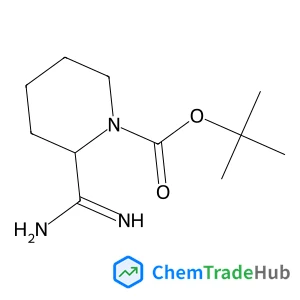
2-Methyl-2-propanyl 2-carbamimidoyl-1-piperidinecarboxylate
CAS Number:
1258640-98-0
Molecular Formula:
C11H21N3O2
![1,10-bis(3,5-dimethylphenyl)-12-hydroxy-4,5,6,7-tetrahydroiindeno[7,1-de:1',7'-fg][1,3,2]dioxaphosphocine 12-oxide structure](https://static.chemtradehub.com/structs/141/1412439-82-7-b9a9.webp "1,10-bis(3,5-dimethylphenyl)-12-hydroxy-4,5,6,7-tetrahydroiindeno[7,1-de:1',7'-fg][1,3,2]dioxaphosphocine 12-oxide structure")
1,10-bis(3,5-dimethylphenyl)-12-hydroxy-4,5,6,7-tetrahydroiindeno[7,1-de:1',7'-fg][1,3,2]dioxaphosphocine 12-oxide
CAS Number:
1412439-82-7
Molecular Formula:
C33H31O4P

Recommended Suppliers






Disclaimer
This page provides academic journal information for reference and research purposes only. We are not affiliated with any journal publishers and do not handle publication submissions. For publication-related inquiries, please contact the respective journal publishers directly.
If you notice any inaccuracies in the information displayed, please contact us at support@chemtradehub.com. We will promptly review and address your concerns.