












Dumbbell stanane: a large-gap quantum spin hall insulator
Literature Information
Publication Date
2015-05-21
DOI
10.1039/C5CP00046G
Impact Factor
3.676
Authors
Xin Chen, Linyang Li, Mingwen Zhao
View Original
Abstract
A quantum spin Hall (QSH) effect is quite promising for applications in spintronics and quantum computations, but at present, can only be achieved at ultralow temperatures. The determination of large-gap QSH insulators is critical to increase the operating temperature. By using first-principles calculations, we demonstrate that the stable hydrogenated stanene with a dumbbell-like structure (DB stanane) has large topological nontrivial band gaps of 312 meV (Γ point) and 160 meV for the bulk, characterized by a topological invariant of Z2 = 1 because of s–pxy band inversion. Helical gapless edge states appear in the nanoribbon structures with high Fermi velocity comparable to that of graphene. The nontrivial topological states are robust against the substrate effects. The realization of this material is a feasible solution for the applications of QSH effects at room temperature and can be beneficial in the fabrication of high-speed spintronics devices.
Related Literature
Mechanisms and models for water transport in reverse osmosis membranes: history, critical assessment, and recent developments
Hanqing Fan, Xinglin Lu, Menachem Elimelech
2023-10-27
Tutorial Review
DOI: 10.1039/D3CS00395G
Benzoyldiisopropylchlorosilane: a visible light photocleavable alcohol protecting group
Florian Lind, Kirill Markelov, Armido Studer
2023-10-25
Edge Article
DOI: 10.1039/D3SC04975B
Photocatalysis with atomically thin sheets
Yingying Fan, Jinguang Hu, Hyeon Suk Shin, Damien Voiry, Qingye Lu, Jimmy C. Yu
2023-10-25
Tutorial Review
DOI: 10.1039/D2CS00205A
Bioorthogonal chemistry for prodrug activation in vivo
Siyong Shen, Pengwei Sun, Zhi Gu, Yifei Bai, Xianglin Wang
2023-10-31
Review Article
DOI: 10.1039/D2CS00889K
Recent advances in point-of-care testing of COVID-19
Sungwoon Lee, Liyan Bi, Hao Chen, Dong Lin, Rongchao Mei, Yixuan Wu, Sang-Woo Joo, Jaebum Choo
2023-11-24
Review Article
DOI: 10.1039/D3CS00709J
Towards multimodal cellular imaging: optical and X-ray fluorescence
Marcus E. Graziotto, Clinton J. Kidman, Simon A. James, Hugh H. Harris
2023-11-01
Review Article
DOI: 10.1039/D3CS00509G
Synthesis and hybridization of CuInS2 nanocrystals for emerging applications
Xiuwen Xu
2023-11-10
Review Article
DOI: 10.1039/D3CS00611E
Reversible Cl/Cl− redox in a spinel Mn3O4 electrode
Sean K. Sandstrom, Qiuyao Li, Yiming Sui, Mason Lyons, Chun-Wai Chang, Rui Zhang, Heng Jiang, Mingliang Yu, David Hoang, William F. Stickle, Huolin L. Xin, Zhenxing Feng, Xiulei Ji
2023-10-24
Edge Article
DOI: 10.1039/D3SC04545E
Reticular framework materials for photocatalytic organic reactions
Ning-Yu Huang, Yu-Tao Zheng, Di Chen, Zhen-Yu Chen, Chao-Zhu Huang, Qiang Xu
2023-10-25
Review Article
DOI: 10.1039/D2CS00289B
You might also like
Compound Q&A
How should waste containing 6-Chloro-5-(2'-hydroxy-3'-methoxy-4-biphenylyl)-3-(3-methoxyphenyl)-1H-pyrrolo[3,2-d]pyrimidine-2,4(3H,5H)-dione (CAS: 1346607-05-3) be handled?
Waste containing 6-Chloro-5-(2'-hydroxy-3'-methoxy-4-biphenylyl)-3-(3-methoxyphe...
1346607-05-36-Chloro-5-(2'-hydro...
Compound Q&A
What are the main uses of (3alpha,5alpha)-3-Hydroxypregnane-11,20-dione (CAS: 23930-19-0)?
(3alpha,5alpha)-3-Hydroxypregnane-11,20-dione is primarily used in the pharmaceu...
23930-19-0(3alpha,5alpha)-3-Hy...
Compound Q&A
What is the market or research trend for 4-Amino-6-chloro-2-pyridinecarboxylic acid (CAS: 546141-56-4)?
The market for 4-Amino-6-chloro-2-pyridinecarboxylic acid (CAS: 546141-56-4) is ...
546141-56-44-Amino-6-chloro-2-p...
Compound Q&A
Are there alternatives to (2-Benzoylethyl)trimethylammonium chloride (CAS: 24472-88-6) in synthesis?
Alternatives to (2-Benzoylethyl)trimethylammonium chloride (CAS: 24472-88-6) in ...
24472-88-6(2-Benzoylethyl)trim...
Compound Q&A
Is N-[4-Nitro-3-(trifluoromethyl)phenyl]acetamide (CAS: 393-12-4) safe?
N-[4-Nitro-3-(trifluoromethyl)phenyl]acetamide (CAS: 393-12-4) is generally safe...
393-12-4N-[4-Nitro-3-(triflu...
Compound Q&A
Are there alternatives to [(4R,5R,6S)-5-hydroxy-10-imino-3,7-dioxa-1,9-diazatricyclo[6.4.0.02,6]dodeca-8,11-dien-4-yl]methyl dihydrogen phosphate (CAS: 39679-56-6) in synthesis?
Alternative reagents such as other phosphates or similar functional groups can b...
39679-56-6[(4R,5R,6S)-5-hydrox...
Compound Q&A
Are there alternatives to N,N'-Bis(3-aminopropyl)-1,3-propanediamine (CAS: 4605-14-5) in synthesis?
There are alternatives to N,N'-Bis(3-aminopropyl)-1,3-propanediamine (CAS: 4605-...
4605-14-5N,N'-Bis(3-aminoprop...
Compound Q&A
What precautions should be taken when handling Aluminium trihexadecanoate (CAS: 555-35-1)?
When handling Aluminium trihexadecanoate, it is important to use appropriate per...
555-35-1Aluminium trihexadec...
Compound Q&A
What is (1,1-Dioxido-3-oxo-1,2-benzothiazol-2(3H)-yl)acetic acid (CAS: 52188-11-1)?
(1,1-Dioxido-3-oxo-1,2-benzothiazol-2(3H)-yl)acetic acid is a chemical compound ...
52188-11-1(1,1-Dioxido-3-oxo-1...
Compound Q&A
Are there alternatives to 5,5-dimethyloxolan-2-one (CAS: 3123-97-5) in synthesis?
Several alternatives to 5,5-dimethyloxolan-2-one (CAS: 3123-97-5) can be used in...
3123-97-55,5-dimethyloxolan-2...
Source Journal
Physical Chemistry Chemical Physics

CiteScore:
5.5
Self-citation Rate:
10.3%
Articles per Year:
3036
Physical Chemistry Chemical Physics (PCCP) is an international journal co-owned by 19 physical chemistry and physics societies from around the world. This journal publishes original, cutting-edge research in physical chemistry, chemical physics and biophysical chemistry. To be suitable for publication in PCCP, articles must include significant innovation and/or insight into physical chemistry; this is the most important criterion that reviewers and Editors will judge against when evaluating submissions. The journal has a broad scope and welcomes contributions spanning experiment, theory, computation and data science. Topical coverage includes spectroscopy, dynamics, kinetics, statistical mechanics, thermodynamics, electrochemistry, catalysis, surface science, quantum mechanics, quantum computing and machine learning. Interdisciplinary research areas such as polymers and soft matter, materials, nanoscience, energy, surfaces/interfaces, and biophysical chemistry are welcomed if they demonstrate significant innovation and/or insight into physical chemistry. Joined experimental/theoretical studies are particularly appreciated when complementary and based on up-to-date approaches.
Recommended Compounds
![1-[6-(1H-Imidazol-1-yl)-3-pyridinyl]methanamine structure](https://static.chemtradehub.com/structs/914/914637-08-4-8825.webp "1-[6-(1H-Imidazol-1-yl)-3-pyridinyl]methanamine structure")
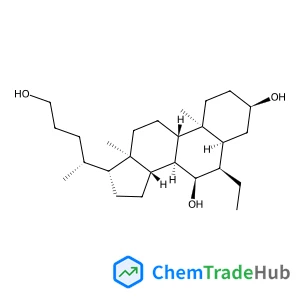
(3alpha,5beta,6alpha,7alpha)-6-Ethylcholane-3,7,24-triol
CAS Number:
1537866-49-1
Molecular Formula:
C26H46O3
Recommended Suppliers





Disclaimer
This page provides academic journal information for reference and research purposes only. We are not affiliated with any journal publishers and do not handle publication submissions. For publication-related inquiries, please contact the respective journal publishers directly.
If you notice any inaccuracies in the information displayed, please contact us at support@chemtradehub.com. We will promptly review and address your concerns.