












Can inorganic salts tune electronic properties of graphene quantum dots?
Literature Information
Publication Date
2015-05-29
DOI
10.1039/C5CP02083B
Impact Factor
3.676
Authors
Guilherme Colherinhas, Eudes Eterno Fileti, Vitaly V. Chaban
View Original
Abstract
Electronic properties of graphene quantum dots (GQDs) constitute a subject of intense scientific interest. Being smaller than 20 nm, GQDs contain confined excitons in all dimensions simultaneously. GQDs feature a non-zero band gap and luminescence on excitation. Tuning their electronic structure is an attractive goal with technological promise. In this work, we apply density functional theory to study the effect of neutral ionic clusters adsorbed on the GQD surface. We conclude that both the HOMO and the LUMO of GQDs are very sensitive to the presence of ions and to their distance from the GQD surface. However, the alteration of the band gap itself is modest, as opposed to the case of free ions (recent reports). Our work fosters progress in modulating electronic properties of nanoscale carbonaceous materials.
Related Literature
Enhanced CO2 reduction with hydrophobic cationic-ionomer layer-modified zero-gap MEA in acidic electrolyte
Hongtao Xie, Bangwei Deng, Lili Wang, Yizhao Li
2023-12-07
Communication
DOI: 10.1039/D3CC05277J
Unlocking novel therapies: cyclic peptide design for amyloidogenic targets through synergies of experiments, simulations, and machine learning
2023-12-07
Highlight
DOI: 10.1039/D3CC04630C
Pyrazolate vs. phenylethynide: direct exchange of the anionic bridging ligand in a cyclic trinuclear silver complex
Aleksei A. Titov, Andrey Yu. Chernyadyev, Ivan A. Godovikov, Oleg A. Filippov, Elena S. Shubina
2023-12-11
Communication
DOI: 10.1039/D3CC05659G
Deuteration of heptamethine cyanine dyes enhances their emission efficacy
Hana Janeková, Hannah C. Friedman, Marina Russo, Mergime Zyberaj, Tasnim Ahmed, Ash Sueh Hua, Anthony V. Sica, Justin R. Caram, Peter Štacko
2023-12-18
Communication
DOI: 10.1039/D3CC05153F
Phytic acid cross-linked and Hofmeister effect strengthened polyvinyl alcohol hydrogels for zinc ion storage
Haiou Wang, Yingqi Hu, Zhan Wang, Yingzhi Li, Weimin Yang, Hua Cheng, Zhouguang Lu
2023-12-06
Communication
DOI: 10.1039/D3CC05008D
Synthesis and isolation of a cyclic bis-vinyl germylene via a diazoolefin adduct of germylene dichloride
Teresa Eisner, Arseni Kostenko, Fiona J. Kiefer, Shigeyoshi Inoue
2023-12-07
Communication
DOI: 10.1039/D3CC05090D
Supramolecular nanosheet formation-induced photosensitisation mechanism change of Rose Bengal dye in aqueous media
Asuka Bunno, Aya Yoshikawa, Mamoru Fujitsuka, Tadashi Mori
2023-12-18
Communication
DOI: 10.1039/D3CC05731C
Cascade radical cyclization on 3-propargyl-2-alkenyl indole gives stereoselective access to cyclohepta[b]indole over carbazole
Santosh J. Gharpure, Sanyog Kumari
2023-11-27
Communication
DOI: 10.1039/D3CC05237K
Hollow cubic ternary PdCuB nanocage electrocatalysts with greatly enhanced catalytic performance for formic acid oxidation
Fu-Kai Yang, Yue Fang, Bing-Tao Gong, Chao Deng, Zhen-Bo Wang
2023-12-18
Communication
DOI: 10.1039/D3CC05183H
You might also like
Compound Q&A
How should waste containing 6-Chloro-5-(2'-hydroxy-3'-methoxy-4-biphenylyl)-3-(3-methoxyphenyl)-1H-pyrrolo[3,2-d]pyrimidine-2,4(3H,5H)-dione (CAS: 1346607-05-3) be handled?
Waste containing 6-Chloro-5-(2'-hydroxy-3'-methoxy-4-biphenylyl)-3-(3-methoxyphe...
1346607-05-36-Chloro-5-(2'-hydro...
Compound Q&A
What are the main uses of (3alpha,5alpha)-3-Hydroxypregnane-11,20-dione (CAS: 23930-19-0)?
(3alpha,5alpha)-3-Hydroxypregnane-11,20-dione is primarily used in the pharmaceu...
23930-19-0(3alpha,5alpha)-3-Hy...
Compound Q&A
What is the market or research trend for 4-Amino-6-chloro-2-pyridinecarboxylic acid (CAS: 546141-56-4)?
The market for 4-Amino-6-chloro-2-pyridinecarboxylic acid (CAS: 546141-56-4) is ...
546141-56-44-Amino-6-chloro-2-p...
Compound Q&A
Are there alternatives to (2-Benzoylethyl)trimethylammonium chloride (CAS: 24472-88-6) in synthesis?
Alternatives to (2-Benzoylethyl)trimethylammonium chloride (CAS: 24472-88-6) in ...
24472-88-6(2-Benzoylethyl)trim...
Compound Q&A
Is N-[4-Nitro-3-(trifluoromethyl)phenyl]acetamide (CAS: 393-12-4) safe?
N-[4-Nitro-3-(trifluoromethyl)phenyl]acetamide (CAS: 393-12-4) is generally safe...
393-12-4N-[4-Nitro-3-(triflu...
Compound Q&A
Are there alternatives to [(4R,5R,6S)-5-hydroxy-10-imino-3,7-dioxa-1,9-diazatricyclo[6.4.0.02,6]dodeca-8,11-dien-4-yl]methyl dihydrogen phosphate (CAS: 39679-56-6) in synthesis?
Alternative reagents such as other phosphates or similar functional groups can b...
39679-56-6[(4R,5R,6S)-5-hydrox...
Compound Q&A
Are there alternatives to N,N'-Bis(3-aminopropyl)-1,3-propanediamine (CAS: 4605-14-5) in synthesis?
There are alternatives to N,N'-Bis(3-aminopropyl)-1,3-propanediamine (CAS: 4605-...
4605-14-5N,N'-Bis(3-aminoprop...
Compound Q&A
What precautions should be taken when handling Aluminium trihexadecanoate (CAS: 555-35-1)?
When handling Aluminium trihexadecanoate, it is important to use appropriate per...
555-35-1Aluminium trihexadec...
Compound Q&A
What is (1,1-Dioxido-3-oxo-1,2-benzothiazol-2(3H)-yl)acetic acid (CAS: 52188-11-1)?
(1,1-Dioxido-3-oxo-1,2-benzothiazol-2(3H)-yl)acetic acid is a chemical compound ...
52188-11-1(1,1-Dioxido-3-oxo-1...
Compound Q&A
Are there alternatives to 5,5-dimethyloxolan-2-one (CAS: 3123-97-5) in synthesis?
Several alternatives to 5,5-dimethyloxolan-2-one (CAS: 3123-97-5) can be used in...
3123-97-55,5-dimethyloxolan-2...
Source Journal
Physical Chemistry Chemical Physics

CiteScore:
5.5
Self-citation Rate:
10.3%
Articles per Year:
3036
Physical Chemistry Chemical Physics (PCCP) is an international journal co-owned by 19 physical chemistry and physics societies from around the world. This journal publishes original, cutting-edge research in physical chemistry, chemical physics and biophysical chemistry. To be suitable for publication in PCCP, articles must include significant innovation and/or insight into physical chemistry; this is the most important criterion that reviewers and Editors will judge against when evaluating submissions. The journal has a broad scope and welcomes contributions spanning experiment, theory, computation and data science. Topical coverage includes spectroscopy, dynamics, kinetics, statistical mechanics, thermodynamics, electrochemistry, catalysis, surface science, quantum mechanics, quantum computing and machine learning. Interdisciplinary research areas such as polymers and soft matter, materials, nanoscience, energy, surfaces/interfaces, and biophysical chemistry are welcomed if they demonstrate significant innovation and/or insight into physical chemistry. Joined experimental/theoretical studies are particularly appreciated when complementary and based on up-to-date approaches.
Recommended Compounds
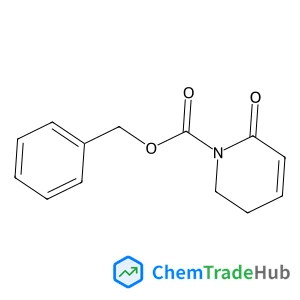
Benzyl 6-oxo-3,6-dihydro-1(2H)-pyridinecarboxylate
CAS Number:
725746-35-0
Molecular Formula:
C13H13NO3
![1-[6-(1H-Imidazol-1-yl)-3-pyridinyl]methanamine structure](https://static.chemtradehub.com/structs/914/914637-08-4-8825.webp "1-[6-(1H-Imidazol-1-yl)-3-pyridinyl]methanamine structure")
Recommended Suppliers






Disclaimer
This page provides academic journal information for reference and research purposes only. We are not affiliated with any journal publishers and do not handle publication submissions. For publication-related inquiries, please contact the respective journal publishers directly.
If you notice any inaccuracies in the information displayed, please contact us at support@chemtradehub.com. We will promptly review and address your concerns.