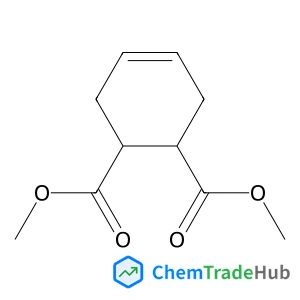
4-Cyclohexene-1,2-dicarboxylic acid, 1,2-dimethyl ester, (1R,2R)-rel-
CAS Number:
17673-68-6
Molecular Formula:
C10H14O4
Muhammad Faizan, Jiahao Xie, Ghulam Murtaza, Carlos Echeverría-Arrondo, Thamraa Alshahrani, Kailash Chandra Bhamu, Amel Laref, Iván Mora-Seró, Shah Haidar Khan
Owing to their emerging role in solar cell technology, lead halide perovskites have aroused significant research interest in the recent past. However, due to its obvious toxicity, looking for a potential alternative to lead is becoming one of the most important pursuits in present times. We present our work based on density functional theory (DFT) investigating lead free defect perovskites (Rb2Sn1−xTexI6 (0 ≤ x ≤ 1)). In particular, we explore the crystal structure, thermodynamic stability, electronic structure, and optical properties of Rb2Sn1−xTexI6 (0 ≤ x ≤ 1) as a function of increasing Te concentration. Our results show that the Sn–Te alloyed perovskites exhibit considerable stability, a suitable band gap, small effective mass, and excellent light absorption. Especially, Rb2Sn0.75Te0.25I6 and Rb2Sn0.50Te0.50I6 have a direct band gap of 1.35 and 1.44 eV, respectively, which is highly favorable for use in a single-junction photovoltaic cell. We hope that our work will arouse the interest of experimental as well as theoretical scientists for synthesizing new materials and/or exploring the Sn–Te mix as a potential substitute for lead in photovoltaic materials.
Jennifer M. Pringle
DOI: 10.1039/C2CP43267F
Yufan He, Maolin Lu, H. Peter Lu
DOI: 10.1039/C2CP42944F
Heng-Rui Liu, Ji-Hui Yang, Yue-Yu Zhang, Shiyou Chen, Aron Walsh, Hongjun Xiang, Xingao Gong, Su-Huai Wei
DOI: 10.1039/C2CP44484D
Bogdan Frecus, N. Arul Murugan, Olav Vahtras, Jacob Kongsted, Hans Ågren
DOI: 10.1039/C2CP43951D
Jakub Reiter, Sebastian Jeremias, Elie Paillard, Martin Winter, Stefano Passerini
DOI: 10.1039/C2CP43066E
Jean-Pierre Veder, Kunal Patel, Junqiao Lee, Muhammad Tanzirul Alam, Andrew Nelson, Roland De Marco
DOI: 10.1039/C2CP43333H
Gernot Engler, Kai Seefeld, Michael Schmitt, Jörg Tatchen, Oliver Grotkopp, Thomas J. J. Müller, Karl Kleinermanns
DOI: 10.1039/C2CP42859H
Angel A. J. Torriero, Jaka Sunarso, Maria Forsyth, Cristina Pozo-Gonzalo
DOI: 10.1039/C2CP43177G
Barbara L. Goodall, Ashley M. Robinson, Christa L. Brosseau
DOI: 10.1039/C2CP42596C
Yee-Fun Lim, Kui Yao, Francis Eng Hock Tay, Kar Heng Seah
DOI: 10.1039/C2CP43873A
6-(3-Fluorophenyl)picolinic acid is generally considered safe for laboratory use...
(3R)-3-Pyrrolidinol is used in the pharmaceutical industry as a precursor for dr...
When handling (4R,5R)-4,5-Diethoxycarbonyl-2,2-dimethyldioxolane (CAS: 59779-75-...
1-(6-Chloroimidazo[1,2-b]pyridazin-3-yl)ethanone is often synthesized via a mult...
The market for N-Ethyl-3,4-dimethylbenzylamine (CAS: 39180-83-1) remains steady,...
Tert-butyl 3-(pyrrolidin-1-yl)azetidine-1-carboxylate is a chemical compound wit...
1-Bromo-3-chloro-2,4-dimethoxybenzene (CAS: 1228956-93-1) falls under the classi...
The safety of 8-Bromo-2-methyl-3,4-dihydroisoquinolin-1(2H)-one (CAS: 1368622-07...
Benzyl [(3S)-2,6-dioxo-3-piperidinyl]carbamate is generally safe when handled wi...
1-{[4-(4,4,5,5-Tetramethyl-1,3,2-dioxaborolan-2-yl)phenyl]sulfonyl}pyrrolidine s...

Physical Chemistry Chemical Physics (PCCP) is an international journal co-owned by 19 physical chemistry and physics societies from around the world. This journal publishes original, cutting-edge research in physical chemistry, chemical physics and biophysical chemistry. To be suitable for publication in PCCP, articles must include significant innovation and/or insight into physical chemistry; this is the most important criterion that reviewers and Editors will judge against when evaluating submissions. The journal has a broad scope and welcomes contributions spanning experiment, theory, computation and data science. Topical coverage includes spectroscopy, dynamics, kinetics, statistical mechanics, thermodynamics, electrochemistry, catalysis, surface science, quantum mechanics, quantum computing and machine learning. Interdisciplinary research areas such as polymers and soft matter, materials, nanoscience, energy, surfaces/interfaces, and biophysical chemistry are welcomed if they demonstrate significant innovation and/or insight into physical chemistry. Joined experimental/theoretical studies are particularly appreciated when complementary and based on up-to-date approaches.
![2-[({[(2-Methyl-2-propanyl)oxy]carbonyl}amino)methyl]isonicotinic acid structure](https://static.chemtradehub.com/structs/473/473924-63-9-973b.webp "2-[({[(2-Methyl-2-propanyl)oxy]carbonyl}amino)methyl]isonicotinic acid structure")
![(2E)-4-[(1R,2S,8R,19S,21R)-14-Hydroxy-11-isopropenyl-8,23,23-trimethyl-5-(3-methyl-2-buten-1-yl)-16,20-dioxo-3,7,22-trioxaheptacyclo[17.4.1.1~8,12~.0~2,17~.0~2,21~.0~4,15~.0~6,13~]pentacosa-4(15),5,13
,17-tetraen-21-yl]-2-methyl-2-butenoic acid structure](https://static.chemtradehub.com/structs/173/173867-04-4-d2d3.webp "(2E)-4-[(1R,2S,8R,19S,21R)-14-Hydroxy-11-isopropenyl-8,23,23-trimethyl-5-(3-methyl-2-buten-1-yl)-16,20-dioxo-3,7,22-trioxaheptacyclo[17.4.1.1~8,12~.0~2,17~.0~2,21~.0~4,15~.0~6,13~]pentacosa-4(15),5,13
,17-tetraen-21-yl]-2-methyl-2-butenoic acid structure")