













Recent progress in the development and use of organic ionic plastic crystal electrolytes
Literature Information
Publication Date
2012-11-26
DOI
10.1039/C2CP43267F
Impact Factor
3.676
Authors
Jennifer M. Pringle
View Original
Abstract
Significant progress has been made recently in the development of Organic Ionic Plastic Crystals (OIPCs), a unique family of solid state electrolytes with applications in electrochemical devices such as lithium batteries and dye-sensitised solar cells. The negligible volatility of OIPCs renders them more suitable than molecular species for long-term device use, while the high thermal and electrochemical stability of many OIPCs fulfils an essential requirement for solid state electrolytes for many device applications. However, the complex mechanisms of conduction through these materials, both in their pure state and in the presence of a small amount of a second component (such as lithium salts to enable their use in lithium batteries) are still not fully understood. At the same time, the range of anions and cations utilised in the synthesis of plastic crystal phases continues to increase. This perspective concentrates on recent research into both fundamental and device-oriented aspects of these materials. Important fundamental understanding of the physical properties and transport mechanisms of different OIPCs has been achieved through use of techniques including variable temperature solid-state NMR and crystallographic analysis, as well as detailed molecular dynamics simulations. In parallel, the applicability of these materials as electrolytes for dye-sensitised solar cells and lithium batteries is being more widely demonstrated. The possibility of using OIPCs as solid state electrolytes for fuel cells is also discussed.
Related Literature
Hydrogen bonding assisted reversible-deactivation radical copolymerization of 4-vinylpyridine and styrene: a facile approach for adjusting polymerization behavior, polymer composition, etc.
Xiaoji Zhou, Wenxiang Wang, Huali Yu, Junfei Zhao, Zhengbiao Zhang, Xiulin Zhu
2013-04-08
Paper
DOI: 10.1039/C3PY00255A
Tunable thermo-, pH- and light-responsive copolymer micelles
Wen Guo, Hui Zou
2013-05-14
Communication
DOI: 10.1039/C3PY00478C
Polymerization of protecting-group-free peptidesvia ROMP
Jacquelin K. Kammeyer, Angela P. Blum, Lisa Adamiak, Nathan C. Gianneschi
2013-05-28
Communication
DOI: 10.1039/C3PY00526G
Post-polymerization modification of reactive polymers derived from vinylcyclopropane: 1. synthesis and thermo-responsive behaviour
Denis H. Seuyep N., Gerrit A. Luinstra, Patrick Theato
2013-02-18
Paper
DOI: 10.1039/C3PY00109A
Photo-responsive linear and cross-linked supramolecular polymers based on host–guest interactions
Shengyi Dong, Lingyan Gao, Jinying Li, Donghua Xu, Qizhong Zhou
2013-05-01
Paper
DOI: 10.1039/C3PY00494E
Helix oscillation of polyacetylene esters detected by dynamic 1H NMR, IR, and UV-vis methods in solution
Yoshiaki Yoshida, Yasuteru Mawatari, Asahi Motoshige, Ranko Motodshige, Toshifumi Hiraoki, Masayoshi Tabata
2013-03-18
Paper
DOI: 10.1039/C3PY00295K
Synthesis of donor–acceptor copolymers based on anthracene derivatives for polymer solar cells
Chunchen Liu, Wanzhu Cai, Xing Guan, Chunhui Duan, Qifan Xue, Lei Ying, Fei Huang, Yong Cao
2013-04-23
Paper
DOI: 10.1039/C3PY00430A
An efficient approach to prepare ether and amide-based self-catalyzed phthalonitrile resins
Michael R. Kessler, Zhou Heng, Javid Hussain Zaidi, Shahid Hameed
2013-03-21
Paper
DOI: 10.1039/C3PY00237C
The reactivity of N-vinylcarbazole in RAFT polymerization: trithiocarbonates deliver optimal control for the synthesis of homopolymers and block copolymers
Carlos Guerrero-Sanchez, Graeme Moad
2013-04-30
Paper
DOI: 10.1039/C3PY00487B
You might also like
Compound Q&A
Is 6-(3-Fluorophenyl)picolinic acid (CAS: 887982-40-3) safe?
6-(3-Fluorophenyl)picolinic acid is generally considered safe for laboratory use...
887982-40-36-(3-Fluorophenyl)pi...
Compound Q&A
What industries use (3R)-3-Pyrrolidinol (CAS: 2799-21-5)?
(3R)-3-Pyrrolidinol is used in the pharmaceutical industry as a precursor for dr...
2799-21-5(3R)-3-Pyrrolidinol
Compound Q&A
What precautions should be taken when handling (4R,5R)-4,5-Diethoxycarbonyl-2,2-dimethyldioxolane (CAS: 59779-75-8)?
When handling (4R,5R)-4,5-Diethoxycarbonyl-2,2-dimethyldioxolane (CAS: 59779-75-...
59779-75-8(4R,5R)-4,5-Diethoxy...
Compound Q&A
How is 1-(6-Chloroimidazo[1,2-b]pyridazin-3-yl)ethanone (CAS: 90734-71-7) typically synthesized?
1-(6-Chloroimidazo[1,2-b]pyridazin-3-yl)ethanone is often synthesized via a mult...
90734-71-71-(6-Chloroimidazo[1...
Compound Q&A
What is the market or research trend for N-Ethyl-3,4-dimethylbenzylamine (CAS: 39180-83-1)?
The market for N-Ethyl-3,4-dimethylbenzylamine (CAS: 39180-83-1) remains steady,...
39180-83-1N-Ethyl-3,4-dimethyl...
Compound Q&A
What is Tert-butyl 3-(pyrrolidin-1-yl)azetidine-1-carboxylate (CAS: 1019008-21-9)?
Tert-butyl 3-(pyrrolidin-1-yl)azetidine-1-carboxylate is a chemical compound wit...
1019008-21-9Tert-butyl 3-(pyrrol...
Compound Q&A
What regulatory guidelines apply to 1-Bromo-3-chloro-2,4-dimethoxybenzene (CAS: 1228956-93-1)?
1-Bromo-3-chloro-2,4-dimethoxybenzene (CAS: 1228956-93-1) falls under the classi...
1228956-93-11-Bromo-3-chloro-2,4...
Compound Q&A
Is 8-Bromo-2-methyl-3,4-dihydroisoquinolin-1(2H)-one (CAS: 1368622-07-4) safe?
The safety of 8-Bromo-2-methyl-3,4-dihydroisoquinolin-1(2H)-one (CAS: 1368622-07...
1368622-07-48-Bromo-2-methyl-3,4...
Compound Q&A
Is Benzyl [(3S)-2,6-dioxo-3-piperidinyl]carbamate (CAS: 22785-43-9) safe?
Benzyl [(3S)-2,6-dioxo-3-piperidinyl]carbamate is generally safe when handled wi...
22785-43-9Benzyl [(3S)-2,6-dio...
Compound Q&A
How should 1-{[4-(4,4,5,5-Tetramethyl-1,3,2-dioxaborolan-2-yl)phenyl]sulfonyl}pyrrolidine (CAS: 928657-21-0) be stored?
1-{[4-(4,4,5,5-Tetramethyl-1,3,2-dioxaborolan-2-yl)phenyl]sulfonyl}pyrrolidine s...
928657-21-01-{[4-(4,4,5,5-Tetra...
Source Journal
Physical Chemistry Chemical Physics

CiteScore:
5.5
Self-citation Rate:
10.3%
Articles per Year:
3036
Physical Chemistry Chemical Physics (PCCP) is an international journal co-owned by 19 physical chemistry and physics societies from around the world. This journal publishes original, cutting-edge research in physical chemistry, chemical physics and biophysical chemistry. To be suitable for publication in PCCP, articles must include significant innovation and/or insight into physical chemistry; this is the most important criterion that reviewers and Editors will judge against when evaluating submissions. The journal has a broad scope and welcomes contributions spanning experiment, theory, computation and data science. Topical coverage includes spectroscopy, dynamics, kinetics, statistical mechanics, thermodynamics, electrochemistry, catalysis, surface science, quantum mechanics, quantum computing and machine learning. Interdisciplinary research areas such as polymers and soft matter, materials, nanoscience, energy, surfaces/interfaces, and biophysical chemistry are welcomed if they demonstrate significant innovation and/or insight into physical chemistry. Joined experimental/theoretical studies are particularly appreciated when complementary and based on up-to-date approaches.
Recommended Compounds
![Benzyl spiro[indole-3,4'-piperidine]-1(2H)-carboxylate hydrochloride (1:1) structure](https://static.chemtradehub.com/structs/159/159635-46-8-8de0.webp "Benzyl spiro[indole-3,4'-piperidine]-1(2H)-carboxylate hydrochloride (1:1) structure")
Benzyl spiro[indole-3,4'-piperidine]-1(2H)-carboxylate hydrochloride (1:1)
CAS Number:
159635-46-8
Molecular Formula:
C20H23ClN2O2
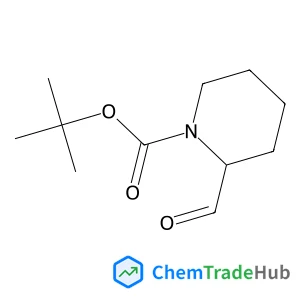
2-Methyl-2-propanyl (2R)-2-formyl-1-piperidinecarboxylate
CAS Number:
134526-69-5
Molecular Formula:
C11H19NO3

Recommended Suppliers






Disclaimer
This page provides academic journal information for reference and research purposes only. We are not affiliated with any journal publishers and do not handle publication submissions. For publication-related inquiries, please contact the respective journal publishers directly.
If you notice any inaccuracies in the information displayed, please contact us at support@chemtradehub.com. We will promptly review and address your concerns.