


Rapid survey of nuclear quadrupole resonance by broadband excitation with comb modulation and dual-mode acquisition
Literature Information
Publication Date
2020-10-28
DOI
10.1039/D0CP05309K
Impact Factor
3.676
Authors
Yuta Hibe, Yasuto Noda, K. Takegoshi, Kazuyuki Takeda
View Original
Abstract
Nuclear Quadrupole Resonance (NQR) provides spectra carrying information as to the electric-field gradient around nuclei with a spin quantum number I > 1/2 and offers helpful clues toward characterizing the electronic structure of materials of chemical interest. A major challenge in NQR is finding hitherto unknown resonance frequencies, which can scatter over a wide range, requiring time consuming repetitive measurements with stepwise frequency increments. Here, we report on an efficient, two-step NQR protocol by bringing rapid-scan and frequency-comb together. In the first step, wideband excitation and simultaneous signal acquisition, both realized by a non-adiabatic, frequency-swept hyperbolic secant (HS) pulse with comb modulation, offers a clue for the existence/absence of the resonance within the frequency region under investigation. When and only when the sign of the resonance has been detected, the second step is implemented to compensate the limited detection bandwidth of the first and to unambiguously determine the NQR frequency. We also study the spin dynamics under the comb-modulated HS pulse by numerical simulations, and experimentally demonstrate the feasibility of the proposed scheme, which is referred to as RApid-Scan with GApped excitation with Dual-mode Operation (RASGADO) NQR.
Recommended Journals

Journal of Peptide Science

Organic Process Research & Development

Journal of Saudi Chemical Society

Journal of Natural Medicines

Current Opinion in Colloid & Interface Science

Current Opinion in Solid State & Materials Science

Nature Medicine

Saudi Pharmaceutical Journal

Russian Journal of Coordination Chemistry

Russian Journal of Organic Chemistry
Related Literature
Gold nanoparticles become stable to cyanide etch when coated with hybrid lipid bilayers
Sarita Sitaula, Marilyn R. Mackiewicz, Scott M. Reed
2008-05-15
Communication
DOI: 10.1039/B801525B
Synthesis of allyl selenides by palladium-catalyzed decarboxylative coupling
Shelli R. Waetzig, Jon A. Tunge
2008-06-10
Communication
DOI: 10.1039/B806949B
Influence of a diene impurity on the molecular structure of phosphate-containing polymers with medical applications
Lisbeth Grøndahl, Edeline Wentrup-Byrne
2008-05-13
Communication
DOI: 10.1039/B803223H
Fluorination reactions in microreactors
Tomas Gustafsson, Ryan Gilmour, Peter H. Seeberger
2008-04-29
Communication
DOI: 10.1039/B803695K
Supported ionic liquidcatalyst (Pd-SILC) for highly efficient and recyclable Suzuki–Miyaura reaction
Hisahiro Hagiwara, Keon Hyeok Ko, Takashi Hoshi, Toshio Suzuki
2007-05-01
Communication
DOI: 10.1039/B704098A
The first urea azine molecule and its coordination to uranium in the first actinide guanidinate complexes
Claude Villiers, Pierre Thuéry, Michel Ephritikhine
2007-06-18
Communication
DOI: 10.1039/B705224C
Rescue of the streptomycin antibiotic activity by using streptidine as a “decoy acceptor” for the aminoglycoside-inactivating enzyme adenyl transferase
Montserrat Latorre, Pablo Peñalver, Julia Revuelta, Juan Luis Asensio, Eduardo García-Junceda, Agatha Bastida
2007-06-13
Communication
DOI: 10.1039/B704785A
Asymmetric multifunctional organocatalytic Michael addition of nitroalkanes to α,β-unsaturated ketones
Pengfei Li, Yongcan Wang, Jinxing Ye
2008-05-16
Communication
DOI: 10.1039/B804540B
Synthesis and self-assembly of propeller-shaped amphiphilic molecules
Kyung-Soo Moon, Eunji Lee, Myongsoo Lee
2008-04-23
Communication
DOI: 10.1039/B801108G
You might also like
Compound Q&A
Are there alternatives to 1-(4-Chlorophenyl)-N-hydroxymethanimine (CAS: 3848-36-0) in synthesis?
When considering alternatives to 1-(4-Chlorophenyl)-N-hydroxymethanimine (CAS: 3...
3848-36-01-(4-Chlorophenyl)-N...
Compound Q&A
How should (1R,9S,10S,12S,14E,16S,19R,20R,21S,22R)-3,9,21-Trihydroxy-5,10,12,14,16,20,22-heptamethyl-23,24-dioxatetracyclo[17.3.1.1~6,9~.0~2,7~]tetracosa-2,5,7,14-tetraen-4-one (CAS: 183202-73-5) be stored?
This compound should be stored in a cool, dry place away from direct sunlight. I...
183202-73-5(1R,9S,10S,12S,14E,1...
Compound Q&A
How is 3-(4-Bromophenyl)-5-(2-fluorophenyl)-1,2,4-oxadiazole (CAS: 419553-16-5) typically synthesized?
3-(4-Bromophenyl)-5-(2-fluorophenyl)-1,2,4-oxadiazole is synthesized through a m...
419553-16-53-(4-Bromophenyl)-5-...
Compound Q&A
How is 5-Chloro-2-(4-chlorophenyl)-4-methyl-6-[3-(1-piperidinyl)propoxy]pyrimidine (CAS: 1639220-19-1) typically synthesized?
5-Chloro-2-(4-chlorophenyl)-4-methyl-6-[3-(1-piperidinyl)propoxy]pyrimidine (CAS...
1639220-19-15-Chloro-2-(4-chloro...
Compound Q&A
What industries use 2-Chloro-4-(difluoromethoxy)pyridine (CAS: 1206978-15-5)?
2-Chloro-4-(difluoromethoxy)pyridine is used in the pharmaceutical industry for ...
1206978-15-52-Chloro-4-(difluoro...
Compound Q&A
What regulatory guidelines apply to 3-Chloro-6-methylpyridazine (CAS: 1121-79-5)?
3-Chloro-6-methylpyridazine (CAS: 1121-79-5) is classified under the Globally Ha...
1121-79-53-Chloro-6-methylpyr...
Compound Q&A
Are there alternatives to Methyl 4,5-dimethyl-2-nitrobenzoate in synthesis?
Several alternatives can be used in the synthesis of Methyl 4,5-dimethyl-2-nitro...
90922-74-0Methyl 4,5-dimethyl-...
Compound Q&A
Are there alternatives to (2E,2'E)-3,3'-(1,4-Phenylene)bisacrylaldehyde in synthesis?
Alternatives to (2E,2'E)-3,3'-(1,4-Phenylene)bisacrylaldehyde include other acry...
63405-68-5(2E,2'E)-3,3'-(1,4-P...
Compound Q&A
What is 3-Amino-5-chloropyridin-2-ol hydrochloride (CAS: 1261906-29-9)?
3-Amino-5-chloropyridin-2-ol hydrochloride is an organic compound with the CAS n...
1261906-29-93-Amino-5-chloropyri...
Compound Q&A
What precautions should be taken when handling 6,7-Difluoro-2,3-dihydro-4H-chromen-4-one (CAS: 1092349-93-3)?
When handling 6,7-Difluoro-2,3-dihydro-4H-chromen-4-one, it is essential to wear...
1092349-93-36,7-Difluoro-2,3-dih...
Source Journal
Physical Chemistry Chemical Physics

CiteScore:
5.5
Self-citation Rate:
10.3%
Articles per Year:
3036
Physical Chemistry Chemical Physics (PCCP) is an international journal co-owned by 19 physical chemistry and physics societies from around the world. This journal publishes original, cutting-edge research in physical chemistry, chemical physics and biophysical chemistry. To be suitable for publication in PCCP, articles must include significant innovation and/or insight into physical chemistry; this is the most important criterion that reviewers and Editors will judge against when evaluating submissions. The journal has a broad scope and welcomes contributions spanning experiment, theory, computation and data science. Topical coverage includes spectroscopy, dynamics, kinetics, statistical mechanics, thermodynamics, electrochemistry, catalysis, surface science, quantum mechanics, quantum computing and machine learning. Interdisciplinary research areas such as polymers and soft matter, materials, nanoscience, energy, surfaces/interfaces, and biophysical chemistry are welcomed if they demonstrate significant innovation and/or insight into physical chemistry. Joined experimental/theoretical studies are particularly appreciated when complementary and based on up-to-date approaches.
Recommended Compounds
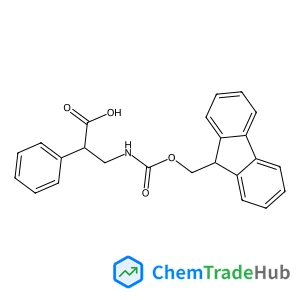
(S)-3-((((9H-Fluoren-9-yl)methoxy)carbonyl)amino)-2-phenylpropanoic acid
CAS Number:
1217663-60-9
Molecular Formula:
C24H21NO4
Recommended Suppliers



Disclaimer
This page provides academic journal information for reference and research purposes only. We are not affiliated with any journal publishers and do not handle publication submissions. For publication-related inquiries, please contact the respective journal publishers directly.
If you notice any inaccuracies in the information displayed, please contact us at support@chemtradehub.com. We will promptly review and address your concerns.