


Supported ionic liquidcatalyst (Pd-SILC) for highly efficient and recyclable Suzuki–Miyaura reaction
Literature Information
Publication Date
2007-05-01
DOI
10.1039/B704098A
Impact Factor
6.222
Authors
Hisahiro Hagiwara, Keon Hyeok Ko, Takashi Hoshi, Toshio Suzuki
View Original
Abstract
Highly efficient Suzuki–Miyaura coupling of aryl halides with arylboronic acid was realized in 50% aqueous ethanol at room temperature employing Pd(OAc)2 immobilized in diethylaminopropylated (NDEAP) alumina pores with the aid of [bmim]PF6, which enabled recycle use up to five times in 95% average yield and turnover number of two million.
Recommended Journals

Environmental Toxicology and Pharmacology

Mini-Reviews in Medicinal Chemistry

Photochemical & Photobiological Sciences

Green Chemistry

Journal of Medical Biochemistry

Physical Chemistry Chemical Physics

European Journal of Organic Chemistry

Angewandte Chemie International Edition

Coloration Technology

Lab on a Chip
Related Literature
Cool white, persistent room-temperature phosphorescence in carbon dots embedded in a silica gel matrix
Julin Joseph, Aji A. Anappara
2017-05-31
Paper
DOI: 10.1039/C7CP02731A
The role of acid–base equilibria in formal hydrogen transfer reactions: tryptophan radical repair by uric acid as a paradigmatic case
Leonardo Muñoz-Rugeles, Annia Galano, Juan Raúl Alvarez-Idaboy
2017-05-16
Paper
DOI: 10.1039/C7CP01557G
Multi-level quantum mechanics theories and molecular mechanics study of the double-inversion mechanism of the F− + CH3I reaction in aqueous solution
Peng Liu, Jingxue Zhang, Dunyou Wang
2017-05-25
Paper
DOI: 10.1039/C7CP02313H
Specific DNA sequences allosterically enhance protein–protein interaction in a transcription factor through modulation of protein dynamics: implications for specificity of gene regulation
Abhishek Mazumder, Subrata Batabyal, Manas Mondal, Tanumoy Mondol, Susobhan Choudhury, Raka Ghosh, Tanaya Chatterjee, Dhananjay Bhattacharyya, Samir Kumar Pal, Siddhartha Roy
2017-05-26
Paper
DOI: 10.1039/C7CP01193H
Preparation and characterization of a calcium–phosphate–silicon coating on a Mg–Zn–Ca alloy via two-step micro-arc oxidation
Jinhe Dou, Yang Chen, Yiming Chi, Huancai Li, Guochao Gu, Chuanzhong Chen
2017-05-19
Paper
DOI: 10.1039/C7CP02672B
Rates and equilibrium constants of the ligand-induced conformational transition of an HCN ion channel protein domain determined by DEER spectroscopy
Alberto Collauto, Royi Kaufmann, William N. Zagotta, Daniella Goldfarb
2017-05-26
Paper
DOI: 10.1039/C7CP01925D
Competitive C–C and C–H bond scission in the ethanol oxidation reaction on Cu(100) and the effect of an alkaline environment
Chuan-Jian Zhong
2017-05-17
Paper
DOI: 10.1039/C7CP01445G
Attraction induced frictionless sliding of rare gas monolayer on metallic surfaces: an efficient strategy for superlubricity
Yanning Zhang, Zhibin Lu, Qunji Xue
2017-03-22
Paper
DOI: 10.1039/C6CP08857K
On the structures, spin states, and optical properties of titanium, platinum, and iron azacalixphyrins: a DFT study
Gabriel Marchand, Olivier Siri
2017-05-22
Paper
DOI: 10.1039/C7CP02600E
You might also like
Compound Q&A
Are there alternatives to 1-(4-Chlorophenyl)-N-hydroxymethanimine (CAS: 3848-36-0) in synthesis?
When considering alternatives to 1-(4-Chlorophenyl)-N-hydroxymethanimine (CAS: 3...
3848-36-01-(4-Chlorophenyl)-N...
Compound Q&A
How should (1R,9S,10S,12S,14E,16S,19R,20R,21S,22R)-3,9,21-Trihydroxy-5,10,12,14,16,20,22-heptamethyl-23,24-dioxatetracyclo[17.3.1.1~6,9~.0~2,7~]tetracosa-2,5,7,14-tetraen-4-one (CAS: 183202-73-5) be stored?
This compound should be stored in a cool, dry place away from direct sunlight. I...
183202-73-5(1R,9S,10S,12S,14E,1...
Compound Q&A
How is 3-(4-Bromophenyl)-5-(2-fluorophenyl)-1,2,4-oxadiazole (CAS: 419553-16-5) typically synthesized?
3-(4-Bromophenyl)-5-(2-fluorophenyl)-1,2,4-oxadiazole is synthesized through a m...
419553-16-53-(4-Bromophenyl)-5-...
Compound Q&A
How is 5-Chloro-2-(4-chlorophenyl)-4-methyl-6-[3-(1-piperidinyl)propoxy]pyrimidine (CAS: 1639220-19-1) typically synthesized?
5-Chloro-2-(4-chlorophenyl)-4-methyl-6-[3-(1-piperidinyl)propoxy]pyrimidine (CAS...
1639220-19-15-Chloro-2-(4-chloro...
Compound Q&A
What industries use 2-Chloro-4-(difluoromethoxy)pyridine (CAS: 1206978-15-5)?
2-Chloro-4-(difluoromethoxy)pyridine is used in the pharmaceutical industry for ...
1206978-15-52-Chloro-4-(difluoro...
Compound Q&A
What regulatory guidelines apply to 3-Chloro-6-methylpyridazine (CAS: 1121-79-5)?
3-Chloro-6-methylpyridazine (CAS: 1121-79-5) is classified under the Globally Ha...
1121-79-53-Chloro-6-methylpyr...
Compound Q&A
Are there alternatives to Methyl 4,5-dimethyl-2-nitrobenzoate in synthesis?
Several alternatives can be used in the synthesis of Methyl 4,5-dimethyl-2-nitro...
90922-74-0Methyl 4,5-dimethyl-...
Compound Q&A
Are there alternatives to (2E,2'E)-3,3'-(1,4-Phenylene)bisacrylaldehyde in synthesis?
Alternatives to (2E,2'E)-3,3'-(1,4-Phenylene)bisacrylaldehyde include other acry...
63405-68-5(2E,2'E)-3,3'-(1,4-P...
Compound Q&A
What is 3-Amino-5-chloropyridin-2-ol hydrochloride (CAS: 1261906-29-9)?
3-Amino-5-chloropyridin-2-ol hydrochloride is an organic compound with the CAS n...
1261906-29-93-Amino-5-chloropyri...
Compound Q&A
What precautions should be taken when handling 6,7-Difluoro-2,3-dihydro-4H-chromen-4-one (CAS: 1092349-93-3)?
When handling 6,7-Difluoro-2,3-dihydro-4H-chromen-4-one, it is essential to wear...
1092349-93-36,7-Difluoro-2,3-dih...
Source Journal
Chemical Communications

CiteScore:
8.6
Self-citation Rate:
4.7%
Articles per Year:
2458
ChemComm publishes urgent research which is of outstanding significance and interest to experts in the field, while also appealing to the journal’s broad chemistry readership. Our communication format is ideally suited to short, urgent studies that are of such importance that they require accelerated publication. Our scope covers all topics in chemistry, and research at the interface of chemistry and other disciplines (such as materials science, nanoscience, physics, engineering and biology) where there is a significant novelty in the chemistry aspects. Major topic areas covered include: Analytical Chemistry Catalysis Chemical Biology and medicinal chemistry Computational Chemistry and Machine Learning Energy and sustainable chemistry Environmental Chemistry Green Chemistry Inorganic Chemistry Materials Chemistry Nanoscience Organic Chemistry Physical Chemistry Polymer Chemistry Supramolecular Chemistry
Recommended Compounds
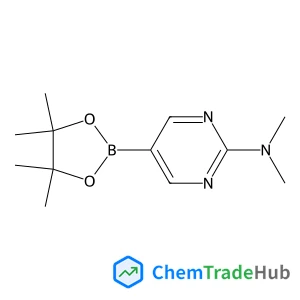
N,N-Dimethyl-5-(4,4,5,5-tetramethyl-1,3,2-dioxaborolan-2-yl)-2-pyrimidinamine
CAS Number:
1032759-30-0
Molecular Formula:
C12H20BN3O2
Recommended Suppliers







Disclaimer
This page provides academic journal information for reference and research purposes only. We are not affiliated with any journal publishers and do not handle publication submissions. For publication-related inquiries, please contact the respective journal publishers directly.
If you notice any inaccuracies in the information displayed, please contact us at support@chemtradehub.com. We will promptly review and address your concerns.