













Collaboration between a Pt-dimer and neighboring Co–Pd atoms triggers efficient pathways for oxygen reduction reaction
Literature Information
Publication Date
2020-12-09
DOI
10.1039/D0CP05205A
Impact Factor
3.676
Authors
Sheng Dai, Dinesh Bhalothia, Jyh-Pin Chou
View Original
Abstract
The development of electrocatalysts with reconcilable balance between the cost and performance in oxygen reduction reaction (ORR) is an imperative task for the widespread adoption of fuel cell technology. In this study, we proposed a unique model of diatomic Pt-cluster (Pt-dimer) in the topmost layer of the Co/Pd bimetallic slab (Co@Pd–Pt2) for mimicking the Cocore@Pdshell nanocatalysts (NCs) surface and systematically investigating its local-regional collaboration pathways in ORR by density functional theory (DFT). The results demonstrate that the Pt-dimer produces local differentiation from both ligand and geometric effects on the Co@Pd surface, which forms adsorption energy (Eads) gradients for relocating the ORR-adsorbates. Our calculations for Eads-variations of ORR-species, reaction coordinates, and intraparticle charge injection propose and confirm a novel local synergetic collaboration around the Pt-dimer in the Co@Pd–Pt2 system with the best-performing ORR behavior compared with all reference models. With proper selection of the composition in intraparticle components, the proposed DFT assessments could be adopted for developing economical and high-performance catalysts in various heterogeneous reactions.
Recommended Journals
Related Literature
Palladium-catalysed N-annulation routes to indoles: the synthesis of indoles with sterically demanding N-substituents, including demethylasterriquinone A1
Anthony J. Fletcher, Matthew N. Bax, Michael C. Willis
2007-09-03
Communication
DOI: 10.1039/B712227F
Enhancing the reactivity of 1,2,3-triazoles in “click” macrocycles by face-to-face dibenzylammonium ion binding
Yi Liu, Xiyun Zhang, Liana M. Klivansky
2007-10-23
Communication
DOI: 10.1039/B711505A
Asymmetric total synthesis of martinelline and martinellic acid
Shuhei Ikeda, Masatoshi Shibuya, Yoshiharu Iwabuchi
2006-11-01
Communication
DOI: 10.1039/B611121A
A highly water-soluble C60–NVP copolymer: a potential material for photodynamic therapy
Yuko Iwamoto, Yoko Yamakoshi
2006-11-03
Communication
DOI: 10.1039/B614305A
Apollony photonic sponge based photoelectrochemical solar cells
Fernando Ramiro-Manzano, Pedro Atienzar, Isabelle Rodriguez, Francisco Meseguer, Hermenegildo Garcia, Avelino Corma
2006-10-27
Communication
DOI: 10.1039/B613422J
Fluorescent CXCR4 chemokine receptor antagonists: metal activated binding
Abid Khan, Jon D. Silversides, Leigh Madden, John Greenman, Stephen J. Archibald
2006-12-04
Communication
DOI: 10.1039/B614557D
Crystallization-driven constitutional changes of dynamic polymers in response to neat/solution conditions
Cheuk-Fai Chow, Jean-Marie Lehn
2007-10-04
Communication
DOI: 10.1039/B713413D
Stereoselective formation of a single-stranded helicate: Structure of a bis(palladium-allyl)quaterpyridine complex and its use in catalytic enantioselective allylic substitution
Hoi-Lun Kwong, Ho-Lun Yeung, Wing-Sze Lee, Wing-Tak Wong
2006-10-04
Communication
DOI: 10.1039/B608481H
Structural elucidation of a nickel boryl complex. A recyclable borylation Ni(ii) reagent of bromobenzene
Debashis Adhikari, John C. Huffman, Daniel J. Mindiola
2007-09-11
Communication
DOI: 10.1039/B709832D
Water soluble distyryl-boradiazaindacenes as efficient photosensitizers for photodynamic therapy
Serdar Atilgan, Zeynep Ekmekci, A. Lale Dogan, Dicle Guc, Engin U. Akkaya
2006-10-06
Communication
DOI: 10.1039/B612347C
You might also like
Compound Q&A
How is Ethyl 4-chlorothieno[2,3-b]pyridine-5-carboxylate (CAS: 59713-58-5) typically synthesized?
Ethyl 4-chlorothieno[2,3-b]pyridine-5-carboxylate (CAS: 59713-58-5) can be synth...
59713-58-5Ethyl 4-chlorothieno...
Compound Q&A
What regulatory guidelines apply to 5-Methyl-1H-indole-3-carbaldehyde (CAS: 52562-50-2)?
5-Methyl-1H-indole-3-carbaldehyde (CAS: 52562-50-2) is subject to various regula...
52562-50-25-Methyl-1H-indole-3...
Compound Q&A
What are the physical and chemical properties of (1,3-Dimethyl-2,4-dioxo-1,2,3,4-tetrahydro-5-pyrimidinyl)boronic acid (CAS: 223418-73-3)?
(1,3-Dimethyl-2,4-dioxo-1,2,3,4-tetrahydro-5-pyrimidinyl)boronic acid is a white...
223418-73-3(1,3-Dimethyl-2,4-di...
Compound Q&A
How should waste containing Sulfocostunolide A (CAS: 1016983-51-9) be handled?
Waste containing Sulfocostunolide A (CAS: 1016983-51-9) should be handled with c...
1016983-51-9Sulfocostunolide A
Compound Q&A
What precautions should be taken when handling Murraxocin (CAS: 88478-44-8)?
When handling Murraxocin (CAS: 88478-44-8), ensure proper personal protective eq...
88478-44-8Murraxocin
Compound Q&A
What are the physical and chemical properties of Formvar (CAS: 63148-64-1)?
Formvar (CAS: 63148-64-1) is an alkyd resin characterized by a high molecular we...
63148-64-1Formvar(R)
Compound Q&A
Is (S)-4-benzyl-2-((benzyloxy)methyl)morpholine (CAS: 205242-66-6) safe?
(S)-4-benzyl-2-((benzyloxy)methyl)morpholine is generally safe when handled with...
205242-66-6(S)-4-benzyl-2-((ben...
Compound Q&A
What industries use Methyl 1-(5-bromo-2-pyrimidinyl)cyclopropanecarboxylate (CAS: 1447607-69-3)?
Methyl 1-(5-bromo-2-pyrimidinyl)cyclopropanecarboxylate (CAS: 1447607-69-3) is p...
1447607-69-3Methyl 1-(5-bromo-2-...
Compound Q&A
Is 2-Methyl-1-phenyl-1-propanamine hydrochloride (CAS: 24290-47-9) safe?
2-Methyl-1-phenyl-1-propanamine hydrochloride (CAS: 24290-47-9) is generally con...
24290-47-92-Methyl-1-phenyl-1-...
Compound Q&A
How is 3-(4-Bromophenyl)-2-methylpropanoic acid (CAS: 66735-01-1) typically synthesized?
3-(4-Bromophenyl)-2-methylpropanoic acid is synthesized through a multi-step pro...
66735-01-13-(4-Bromophenyl)-2-...
Source Journal
Physical Chemistry Chemical Physics

CiteScore:
5.5
Self-citation Rate:
10.3%
Articles per Year:
3036
Physical Chemistry Chemical Physics (PCCP) is an international journal co-owned by 19 physical chemistry and physics societies from around the world. This journal publishes original, cutting-edge research in physical chemistry, chemical physics and biophysical chemistry. To be suitable for publication in PCCP, articles must include significant innovation and/or insight into physical chemistry; this is the most important criterion that reviewers and Editors will judge against when evaluating submissions. The journal has a broad scope and welcomes contributions spanning experiment, theory, computation and data science. Topical coverage includes spectroscopy, dynamics, kinetics, statistical mechanics, thermodynamics, electrochemistry, catalysis, surface science, quantum mechanics, quantum computing and machine learning. Interdisciplinary research areas such as polymers and soft matter, materials, nanoscience, energy, surfaces/interfaces, and biophysical chemistry are welcomed if they demonstrate significant innovation and/or insight into physical chemistry. Joined experimental/theoretical studies are particularly appreciated when complementary and based on up-to-date approaches.
Recommended Compounds
![2-(Methylsulfonyl)-2,4,5,6-tetrahydropyrrolo[3,4-c]pyrazole structure](https://static.chemtradehub.com/structs/122/1226781-80-1-09d5.webp "2-(Methylsulfonyl)-2,4,5,6-tetrahydropyrrolo[3,4-c]pyrazole structure")
2-(Methylsulfonyl)-2,4,5,6-tetrahydropyrrolo[3,4-c]pyrazole
CAS Number:
1226781-80-1
Molecular Formula:
C6H9N3O2S
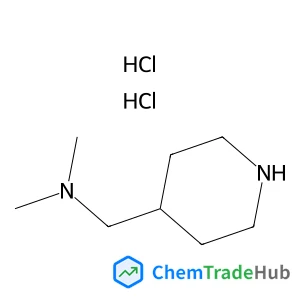
N,N-dimethyl(piperidin-4-yl)methanamine hydrochloride
CAS Number:
172281-72-0
Molecular Formula:
C8H20Cl2N2
![2-Methyl-2-propanyl 1,6-diazaspiro[3.4]octane-6-carboxylate structure](https://static.chemtradehub.com/structs/115/1158749-79-1-81ee.webp "2-Methyl-2-propanyl 1,6-diazaspiro[3.4]octane-6-carboxylate structure")
2-Methyl-2-propanyl 1,6-diazaspiro[3.4]octane-6-carboxylate
CAS Number:
1158749-79-1
Molecular Formula:
C11H20N2O2
Recommended Suppliers





Disclaimer
This page provides academic journal information for reference and research purposes only. We are not affiliated with any journal publishers and do not handle publication submissions. For publication-related inquiries, please contact the respective journal publishers directly.
If you notice any inaccuracies in the information displayed, please contact us at support@chemtradehub.com. We will promptly review and address your concerns.