












Palladium-catalysed N-annulation routes to indoles: the synthesis of indoles with sterically demanding N-substituents, including demethylasterriquinone A1
Literature Information
Publication Date
2007-09-03
DOI
10.1039/B712227F
Impact Factor
6.222
Authors
Anthony J. Fletcher, Matthew N. Bax, Michael C. Willis
View Original
Abstract
Tandem palladium-catalysed aryl and alkenyl C–N bond formation allows the synthesis of a variety of indoles bearing sterically demanding N-substituents, including the natural product demethylasterriquinone A1.
Related Literature
Hybrid zinc oxide/graphene electrodes for depleted heterojunction colloidal quantum-dot solar cells
Hossein Aashuri, Zhiyong Fan
2015-08-20
Paper
DOI: 10.1039/C5CP03571F
A high-spin organic diradical as a spin filter
Suranjan Shil, Debojit Bhattacharya, Anirban Misra, Douglas J. Klein
2015-08-10
Paper
DOI: 10.1039/C5CP03193A
Electrochemical properties of a thermally expanded magnetic graphene composite with a conductive polymer
Mahmoud M. M. Ahmed
2016-03-14
Paper
DOI: 10.1039/C6CP00311G
Theoretical kinetic study for methyl levulinate: oxidation by OH and CH3 radicals and further unimolecular decomposition pathways
A. M. Zaras, M. Szőri, P. Dagaut
2015-08-14
Paper
DOI: 10.1039/C5CP04194E
Atmospheric fates of Criegee intermediates in the ozonolysis of isoprene
Tran B. Nguyen, Geoffrey S. Tyndall, John D. Crounse, Alexander P. Teng, Kelvin H. Bates, Rebecca H. Schwantes, Matthew M. Coggon, Li Zhang, Philip Feiner, David O. Milller, Kate M. Skog, Jean C. Rivera-Rios, Matthew Dorris, Abigail Koss, Steven S. Brown, Joost A. de Gouw, William H. Brune, Frank N. Keutsch
2016-03-16
Paper
DOI: 10.1039/C6CP00053C
Fluorescent aliphatic hyperbranched polyether: chromophore-free and without any N and P atoms
2016-01-15
Communication
DOI: 10.1039/C5CP07134H
Lysozyme adsorption at a silica surface using simulation and experiment: effects of pH on protein layer structure
Karina Kubiak-Ossowska, Monika Cwieka, Agnieszka Kaczynska, Barbara Jachimska, Paul A. Mulheran
2015-08-24
Paper
DOI: 10.1039/C5CP03910J
Nanometric distance measurements between Mn(ii)DOTA centers
H. Y. Vincent Ching, Leandro C. Tabares, Sun Un
2015-08-10
Paper
DOI: 10.1039/C5CP03487F
You might also like
Compound Q&A
What is 1-(2,4,6-Trifluorophenyl)ethanol (CAS: 1250113-83-7)?
1-(2,4,6-Trifluorophenyl)ethanol is an organic compound with the CAS number 1250...
1250113-83-71-(2,4,6-Trifluoroph...
Compound Q&A
Is 1-(2,4-Dimethoxybenzyl)-4-(hydroxymethyl)-2-pyrrolidinone (CAS: 919111-34-5) safe?
1-(2,4-Dimethoxybenzyl)-4-(hydroxymethyl)-2-pyrrolidinone (CAS: 919111-34-5) is ...
919111-34-51-(2,4-Dimethoxybenz...
Compound Q&A
What are the physical and chemical properties of (7S,15R)-6β,15-Diacetoxy-7α,20-epoxy-7-hydroxykaura-2,16-dien-1-one (CAS: 51419-51-3)?
(7S,15R)-6β,15-Diacetoxy-7α,20-epoxy-7-hydroxykaura-2,16-dien-1-one is a crystal...
51419-51-3(7S,15R)-6β,15-Diace...
Compound Q&A
What regulatory guidelines apply to rac-ethyl (1r,4r)-4-hydroxycyclohexane-1-carboxylate, trans (CAS: 3618-04-0)?
The compound rac-ethyl (1r,4r)-4-hydroxycyclohexane-1-carboxylate, trans (CAS: 3...
3618-04-0rac-ethyl (1r,4r)-4-...
Compound Q&A
What is the market or research trend for 2-(2,4-Difluorophenoxy)-3-nitropyridine (CAS: 175135-62-3)?
The market for 2-(2,4-Difluorophenoxy)-3-nitropyridine (CAS: 175135-62-3) is cur...
175135-62-32-(2,4-Difluoropheno...
Compound Q&A
What are the main uses of 6-Diazo-5-oxo-L-norleucine (CAS: 157-03-9)?
The main uses of 6-Diazo-5-oxo-L-norleucine (CAS: 157-03-9) include research in ...
157-03-96-Diazo-5-oxo-L-norl...
Compound Q&A
What precautions should be taken when handling 2-Aminoethyl-mono-amide-DOTA-tris(tBu ester) (CAS: 173308-19-5)?
When handling 2-Aminoethyl-mono-amide-DOTA-tris(tBu ester) (CAS: 173308-19-5), i...
173308-19-52-Aminoethyl-mono-am...
Compound Q&A
How is 5-Methylimidazo[1,2-a]pyridine-3-carbaldehyde (CAS: 178488-37-4) typically synthesized?
5-Methylimidazo[1,2-a]pyridine-3-carbaldehyde (CAS: 178488-37-4) can be synthesi...
178488-37-45-Methylimidazo[1,2-...
Compound Q&A
Are there alternatives to 2,4,6-Trihydroxyisophthalaldehyde (CAS: 4396-13-8) in synthesis?
There are alternative reagents that can be used in the synthesis of 2,4,6-Trihyd...
4396-13-82,4,6-Trihydroxyisop...
Compound Q&A
What is (2Z)-3-(5-Fluoro-1H-indol-3-yl)-2-sulfanylacrylic acid (CAS: 179461-52-0)?
(2Z)-3-(5-Fluoro-1H-indol-3-yl)-2-sulfanylacrylic acid is a chemical compound wi...
179461-52-0(2Z)-3-(5-Fluoro-1H-...
Source Journal
Chemical Communications

CiteScore:
8.6
Self-citation Rate:
4.7%
Articles per Year:
2458
ChemComm publishes urgent research which is of outstanding significance and interest to experts in the field, while also appealing to the journal’s broad chemistry readership. Our communication format is ideally suited to short, urgent studies that are of such importance that they require accelerated publication. Our scope covers all topics in chemistry, and research at the interface of chemistry and other disciplines (such as materials science, nanoscience, physics, engineering and biology) where there is a significant novelty in the chemistry aspects. Major topic areas covered include: Analytical Chemistry Catalysis Chemical Biology and medicinal chemistry Computational Chemistry and Machine Learning Energy and sustainable chemistry Environmental Chemistry Green Chemistry Inorganic Chemistry Materials Chemistry Nanoscience Organic Chemistry Physical Chemistry Polymer Chemistry Supramolecular Chemistry
Recommended Compounds
![4-[(1-Methyl-1H-pyrrol-2-yl)methylene]-1,3(2H,4H)-isoquinolinedione structure](https://static.chemtradehub.com/structs/110/1104546-89-5-a600.webp "4-[(1-Methyl-1H-pyrrol-2-yl)methylene]-1,3(2H,4H)-isoquinolinedione structure")
4-[(1-Methyl-1H-pyrrol-2-yl)methylene]-1,3(2H,4H)-isoquinolinedione
CAS Number:
1104546-89-5
Molecular Formula:
C15H12N2O2
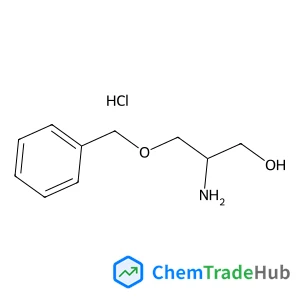
(R)-2-amino-3-(benzyloxy)propan-1-ol hydrochloride
CAS Number:
58577-95-0
Molecular Formula:
C10H16ClNO2

Recommended Suppliers





Disclaimer
This page provides academic journal information for reference and research purposes only. We are not affiliated with any journal publishers and do not handle publication submissions. For publication-related inquiries, please contact the respective journal publishers directly.
If you notice any inaccuracies in the information displayed, please contact us at support@chemtradehub.com. We will promptly review and address your concerns.