












Achieving high hydrogen evolution reaction activity of a Mo2C monolayer
Literature Information
Publication Date
2020-11-03
DOI
10.1039/D0CP05053A
Impact Factor
3.676
Authors
Tong Yu, Jiani Ma, Shoutao Zhang
View Original
Abstract
Two-dimensional Mo2C materials (1T and 2H phases) have emerged as promising electrocatalysts for the hydrogen evolution reaction (HER) due to their low cost, inherent metallicity, and high stability. Unfortunately, the catalytic activity of Mo2C is lower than that of Pt, and it needs to be substantially improved for practical applications. It is necessary and urgent to consider the effect of synergetic interactions among defects, functions, and strain on the HER activity. In this study, the geometric structures, electronic properties, and the HER activity of the Mo2C monolayer, with vacancy defects (i.e. Mo and C), oxygen functionalization, and strain, are studied by using first-principles calculations. According to our results, the combination of Mo vacancies, which can be obtained under C-rich conditions, and oxygen functionalization is the most effective way to improve the HER activity of 1T- and 2H-Mo2C. Considering the abundant active sites and optimal Gibbs free energy of hydrogen adsorption, the 1T phase we obtained shows excellent HER activity even at high H coverage and improves the utilization of active sites, for which the HER activity is comparable to that of Pt. This can be attributed to the fact that oxygen atoms gain more electrons from Mo2C, which weakens the strength of the O–H bond. Our work provides not only an opportunity to better understand the catalytic mechanism, but also a guide to achieving high HER activity of a Mo2C monolayer.
Recommended Journals
Related Literature
Thymine relaxation after UV irradiation: the role of tautomerization and πσ* states
Jesús González-Vázquez, Leticia González, Elena Samoylova, Thomas Schultz
2009-03-13
Paper
DOI: 10.1039/B815602F
Surprisingly high, bulk liquid-like mobility of silica-confined ionic liquids
Ronald Göbel, Peter Hesemann, Jens Weber, Eléonore Möller, Alwin Friedrich, Sabine Beuermann
2009-03-17
Paper
DOI: 10.1039/B821833A
Ab initio study of the magnetic exchange coupling constants of a structural model [CaMn3IIIMnII] of the oxygen evolving center in photosystem II
Heike Fliegl, Karin Fink, Christopher E. Anson
2009-03-12
Paper
DOI: 10.1039/B819444K
Adsorption of xenon on a protein arising from the translational motion of solvent molecules
Ryo Akiyama, Yasuhito Karino, Hokuto Obama, Ayako Yoshifuku
2010-02-24
Communication
DOI: 10.1039/B921314G
Dipole effects on molecular and electronic structures in a novel conjugate of oligo(phenyleneethynylene) and helical peptide
Hidenori Nakayama, Tomoyuki Morita, Shunsaku Kimura
2009-03-10
Paper
DOI: 10.1039/B817685J
Influence of OHgroups on charge transport across organic–organic interfaces: a systematic approach employing an “ideal” device
Zhi-Hong Wang, Daniel Käfer, Asif Bashir, Jan Götzen, Alexander Birkner, Gregor Witte, Christof Wöll
2010-02-03
Paper
DOI: 10.1039/B924230A
Designing meso- and macropore architectures in hybrid organic–inorganic membranes by combining surfactant and breath figure templating (BFT)
Ozlem Sel, Christel Laberty-Robert, Thierry Azais, Clément Sanchez
2009-03-27
Paper
DOI: 10.1039/B821506E
Conformational behaviour determines the low-relaxivity state of a conditional MRI contrast agent
Ugo Cosentino, Demetrio Pitea, Giorgio Moro, Gloria A. A. Saracino, Alessandra Villa
2009-04-20
Paper
DOI: 10.1039/B902049G
From nanocrystal synthesis to functional nanostructure fabrication: laser ablation in liquid
P. Liu, H. Cui, C. X. Wang, G. W. Yang
2010-03-12
Perspective
DOI: 10.1039/B918759F
You might also like
Compound Q&A
How should waste containing 2-Ethyl-4-Methyl-1H-Imidazole-5-Carbaldehyde (CAS: 88634-80-4) be handled?
Waste containing 2-Ethyl-4-Methyl-1H-Imidazole-5-Carbaldehyde (CAS: 88634-80-4) ...
88634-80-42-Ethyl-4-Methyl-1H-...
Compound Q&A
What industries use Triethoxy(octyl)silane (CAS: 1385031-14-0)?
Triethoxy(octyl)silane (CAS: 1385031-14-0) is widely used in the pharmaceuticals...
1385031-14-0Triethoxy(octyl)sila...
Compound Q&A
Are there alternatives to 3-iodo-7-nitro-1H-indazole (CAS: 864724-64-1) in synthesis?
Several alternatives to 3-iodo-7-nitro-1H-indazole (CAS: 864724-64-1) exist in t...
864724-64-13-iodo-7-nitro-1H-in...
Compound Q&A
Are there alternatives to Benzene, bis[(trimethoxysilyl)ethyl] (CAS: 266317-71-9) in synthesis?
Yes, there are alternatives to Benzene, bis[(trimethoxysilyl)ethyl] (CAS: 266317...
266317-71-9Benzene, bis[(trimet...
Compound Q&A
Is Isothiazole-3-carbonitrile (CAS: 1452-17-1) safe?
Isothiazole-3-carbonitrile (CAS: 1452-17-1) is generally considered safe when us...
1452-17-1Isothiazole-3-carbon...
Compound Q&A
Is (3-Chlorophenyl)methanol (CAS: 873-63-2) safe?
(3-Chlorophenyl)methanol (CAS: 873-63-2) is considered low to moderately toxic. ...
873-63-2(3-Chlorophenyl)meth...
Compound Q&A
How is (2S,3S)-2-Hydroxy-3-({[(2-methyl-2-propanyl)oxy]carbonyl}amino)-3-(2-naphthyl)propanoic acid (CAS: 959583-98-3) typically synthesized?
(2S,3S)-2-Hydroxy-3-({[(2-methyl-2-propanyl)oxy]carbonyl}amino)-3-(2-naphthyl)pr...
959583-98-3(2S,3S)-2-Hydroxy-3-...
Compound Q&A
What precautions should be taken when handling Methyl 2-(bromomethyl)-5-methoxybenzoate (CAS: 788081-99-2)?
Proper handling of methyl 2-(bromomethyl)-5-methoxybenzoate requires the use of ...
788081-99-2Methyl 2-(bromomethy...
Compound Q&A
What is 6,8-Dibromoimidazo[1,2-a]pyridine-2-carboxylic acid (CAS: 904805-36-3)?
6,8-Dibromoimidazo[1,2-a]pyridine-2-carboxylic acid (CAS: 904805-36-3) is an aro...
904805-36-36,8-Dibromoimidazo[1...
Compound Q&A
Is 3-Amino-5-bromo-2-pyridinecarbonitrile (CAS: 573675-27-1) safe?
3-Amino-5-bromo-2-pyridinecarbonitrile is considered safe when handled under pro...
573675-27-13-Amino-5-bromo-2-py...
Source Journal
Physical Chemistry Chemical Physics

CiteScore:
5.5
Self-citation Rate:
10.3%
Articles per Year:
3036
Physical Chemistry Chemical Physics (PCCP) is an international journal co-owned by 19 physical chemistry and physics societies from around the world. This journal publishes original, cutting-edge research in physical chemistry, chemical physics and biophysical chemistry. To be suitable for publication in PCCP, articles must include significant innovation and/or insight into physical chemistry; this is the most important criterion that reviewers and Editors will judge against when evaluating submissions. The journal has a broad scope and welcomes contributions spanning experiment, theory, computation and data science. Topical coverage includes spectroscopy, dynamics, kinetics, statistical mechanics, thermodynamics, electrochemistry, catalysis, surface science, quantum mechanics, quantum computing and machine learning. Interdisciplinary research areas such as polymers and soft matter, materials, nanoscience, energy, surfaces/interfaces, and biophysical chemistry are welcomed if they demonstrate significant innovation and/or insight into physical chemistry. Joined experimental/theoretical studies are particularly appreciated when complementary and based on up-to-date approaches.
Recommended Compounds
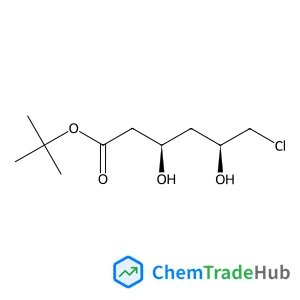
2-Methyl-2-propanyl (3R,5S)-6-chloro-3,5-dihydroxyhexanoate
CAS Number:
154026-93-4
Molecular Formula:
C10H19ClO4
![N,N'-1,2-Ethanediylbis[2-(vinylsulfonyl)acetamide] structure](https://static.chemtradehub.com/structs/667/66710-66-5-b556.webp "N,N'-1,2-Ethanediylbis[2-(vinylsulfonyl)acetamide] structure")
N,N'-1,2-Ethanediylbis[2-(vinylsulfonyl)acetamide]
CAS Number:
66710-66-5
Molecular Formula:
C10H16N2O6S2


Recommended Suppliers





Disclaimer
This page provides academic journal information for reference and research purposes only. We are not affiliated with any journal publishers and do not handle publication submissions. For publication-related inquiries, please contact the respective journal publishers directly.
If you notice any inaccuracies in the information displayed, please contact us at support@chemtradehub.com. We will promptly review and address your concerns.