













From nanocrystal synthesis to functional nanostructure fabrication: laser ablation in liquid
Literature Information
Publication Date
2010-03-12
DOI
10.1039/B918759F
Impact Factor
3.676
Authors
P. Liu, H. Cui, C. X. Wang, G. W. Yang
View Original
Abstract
Although nanomaterials investigations have been carried over the recent decades, researchers still face a fundamental challenge: how to control the phase, size and shape of nanocrystals in the synthesis of nanomaterials, i.e., how to achieve the transformation from nanocrytsal synthesis to functional nanostructure fabrication. For this issue, we, in this review, introduce recent developments in laser ablation in liquid (LAL) for the synthesis and fabrication of novel nanostructures with metastable phases and shapes. Laser ablation of solid targets in liquid has actually opened a door toward to synthesize nanocrystals and fabricate nanostructures due to these advantages as follows: (i) LAL is a chemically “simple and clean” synthesis due to the process with reduced byproduct formation, simpler starting materials, no need for catalyst, etc. (ii) Under ambient conditions, not extreme temperature and pressure, a variety of metastable phases that may not usually be attainable, can be generated by mild preparation methods. (iii) New phase formation involves in both liquid and solid upon LAL, which allows researchers to choose and combine interesting solid target and liquid to synthesize nanocrystals and fabricate nanostructures of new compounds for purpose of fundamental research and potential applications. (iv) The phase, size and shape of the synthesized nanocrystals can be readily controlled by tuning laser parameters and applying assistances such as inorganic salts or electrical field upon LAL. For example, we have synthesized the micro- and nanocubes of carbon with C8-like structures by the inorganic salts assisted LAL, and the micro- and nanocubes and spindles of GeO2 by the electrical field assisted LAL. Additionally, we have developed a new technique to fabricate functional nanopatterns on the basis of the pulsed-laser deposition in liquid. Accordingly, LAL could greatly extend its application in fabrication of functional nanostructures in the future.
Related Literature
Deamidation reaction network mapping of pharmacologic and related proteins: impact of solvation dielectric on the degradation energetics of asparagine dipeptides
Katherine E. Lawson, Joseph K. Dekle, Megan N. Evans, Andrew J. Adamczyk
2022-04-01
Paper
DOI: 10.1039/D2RE00110A
Oxidative desulfurization of fuel oil catalyzed by a carbon nitride supported phosphotungstic acid based dicationic ionic liquid
Xingjian Liu, Jingwen Li, Yanwen Guo, Jiang Wu, Bing Hu
2022-01-09
Paper
DOI: 10.1039/D1RE00514F
Convenient and accurate insight into solution-phase equilibria from FlowNMR titrations
Ian Clegg, Anna Codina
2022-06-09
Paper
DOI: 10.1039/D2RE00123C
Process analytical technology (PAT): applications to flow processes for active pharmaceutical ingredient (API) development
Courtney N. Talicska, Eamon C. O'Connell, Howard W. Ward, Angel R. Diaz, Mark A. Hardink, Douglas Connolly, Kevin P. Girard, Tomislav Ljubicic
2022-03-31
Paper
DOI: 10.1039/D2RE00004K
Probing the methanol-assisted autocatalytic formation of methanol over Cu/ZnO/Al2O3 by high-pressure methanol and methyl formate pulses
Philipp Schwiderowski, Sascha Stürmer
2022-07-13
Paper
DOI: 10.1039/D2RE00185C
Analysis of n-hexane, 1-hexene, cyclohexane and cyclohexene catalytic cracking over HZSM-5 zeolites: effects of molecular structure
Zhenzhou Ma, Bochong Chen, Liu Zhao, Enxian Yuan, Tingting Cui
2022-05-04
Paper
DOI: 10.1039/D1RE00532D
Microwave-promoted continuous flow synthesis of thermoplastic polyurethane–silver nanocomposites and their antimicrobial performance
Qandeel Saleem, Milad Torabfam
2022-05-19
Paper
DOI: 10.1039/D2RE00049K
Revisiting aromatic diazotization and aryl diazonium salts in continuous flow: highlighted research during 2001–2021
Jianli Chen, Xiaoxuan Xie, Jiming Liu, Zhiqun Yu, Weike Su
2022-02-28
Review Article
DOI: 10.1039/D2RE00001F
You might also like
Compound Q&A
What industries use (1R,3S)-1,3-Cyclopentanediol (CAS: 16326-97-9)?
(1R,3S)-1,3-Cyclopentanediol finds applications in various industries. In the ph...
16326-97-9(1R,3S)-1,3-Cyclopen...
Compound Q&A
What precautions should be taken when handling N'-[4-(Dimethylamino)phenyl]-N,N-dimethyl-1,4-benzenediamine (CAS: 637-31-0)?
When handling N'-[4-(Dimethylamino)phenyl]-N,N-dimethyl-1,4-benzenediamine, it i...
637-31-0N'-[4-(Dimethylamino...
Compound Q&A
Are there alternatives to 5-(2,4-Difluorophenyl)-2-methoxypyrimidine (CAS: 1352318-16-1) in synthesis?
There are several alternatives to 5-(2,4-Difluorophenyl)-2-methoxypyrimidine in ...
1352318-16-15-(2,4-Difluoropheny...
Compound Q&A
What regulatory guidelines apply to 1-(3-Methoxyphenoxy)propan-2-ol (CAS: 382141-68-6)?
1-(3-Methoxyphenoxy)propan-2-ol (CAS: 382141-68-6) must comply with the Globally...
382141-68-61-(3-Methoxyphenoxy)...
Compound Q&A
Is Tetrodotoxin Citrate (CAS: 18660-81-6) safe?
Tetrodotoxin Citrate is extremely dangerous and should be handled with extreme c...
18660-81-6Tetrodotoxin Citrate
Compound Q&A
What are the main uses of 2-Methyl-2-propanyl [(1R,3S)-3-hydroxycyclopentyl]carbamate (CAS: 225641-84-9)?
2-Methyl-2-propanyl [(1R,3S)-3-hydroxycyclopentyl]carbamate (CAS: 225641-84-9) i...
225641-84-92-Methyl-2-propanyl ...
Compound Q&A
How should waste containing 4-(2-Hydroxyhexafluoroisopropyl)Benzoic Acid (CAS: 16261-80-6) be handled?
Waste containing 4-(2-Hydroxyhexafluoroisopropyl)Benzoic Acid (CAS: 16261-80-6) ...
16261-80-64-(2-Hydroxyhexafluo...
Compound Q&A
How is 2-Methyl-2-proanyl {(2S)-1-[(benzyloxy)amino]-3-hydroxy-3-methyl-1-oxo-2-butanyl}carbamate (CAS: 102507-19-7) typically synthesized?
2-Methyl-2-proanyl {(2S)-1-[(benzyloxy)amino]-3-hydroxy-3-methyl-1-oxo-2-butanyl...
102507-19-72-Methyl-2-propanyl ...
Compound Q&A
What is Benzeneethanamine, α-ethyl-, hydrochloride (1:1) (CAS: 20735-15-3)?
Benzeneethanamine, α-ethyl-, hydrochloride (1:1) is an organic compound with the...
20735-15-3Benzeneethanamine, α...
Compound Q&A
Are there alternatives to 3-{(E)-[4-(Dimethylamino)phenyl]diazenyl}benzoic acid (CAS: 20691-84-3) in synthesis?
In the synthesis of compounds similar to 3-{(E)-[4-(Dimethylamino)phenyl]diazeny...
20691-84-33-{(E)-[4-(Dimethyla...
Source Journal
Physical Chemistry Chemical Physics

CiteScore:
5.5
Self-citation Rate:
10.3%
Articles per Year:
3036
Physical Chemistry Chemical Physics (PCCP) is an international journal co-owned by 19 physical chemistry and physics societies from around the world. This journal publishes original, cutting-edge research in physical chemistry, chemical physics and biophysical chemistry. To be suitable for publication in PCCP, articles must include significant innovation and/or insight into physical chemistry; this is the most important criterion that reviewers and Editors will judge against when evaluating submissions. The journal has a broad scope and welcomes contributions spanning experiment, theory, computation and data science. Topical coverage includes spectroscopy, dynamics, kinetics, statistical mechanics, thermodynamics, electrochemistry, catalysis, surface science, quantum mechanics, quantum computing and machine learning. Interdisciplinary research areas such as polymers and soft matter, materials, nanoscience, energy, surfaces/interfaces, and biophysical chemistry are welcomed if they demonstrate significant innovation and/or insight into physical chemistry. Joined experimental/theoretical studies are particularly appreciated when complementary and based on up-to-date approaches.
Recommended Compounds
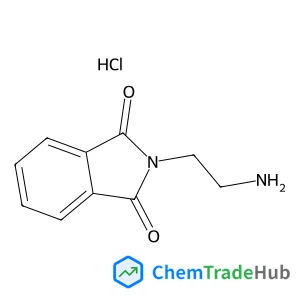
2-(2-Aminoethyl)-1H-isoindole-1,3(2H)-dione hydrochloride (1:1)
CAS Number:
30250-67-0
Molecular Formula:
C10H11ClN2O2
Recommended Suppliers






Disclaimer
This page provides academic journal information for reference and research purposes only. We are not affiliated with any journal publishers and do not handle publication submissions. For publication-related inquiries, please contact the respective journal publishers directly.
If you notice any inaccuracies in the information displayed, please contact us at support@chemtradehub.com. We will promptly review and address your concerns.