












Surprisingly high, bulk liquid-like mobility of silica-confined ionic liquids
Literature Information
Publication Date
2009-03-17
DOI
10.1039/B821833A
Impact Factor
3.676
Authors
Ronald Göbel, Peter Hesemann, Jens Weber, Eléonore Möller, Alwin Friedrich, Sabine Beuermann
View Original
Abstract
Mesoporous silica monoliths were prepared by the sol–gel technique and filled with 1-ethyl-3-methyl imidazolium [Emim]-X (X = dicyanamide [N(CN)2], ethyl sulfate [EtSO4], thiocyanate [SCN], and triflate [TfO]) ionic liquids (ILs) using a methanol-IL exchange technique. The structure and behavior of the ILs inside the silica monoliths were studied using X-ray scattering, nitrogen sorption, IR spectroscopy, solid-state NMR, and thermal analysis. DSC finds shifts in both the glass transition temperature and melting points (where applicable) of the ILs. Glass transition and melting occur well below room temperature. There is thus no conflict with the NMR and IR data, which show that the ILs are as mobile at room temperature as the bulk (not confined) ILs. The very narrow line widths of the NMR spectra suggest that the ILs in our materials have the highest mobility reported for confined ILs so far. As a result, our data suggest that it is possible to generate IL/silica hybrid materials (ionogels) with bulk-like properties of the IL. This could be interesting for applications in, e.g., the solar cell or membrane fields.
Related Literature
Degradation mechanism of a lignin model compound during alkaline aerobic oxidation: formation of the vanillin precursor from the β-O-4 middle unit of softwood lignin
Yuki Hirano, Akari Izawa, Takashi Hosoya, Hisashi Miyafuji
2022-04-22
Paper
DOI: 10.1039/D2RE00036A
An environmentally benign and high-rate Appel type reaction
Nicolas Mattias Del Rio Fuenzalida, Eirin Alme, Frida Johanne Lundevall, Hans-René Bjørsvik
2022-04-22
Paper
DOI: 10.1039/D2RE00071G
Highly conductive CNT aerogel synthesized via an inert FC-CVD technique: a step towards a greener approach
2022-07-04
Communication
DOI: 10.1039/D2RE00170E
Development of a modular photoreactor for the upscaling of continuous flow photochemistry
Johannes G. H. Hermens, Mathieu L. Lepage, Arjan Kloekhorst, Erik Keller, Robin Bloem, Maurice Meijer, Ben L. Feringa
2022-09-28
Communication
DOI: 10.1039/D2RE00310D
Developing flow photo-thiol–ene functionalizations of cinchona alkaloids with an autonomous self-optimizing flow reactor
Abollé Abollé, Elvina Barré, Vincent Coeffard, François-Xavier Felpin
2022-02-28
Paper
DOI: 10.1039/D1RE00509J
A low-cost and high-performance 3D micromixer over a wide working range and its application for high-sensitivity biomarker detection
Liuyong Shi
2022-07-27
Paper
DOI: 10.1039/D2RE00103A
Effect of the nickel impregnation method on clay supports in the hydroconversion reaction of n-decane
Jahaziel Amaya, Cesar Calderón, Rafael Molina, Sonia Moreno
2022-10-13
Paper
DOI: 10.1039/D2RE00353H
You might also like
Compound Q&A
How should waste containing 2-Ethyl-4-Methyl-1H-Imidazole-5-Carbaldehyde (CAS: 88634-80-4) be handled?
Waste containing 2-Ethyl-4-Methyl-1H-Imidazole-5-Carbaldehyde (CAS: 88634-80-4) ...
88634-80-42-Ethyl-4-Methyl-1H-...
Compound Q&A
What industries use Triethoxy(octyl)silane (CAS: 1385031-14-0)?
Triethoxy(octyl)silane (CAS: 1385031-14-0) is widely used in the pharmaceuticals...
1385031-14-0Triethoxy(octyl)sila...
Compound Q&A
Are there alternatives to 3-iodo-7-nitro-1H-indazole (CAS: 864724-64-1) in synthesis?
Several alternatives to 3-iodo-7-nitro-1H-indazole (CAS: 864724-64-1) exist in t...
864724-64-13-iodo-7-nitro-1H-in...
Compound Q&A
Are there alternatives to Benzene, bis[(trimethoxysilyl)ethyl] (CAS: 266317-71-9) in synthesis?
Yes, there are alternatives to Benzene, bis[(trimethoxysilyl)ethyl] (CAS: 266317...
266317-71-9Benzene, bis[(trimet...
Compound Q&A
Is Isothiazole-3-carbonitrile (CAS: 1452-17-1) safe?
Isothiazole-3-carbonitrile (CAS: 1452-17-1) is generally considered safe when us...
1452-17-1Isothiazole-3-carbon...
Compound Q&A
Is (3-Chlorophenyl)methanol (CAS: 873-63-2) safe?
(3-Chlorophenyl)methanol (CAS: 873-63-2) is considered low to moderately toxic. ...
873-63-2(3-Chlorophenyl)meth...
Compound Q&A
How is (2S,3S)-2-Hydroxy-3-({[(2-methyl-2-propanyl)oxy]carbonyl}amino)-3-(2-naphthyl)propanoic acid (CAS: 959583-98-3) typically synthesized?
(2S,3S)-2-Hydroxy-3-({[(2-methyl-2-propanyl)oxy]carbonyl}amino)-3-(2-naphthyl)pr...
959583-98-3(2S,3S)-2-Hydroxy-3-...
Compound Q&A
What precautions should be taken when handling Methyl 2-(bromomethyl)-5-methoxybenzoate (CAS: 788081-99-2)?
Proper handling of methyl 2-(bromomethyl)-5-methoxybenzoate requires the use of ...
788081-99-2Methyl 2-(bromomethy...
Compound Q&A
What is 6,8-Dibromoimidazo[1,2-a]pyridine-2-carboxylic acid (CAS: 904805-36-3)?
6,8-Dibromoimidazo[1,2-a]pyridine-2-carboxylic acid (CAS: 904805-36-3) is an aro...
904805-36-36,8-Dibromoimidazo[1...
Compound Q&A
Is 3-Amino-5-bromo-2-pyridinecarbonitrile (CAS: 573675-27-1) safe?
3-Amino-5-bromo-2-pyridinecarbonitrile is considered safe when handled under pro...
573675-27-13-Amino-5-bromo-2-py...
Source Journal
Physical Chemistry Chemical Physics

CiteScore:
5.5
Self-citation Rate:
10.3%
Articles per Year:
3036
Physical Chemistry Chemical Physics (PCCP) is an international journal co-owned by 19 physical chemistry and physics societies from around the world. This journal publishes original, cutting-edge research in physical chemistry, chemical physics and biophysical chemistry. To be suitable for publication in PCCP, articles must include significant innovation and/or insight into physical chemistry; this is the most important criterion that reviewers and Editors will judge against when evaluating submissions. The journal has a broad scope and welcomes contributions spanning experiment, theory, computation and data science. Topical coverage includes spectroscopy, dynamics, kinetics, statistical mechanics, thermodynamics, electrochemistry, catalysis, surface science, quantum mechanics, quantum computing and machine learning. Interdisciplinary research areas such as polymers and soft matter, materials, nanoscience, energy, surfaces/interfaces, and biophysical chemistry are welcomed if they demonstrate significant innovation and/or insight into physical chemistry. Joined experimental/theoretical studies are particularly appreciated when complementary and based on up-to-date approaches.
Recommended Compounds
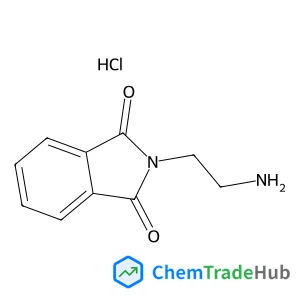
2-(2-Aminoethyl)-1H-isoindole-1,3(2H)-dione hydrochloride (1:1)
CAS Number:
30250-67-0
Molecular Formula:
C10H11ClN2O2
![N-[(9H-Fluoren-9-ylmethoxy)carbonyl]-beta-phenyl-L-phenylalanine structure](https://static.chemtradehub.com/structs/201/201484-50-6-c2fc.webp "N-[(9H-Fluoren-9-ylmethoxy)carbonyl]-beta-phenyl-L-phenylalanine structure")
N-[(9H-Fluoren-9-ylmethoxy)carbonyl]-beta-phenyl-L-phenylalanine
CAS Number:
201484-50-6
Molecular Formula:
C30H25NO4
Recommended Suppliers





Disclaimer
This page provides academic journal information for reference and research purposes only. We are not affiliated with any journal publishers and do not handle publication submissions. For publication-related inquiries, please contact the respective journal publishers directly.
If you notice any inaccuracies in the information displayed, please contact us at support@chemtradehub.com. We will promptly review and address your concerns.