


Can modified DNA base pairs with chalcogen bonding expand the genetic alphabet? A combined quantum chemical and molecular dynamics simulation study
Literature Information
Publication Date
2020-10-05
DOI
10.1039/D0CP04921B
Impact Factor
3.676
Authors
Preetleen Kathuria, Stacey D. Wetmore, Purshotam Sharma
View Original
Abstract
A comprehensive (DFT and MD) computational study is presented with the goal to design and analyze model chalcogen-bonded modified nucleobase pairs that replace one (i.e., AXY:T, G:CXY, GXY:C) or two (GXY:CX′Y′, X/X′ = S, Se and Y/Y′ = F, Cl, Br) Watson–Crick (WC) hydrogen bonds of the canonical A:T or G:C pair with chalcogen bond(s). DFT calculations on 18 base pair combinations that replace one WC hydrogen bond with a chalcogen bond reveal that the bases favorably interact in the gas phase (binding strengths up to −140 kJ mol−1) and water (up to −85 kJ mol−1). Although the remaining hydrogen bond(s) exhibits similar characteristics to those in the canonical base pairs, the structural features of the (Y–X⋯O) chalcogen bond(s) change significantly with the identity of X and Y. The 36 doubly-substituted (GXY:CX′Y′) base pairs have structural deviations from canonical G:C similar to those of the singly-substituted modifications (G:CXY or GXY:C). Furthermore, despite the replacement of two strong hydrogen bonds with chalcogen bonds, some GXY:CX′Y′ pairs possess comparable binding energies (up to −132 kJ mol−1 in the gas phase and up to −92 kJ mol−1 in water) to the most stable G:CXY or GXY:C pairs, as well as canonical G:C. More importantly, G:C-modified pairs containing X = Se (high polarizability) and Y = F (high electronegativity) are the most stable, with comparable or slightly larger (by up to 13 kJ mol−1) binding energies than G:C. Further characterization of the chalcogen bonding in all modified base pairs (AIM, NBO and NCI analyses) reveals that the differences in the binding energies of modified base pairs are mainly dictated by the differences in the strengths of their chalcogen bonds. Finally, MD simulations on DNA oligonucleotides containing the most stable chalcogen-bonded base pair from each of the four classifications (AXY:T, G:CXY, GXY:C and GXY:CX′Y′) reveal that the singly-modified G:C pairs best retain the local helical structure and pairing stability to a greater extent than the modified A:T pair. Overall, our study identifies two (G:CSeF and GSeF:C) promising pairs that retain chalcogen bonding in DNA and should be synthesized and further explored in terms of their potential to expand the genetic alphabet.
Recommended Journals

Critical Reviews in Solid State and Materials Sciences

Bioorganic & Medicinal Chemistry

NDT & E International

Acta Metallurgica Sinica-English Letters

Journal of the Indian Institute of Science

Electroanalysis

Colloid Journal

Main Group Chemistry

Bioorganic & Medicinal Chemistry Letters

Biocatalysis and Biotransformation
Related Literature
Directed covalent assembly of rigid organic nanodisks using self-assembled temporary scaffolds‡
Samuel Tekobo, Eugene Pinkhassik
2009-01-06
Communication
DOI: 10.1039/B817598E
Dye displacement assay for saccharide detection with boronate hydrogels‡
Winson M. J. Ma, Marta P. Pereira Morais, François D’Hooge, Jean M. H. van den Elsen, Jonathan P. L. Cox, Tony D. James, John S. Fossey
2008-12-19
Communication
DOI: 10.1039/B814379J
Order–disorder and displacive components in the ferroelectric–paraelectric phase transition of potassium titanyl phosphate KTiOPO4
Masatomo Yashima, Takafumi Komatsu
2009-01-05
Communication
DOI: 10.1039/B817280C
Transition metalborylene complexes: boron analogues of classical organometallic systems
Dragoslav Vidovic, Glesni A. Pierce, Simon Aldridge
2009-01-07
Feature Article
DOI: 10.1039/B816042B
Photolysis of diarylvinylcyclopropenes for the construction of 1-methylene-8a-aryl-1,8a-dihydroazulene skeletons
Fang-Fang Yu, Wang-Gui Yang
2009-02-11
Communication
DOI: 10.1039/B820212E
Chiral detection at a liquid–liquid interface
Ritu Kataky, Paula Lopes
2009-02-18
Communication
DOI: 10.1039/B822685G
Detection of single-nucleotide mismatches using scanning electrochemical microscopy
Piotr Michal Diakowski, Heinz-Bernhard Kraatz
2009-01-05
Communication
DOI: 10.1039/B819876D
Enantiopure imidazolinium-dithiocarboxylates as highly selective novel organocatalysts
Oksana Sereda, Amélie Blanrue, René Wilhelm
2008-12-24
Communication
DOI: 10.1039/B817991C
Direct enantioselectivealdol reactions catalyzed by a proline–thiourea host–guest complex
Ömer Reis, Serkan Eymur, Barbaros Reis, Ayhan S. Demir
2009-01-07
Communication
DOI: 10.1039/B817474A
Solid-phase based total synthesis of Jasplakinolide by ring-closing metathesis
Tai-Shan Hu
2009-02-20
Communication
DOI: 10.1039/B900342H
You might also like
Compound Q&A
What are the main uses of (5-Sulfamoyl-3-pyridinyl)boronic acid (CAS: 951233-61-7)?
(5-Sulfamoyl-3-pyridinyl)boronic acid is primarily used in chemical synthesis, p...
951233-61-7(5-Sulfamoyl-3-pyrid...
Compound Q&A
How is Benzyl 2-methyl-2-(methylsulfonyl)-4-pentenoate (CAS: 1942858-50-5) typically synthesized?
Benzyl 2-methyl-2-(methylsulfonyl)-4-pentenoate is typically synthesized via est...
1942858-50-5Benzyl 2-methyl-2-(m...
Compound Q&A
What precautions should be taken when handling 8-Fluoroquinolin-6-ol (CAS: 209353-22-0)?
When handling 8-Fluoroquinolin-6-ol (CAS: 209353-22-0), it is important to use p...
209353-22-08-Fluoroquinolin-6-o...
Compound Q&A
What are the physical and chemical properties of 1,3-Dibromo-5-(2-methyl-2-propanyl)benzene (CAS: 129316-09-2)?
1,3-Dibromo-5-(2-methyl-2-propanyl)benzene (CAS: 129316-09-2) is a crystalline c...
129316-09-21,3-Dibromo-5-(2-met...
Compound Q&A
What industries use Ethyl 7-chloro-4-oxo-1-(1,3-thiazol-2-yl)-1,4-dihydro-1,8-naphthyridine-3-carboxylate (CAS: 174726-87-5)?
Ethyl 7-chloro-4-oxo-1-(1,3-thiazol-2-yl)-1,4-dihydro-1,8-naphthyridine-3-carbox...
174726-87-5Ethyl 7-chloro-4-oxo...
Compound Q&A
What precautions should be taken when handling Delta-7-Avenasterol (CAS: 23290-26-8)?
When handling Delta-7-Avenasterol (CAS: 23290-26-8), it is important to wear app...
23290-26-8Delta-7-Avenasterol
Compound Q&A
What precautions should be taken when handling N-({(5R)-3-[3-Fluoro-4-(4-morpholinyl)phenyl]-2-oxo-1,3-oxazolidin-5-yl}methyl)acetamide (CAS: 872992-20-6)?
Proper handling involves the use of personal protective equipment such as gloves...
872992-20-6N-({(5R)-3-[3-Fluoro...
Compound Q&A
What precautions should be taken when handling 2-Methyl-2-proanyl 4-[(2-aminophenyl)amino]-1-piperidinecarboxylate (CAS: 79099-00-6)?
When handling 2-Methyl-2-proanyl 4-[(2-aminophenyl)amino]-1-piperidinecarboxylat...
79099-00-62-Methyl-2-propanyl ...
Compound Q&A
What is N-Methyl-4-chlorobenzylamine hydrochloride (CAS: 65542-24-7)?
N-Methyl-4-chlorobenzylamine hydrochloride (CAS: 65542-24-7) is a organic compou...
65542-24-7N-Methyl-4-chloroben...
Compound Q&A
Is [2-(Dodecyloxy)ethoxy]acetic acid (CAS: 27306-90-7) safe?
[2-(Dodecyloxy)ethoxy]acetic acid (CAS: 27306-90-7) is generally considered safe...
27306-90-7[2-(Dodecyloxy)ethox...
Source Journal
Physical Chemistry Chemical Physics

CiteScore:
5.5
Self-citation Rate:
10.3%
Articles per Year:
3036
Physical Chemistry Chemical Physics (PCCP) is an international journal co-owned by 19 physical chemistry and physics societies from around the world. This journal publishes original, cutting-edge research in physical chemistry, chemical physics and biophysical chemistry. To be suitable for publication in PCCP, articles must include significant innovation and/or insight into physical chemistry; this is the most important criterion that reviewers and Editors will judge against when evaluating submissions. The journal has a broad scope and welcomes contributions spanning experiment, theory, computation and data science. Topical coverage includes spectroscopy, dynamics, kinetics, statistical mechanics, thermodynamics, electrochemistry, catalysis, surface science, quantum mechanics, quantum computing and machine learning. Interdisciplinary research areas such as polymers and soft matter, materials, nanoscience, energy, surfaces/interfaces, and biophysical chemistry are welcomed if they demonstrate significant innovation and/or insight into physical chemistry. Joined experimental/theoretical studies are particularly appreciated when complementary and based on up-to-date approaches.
Recommended Compounds
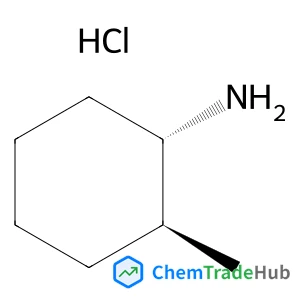
(1R,2R)-2-Methylcyclohexanamine hydrochloride (1:1)
CAS Number:
39558-31-1
Molecular Formula:
C7H16ClN
Recommended Suppliers






Disclaimer
This page provides academic journal information for reference and research purposes only. We are not affiliated with any journal publishers and do not handle publication submissions. For publication-related inquiries, please contact the respective journal publishers directly.
If you notice any inaccuracies in the information displayed, please contact us at support@chemtradehub.com. We will promptly review and address your concerns.