











Revealing the role of nitrogen dopants in tuning the electronic and optical properties of graphene quantum dots via a TD-DFT study
Literature Information
Publication Date
2020-11-09
DOI
10.1039/D0CP04707D
Impact Factor
3.676
Authors
Bo Li
View Original
Abstract
Graphene quantum dots (GQDs) have been suggested to have a wide range of applications due to their unique electronic and optical properties. Moreover, heteroatom doping has become a viable way to fine-tune the properties of GQDs. However, the working principle of the doping strategy is still not conclusive. In this study, the effects of size, configuration of the nitrogen dopant, and N/C ratio on the electronic and optical properties of GQDs have been carefully examined. First, the variation of the adsorption wavelength of pristine GQDs was evaluated for which a linear relation is established against different diameters. Moreover, it is found that both the configuration and content of nitrogen dopants have a significant impact on the adsorption wavelength and band gap of GQDs. In particular, different nitrogen species could have exactly opposite effects on the adsorption behavior. The origin of the nitrogen doping effect is calibrated from orbital localization, charge analysis, natural transition orbitals, and atomic contribution towards excitation. It is noted that nitrogen doping can simultaneously reduce both light adsorption energy and emission energy compared with the pristine one. This study provides an insightful explanation for the electronic and optical properties of GQDs and consolidates the theory base of the doping strategy.
Recommended Journals
Related Literature
Protocol for disentangling the thermally activated contribution to the tunneling-assisted charge transport. Analytical results and experimental relevance
2017-04-06
Paper
DOI: 10.1039/C7CP01103B
A new mechanism for the low dielectric property of POSS nanocomposites: the key role of interfacial effect
Yuan Yuan, Yawen Huang, Hongtao Yu, Junxiao Yang
2017-05-11
Paper
DOI: 10.1039/C7CP02678A
Effect of low water content in protic ionic liquid on ions electrosorption in porous carbon: application to electrochemical capacitors
B. Gorska, L. Timperman, M. Anouti, F. Béguin
2017-03-24
Paper
DOI: 10.1039/C7CP00398F
On the structures, spin states, and optical properties of titanium, platinum, and iron azacalixphyrins: a DFT study
Gabriel Marchand, Olivier Siri
2017-05-22
Paper
DOI: 10.1039/C7CP02600E
Rates and equilibrium constants of the ligand-induced conformational transition of an HCN ion channel protein domain determined by DEER spectroscopy
Alberto Collauto, Royi Kaufmann, William N. Zagotta, Daniella Goldfarb
2017-05-26
Paper
DOI: 10.1039/C7CP01925D
Binary twinned-icosahedral [B21H18]− interacts with cyclodextrins as a precedent for its complexation with other organic motifs
Eduard Bernhardt, Juan Z. Dávalos, Martin Lepšík, Khaleel I. Assaf, Werner M. Nau, Josef Holub, Josep M. Oliva-Enrich, Jindřich Fanfrlík, Drahomír Hnyk
2017-04-19
Communication
DOI: 10.1039/C7CP01074E
Well incorporation of carbon nanodots with silicon nanowire arrays featuring excellent photocatalytic performances
Chia-Yun Chen, Po-Hsuan Hsiao, Ta-Cheng Wei, Ting-Chen Chen, Chien-Hsin Tang
2017-04-24
Paper
DOI: 10.1039/C7CP01674C
Aggregation of cyclic polypeptoids bearing zwitterionic end-groups with attractive dipole–dipole and solvophobic interactions: a study by small-angle neutron scattering and molecular dynamics simulation
Pu Du, Ang Li, Xin Li, Yueheng Zhang, Changwoo Do, Lilin He, Steven W. Rick, Vijay T. John, Revati Kumar, Donghui Zhang
2017-04-12
Paper
DOI: 10.1039/C7CP01602F
Attraction induced frictionless sliding of rare gas monolayer on metallic surfaces: an efficient strategy for superlubricity
Yanning Zhang, Zhibin Lu, Qunji Xue
2017-03-22
Paper
DOI: 10.1039/C6CP08857K
Interrelationship between TiO2 nanoparticle size and kind/size of dyes in the mechanism and conversion efficiency of dye sensitized solar cells
Pooya Tahay, Meisam Babapour Gol Afshani, Ali Alavi, Zahra Parsa, Nasser Safari
2017-03-31
Paper
DOI: 10.1039/C7CP01159H
You might also like
Compound Q&A
Are there alternatives to 1-(4-Chlorophenyl)-N-hydroxymethanimine (CAS: 3848-36-0) in synthesis?
When considering alternatives to 1-(4-Chlorophenyl)-N-hydroxymethanimine (CAS: 3...
3848-36-01-(4-Chlorophenyl)-N...
Compound Q&A
How should (1R,9S,10S,12S,14E,16S,19R,20R,21S,22R)-3,9,21-Trihydroxy-5,10,12,14,16,20,22-heptamethyl-23,24-dioxatetracyclo[17.3.1.1~6,9~.0~2,7~]tetracosa-2,5,7,14-tetraen-4-one (CAS: 183202-73-5) be stored?
This compound should be stored in a cool, dry place away from direct sunlight. I...
183202-73-5(1R,9S,10S,12S,14E,1...
Compound Q&A
How is 3-(4-Bromophenyl)-5-(2-fluorophenyl)-1,2,4-oxadiazole (CAS: 419553-16-5) typically synthesized?
3-(4-Bromophenyl)-5-(2-fluorophenyl)-1,2,4-oxadiazole is synthesized through a m...
419553-16-53-(4-Bromophenyl)-5-...
Compound Q&A
How is 5-Chloro-2-(4-chlorophenyl)-4-methyl-6-[3-(1-piperidinyl)propoxy]pyrimidine (CAS: 1639220-19-1) typically synthesized?
5-Chloro-2-(4-chlorophenyl)-4-methyl-6-[3-(1-piperidinyl)propoxy]pyrimidine (CAS...
1639220-19-15-Chloro-2-(4-chloro...
Compound Q&A
What industries use 2-Chloro-4-(difluoromethoxy)pyridine (CAS: 1206978-15-5)?
2-Chloro-4-(difluoromethoxy)pyridine is used in the pharmaceutical industry for ...
1206978-15-52-Chloro-4-(difluoro...
Compound Q&A
What regulatory guidelines apply to 3-Chloro-6-methylpyridazine (CAS: 1121-79-5)?
3-Chloro-6-methylpyridazine (CAS: 1121-79-5) is classified under the Globally Ha...
1121-79-53-Chloro-6-methylpyr...
Compound Q&A
Are there alternatives to Methyl 4,5-dimethyl-2-nitrobenzoate in synthesis?
Several alternatives can be used in the synthesis of Methyl 4,5-dimethyl-2-nitro...
90922-74-0Methyl 4,5-dimethyl-...
Compound Q&A
Are there alternatives to (2E,2'E)-3,3'-(1,4-Phenylene)bisacrylaldehyde in synthesis?
Alternatives to (2E,2'E)-3,3'-(1,4-Phenylene)bisacrylaldehyde include other acry...
63405-68-5(2E,2'E)-3,3'-(1,4-P...
Compound Q&A
What is 3-Amino-5-chloropyridin-2-ol hydrochloride (CAS: 1261906-29-9)?
3-Amino-5-chloropyridin-2-ol hydrochloride is an organic compound with the CAS n...
1261906-29-93-Amino-5-chloropyri...
Compound Q&A
What precautions should be taken when handling 6,7-Difluoro-2,3-dihydro-4H-chromen-4-one (CAS: 1092349-93-3)?
When handling 6,7-Difluoro-2,3-dihydro-4H-chromen-4-one, it is essential to wear...
1092349-93-36,7-Difluoro-2,3-dih...
Source Journal
Physical Chemistry Chemical Physics

CiteScore:
5.5
Self-citation Rate:
10.3%
Articles per Year:
3036
Physical Chemistry Chemical Physics (PCCP) is an international journal co-owned by 19 physical chemistry and physics societies from around the world. This journal publishes original, cutting-edge research in physical chemistry, chemical physics and biophysical chemistry. To be suitable for publication in PCCP, articles must include significant innovation and/or insight into physical chemistry; this is the most important criterion that reviewers and Editors will judge against when evaluating submissions. The journal has a broad scope and welcomes contributions spanning experiment, theory, computation and data science. Topical coverage includes spectroscopy, dynamics, kinetics, statistical mechanics, thermodynamics, electrochemistry, catalysis, surface science, quantum mechanics, quantum computing and machine learning. Interdisciplinary research areas such as polymers and soft matter, materials, nanoscience, energy, surfaces/interfaces, and biophysical chemistry are welcomed if they demonstrate significant innovation and/or insight into physical chemistry. Joined experimental/theoretical studies are particularly appreciated when complementary and based on up-to-date approaches.
Recommended Compounds
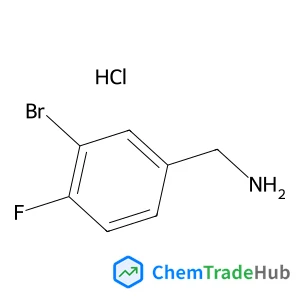
1-(3-Bromo-4-fluorophenyl)methanamine hydrochloride (1:1)
CAS Number:
202865-68-7
Molecular Formula:
C7H8BrClFN
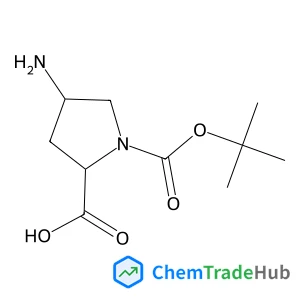
(2R,4R)-1-Boc-4-Aminopyrrolidine-2-carboxylic acid
CAS Number:
132622-98-1
Molecular Formula:
C10H18N2O4
Recommended Suppliers



Disclaimer
This page provides academic journal information for reference and research purposes only. We are not affiliated with any journal publishers and do not handle publication submissions. For publication-related inquiries, please contact the respective journal publishers directly.
If you notice any inaccuracies in the information displayed, please contact us at support@chemtradehub.com. We will promptly review and address your concerns.