












Effect of low water content in protic ionic liquid on ions electrosorption in porous carbon: application to electrochemical capacitors
Literature Information
Publication Date
2017-03-24
DOI
10.1039/C7CP00398F
Impact Factor
3.676
Authors
B. Gorska, L. Timperman, M. Anouti, F. Béguin
View Original
Abstract
The effect of low water content (<20, 150, 1000, 10 000 ppm) in triethylammonium bis[(trifluoromethyl)sulfonyl]imide – [(C2H5)3N+H][TFSI−] – protic ionic liquid (PIL) on the performance of activated carbon (AC) electrodes as well as AC/AC electrochemical capacitors (ECs) is reported. Under negative polarization, hydrogen electrosorption onto carbon is enhanced along with the increase of water content in PIL, whereas the resulting desorption peaks are shifted to lower potential values, evidencing lower sorption energy when hydrogen is stored from moisture containing PIL. Cyclic voltammetry (CV) investigations on PIL-based ECs demonstrated that the evolution of the Stern layer nanostructure at positive and negative potentials is asymmetrical. The results revealed comparable electrochemical performance for PIL containing 150 and 1000 ppm of H2O, due to similar operation of the positive electrode, where [TFSI−] anions are adsorbed in the outer Helmholtz plane, and the negative one, where hydrogen is stored through the reduction of the intermediate hydronium cation. By contrast, a cell with “dry” PIL (<20 ppm of water) displayed a distinctive operation due to hydrogen electrosorption directly through reduction of the protonated cation, and selective adsorption of [TFSI−] anions, which occurs thanks to the high polarizability and image force (IF) created by their induced charge. Galvanostatic cycling with potential limitation (GCPL) showed comparable capacitance values whatever the water content in PILs up to 1000 ppm, yet electrochemical impedance spectroscopy (EIS) revealed higher capacitance as well as better retention at higher frequencies with the PIL containing 150 ppm of water. Hence, 150 ppm is reasoned to be an optimal value for diffusion and adsorption of ions. The nature of current collectors (aluminum or stainless steel) has a determining role in their polarization behavior, and consequently the potential range of electrodes as well as ion diffusion into the activated carbon porosity, influencing the observed capacitance values (CEIS/2.0V: 170 vs. 128 F g−1, for Al and SSt, respectively).
Related Literature
Describing chemical transformations in multiple spiking isotope dilution: fundamental aspects and definitions
Juris Meija, Laurent Ouerdane, Zoltán Mester
2008-11-28
Paper
DOI: 10.1039/B814388A
On-capillary derivatization using a hybrid artificial neural network-genetic algorithm approach
Toni Riveros, Grady Hanrahan, Sarah Muliadi, Jennifer Arceo, Frank A. Gomez
2009-08-03
Paper
DOI: 10.1039/B909143B
Raman spectral imaging of single living cancer cells: a preliminary study
Florence Draux, Pierre Jeannesson, Abdelilah Beljebbar, Ali Tfayli, Nicolas Fourre, Michel Manfait, Josep Sulé-Suso, Ganesh D. Sockalingum
2008-12-02
Paper
DOI: 10.1039/B812610K
Electrochemical studies on the oxidation of guanine and adenine at cyclodextrin modified electrodes
Abdolkarim Abbaspour, Abolhassan Noori
2008-09-02
Paper
DOI: 10.1039/B806920D
Electrode array detector for microchip capillary electrophoresis
Ryan E. Holcomb, James R. Kraly, Charles S. Henry
2008-12-03
Paper
DOI: 10.1039/B816289A
Integrated strong cation exchange/capillary reversed-phase liquid chromatography/on-target digestion coupled with mass spectrometry for identification of intact human liver tissue proteins‡
Mingxia Gao, Wenjia Yu, Yang Zhang, Guoquan Yan, Chunhui Deng, Xiangmin Zhang
2008-07-30
Paper
DOI: 10.1039/B803388A
You might also like
Compound Q&A
Are there alternatives to 1-(4-Chlorophenyl)-N-hydroxymethanimine (CAS: 3848-36-0) in synthesis?
When considering alternatives to 1-(4-Chlorophenyl)-N-hydroxymethanimine (CAS: 3...
3848-36-01-(4-Chlorophenyl)-N...
Compound Q&A
How should (1R,9S,10S,12S,14E,16S,19R,20R,21S,22R)-3,9,21-Trihydroxy-5,10,12,14,16,20,22-heptamethyl-23,24-dioxatetracyclo[17.3.1.1~6,9~.0~2,7~]tetracosa-2,5,7,14-tetraen-4-one (CAS: 183202-73-5) be stored?
This compound should be stored in a cool, dry place away from direct sunlight. I...
183202-73-5(1R,9S,10S,12S,14E,1...
Compound Q&A
How is 3-(4-Bromophenyl)-5-(2-fluorophenyl)-1,2,4-oxadiazole (CAS: 419553-16-5) typically synthesized?
3-(4-Bromophenyl)-5-(2-fluorophenyl)-1,2,4-oxadiazole is synthesized through a m...
419553-16-53-(4-Bromophenyl)-5-...
Compound Q&A
How is 5-Chloro-2-(4-chlorophenyl)-4-methyl-6-[3-(1-piperidinyl)propoxy]pyrimidine (CAS: 1639220-19-1) typically synthesized?
5-Chloro-2-(4-chlorophenyl)-4-methyl-6-[3-(1-piperidinyl)propoxy]pyrimidine (CAS...
1639220-19-15-Chloro-2-(4-chloro...
Compound Q&A
What industries use 2-Chloro-4-(difluoromethoxy)pyridine (CAS: 1206978-15-5)?
2-Chloro-4-(difluoromethoxy)pyridine is used in the pharmaceutical industry for ...
1206978-15-52-Chloro-4-(difluoro...
Compound Q&A
What regulatory guidelines apply to 3-Chloro-6-methylpyridazine (CAS: 1121-79-5)?
3-Chloro-6-methylpyridazine (CAS: 1121-79-5) is classified under the Globally Ha...
1121-79-53-Chloro-6-methylpyr...
Compound Q&A
Are there alternatives to Methyl 4,5-dimethyl-2-nitrobenzoate in synthesis?
Several alternatives can be used in the synthesis of Methyl 4,5-dimethyl-2-nitro...
90922-74-0Methyl 4,5-dimethyl-...
Compound Q&A
Are there alternatives to (2E,2'E)-3,3'-(1,4-Phenylene)bisacrylaldehyde in synthesis?
Alternatives to (2E,2'E)-3,3'-(1,4-Phenylene)bisacrylaldehyde include other acry...
63405-68-5(2E,2'E)-3,3'-(1,4-P...
Compound Q&A
What is 3-Amino-5-chloropyridin-2-ol hydrochloride (CAS: 1261906-29-9)?
3-Amino-5-chloropyridin-2-ol hydrochloride is an organic compound with the CAS n...
1261906-29-93-Amino-5-chloropyri...
Compound Q&A
What precautions should be taken when handling 6,7-Difluoro-2,3-dihydro-4H-chromen-4-one (CAS: 1092349-93-3)?
When handling 6,7-Difluoro-2,3-dihydro-4H-chromen-4-one, it is essential to wear...
1092349-93-36,7-Difluoro-2,3-dih...
Source Journal
Physical Chemistry Chemical Physics

CiteScore:
5.5
Self-citation Rate:
10.3%
Articles per Year:
3036
Physical Chemistry Chemical Physics (PCCP) is an international journal co-owned by 19 physical chemistry and physics societies from around the world. This journal publishes original, cutting-edge research in physical chemistry, chemical physics and biophysical chemistry. To be suitable for publication in PCCP, articles must include significant innovation and/or insight into physical chemistry; this is the most important criterion that reviewers and Editors will judge against when evaluating submissions. The journal has a broad scope and welcomes contributions spanning experiment, theory, computation and data science. Topical coverage includes spectroscopy, dynamics, kinetics, statistical mechanics, thermodynamics, electrochemistry, catalysis, surface science, quantum mechanics, quantum computing and machine learning. Interdisciplinary research areas such as polymers and soft matter, materials, nanoscience, energy, surfaces/interfaces, and biophysical chemistry are welcomed if they demonstrate significant innovation and/or insight into physical chemistry. Joined experimental/theoretical studies are particularly appreciated when complementary and based on up-to-date approaches.
Recommended Compounds
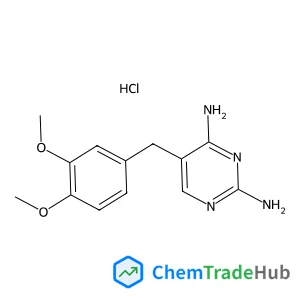
5-(3,4-Dimethoxybenzyl)-2,4-pyrimidinediamine hydrochloride (1:1)
CAS Number:
2507-23-5
Molecular Formula:
C13H17ClN4O2
Recommended Suppliers







Disclaimer
This page provides academic journal information for reference and research purposes only. We are not affiliated with any journal publishers and do not handle publication submissions. For publication-related inquiries, please contact the respective journal publishers directly.
If you notice any inaccuracies in the information displayed, please contact us at support@chemtradehub.com. We will promptly review and address your concerns.