


A theoretical study of atomically dispersed MN4/C (M = Fe or Mn) as a high-activity catalyst for the oxygen reduction reaction
Literature Information
Publication Date
2020-11-23
DOI
10.1039/D0CP04676K
Impact Factor
3.676
Authors
Hao Xu, Dan Wang, Peixia Yang, Anmin Liu, Ruopeng Li, Yun Li, Lihui Xiao, Jinqiu Zhang, Maozhong An
View Original
Abstract
Carbon-based, non-noble metal catalysts for the oxygen reduction reaction (ORR) are crucial for the large-scale application of metal–air batteries and fuel cells. Density functional theory calculations were performed to explore the potential of atomically dispersed MN4/C (M = Fe or Mn) as an ORR catalyst in an acidic electrolyte and the ORR mechanism on MN4/C was systematically studied. The results indicated MN4 as the active site of MN4/C and a four-electron OOH transformation pathway as the preferred ORR mechanism on the MN4/C surface. The Gibbs free energy diagram showed that the rate-determining step of the FeN4/C and MnN4/C catalysts is the formation of the second H2O molecule and OOH*, respectively. FeN4/C exhibited higher thermodynamic limiting potential (0.79 V) and, thus, higher ORR activity than MnN4/C (0.52 V) in an acidic environment; its excellent catalytic performance is due to the nice electron structure and adsorption properties of the FeN4 site. Therefore, this work demonstrates that atomically dispersed MN4/C is a promising catalyst for the ORR.
Recommended Journals

Journal of Natural Medicines

Russian Journal of Bioorganic Chemistry

Russian Journal of General Chemistry

Saudi Pharmaceutical Journal

Current Opinion in Solid State & Materials Science

Journal of Peptide Science

Chemistry Education Research and Practice

Current Opinion in Colloid & Interface Science

Nature Medicine

Russian Journal of Organic Chemistry
Related Literature
Synthesis and catalytic properties of MIL-100(Fe), an iron(iii) carboxylate with large pores
Patricia Horcajada, Suzy Surblé, Christian Serre, Do-Young Hong, You-Kyong Seo, Jong-San Chang, Jean-Marc Grenèche, Irene Margiolaki, Gérard Férey
2007-05-15
Communication
DOI: 10.1039/B704325B
Shape-controlled synthesis of protein-conjugated silver sulfide nanocrystals and study on the inhibition of tumor cell viability
Lin Yang, Hua-Jie Wang, Hua-Yan Yang, Shan-Hu Liu, Bao-Fang Zhang, Kui Wang, Xiao-Ming Ma, Zhi Zheng
2008-05-08
Communication
DOI: 10.1039/B804274H
Alkylation of active methylene compounds with alcohols catalyzed by an iridium complex
Masao Morita, Yasushi Obora, Yasutaka Ishii
2007-04-30
Communication
DOI: 10.1039/B702293J
Highly diastereoselective ionic/radical domino reactions: single electron transfer induced cyclization of bis-sulfoxides‡
Jean-Philippe Goddard, Catherine Gomez, Franck Brebion, Sophie Beauvière, Louis Fensterbank, Max Malacria
2007-06-21
Communication
DOI: 10.1039/B705284G
O-Dihaloarenes as aryne precursors for nickel-catalyzed [2 + 2 + 2] cycloaddition with alkynes and nitriles
Jen-Chieh Hsieh, Chien-Hong Cheng
2008-05-06
Communication
DOI: 10.1039/B801870G
A chemo- and regio-selective three-component dihydropyrimidinone synthesis
Chris D. Bailey, Chris E. Houlden, Grégory L. J. Bar, Guy C. Lloyd-Jones, Kevin I. Booker-Milburn
2007-06-19
Communication
DOI: 10.1039/B707361E
Palladium-catalysed regioselective addition reaction of ethyl phenylphosphinate with terminal acetylenes: ligand- and solvent-dependent regioselectivity‡
Satish Kumar Nune, Masato Tanaka
2007-04-27
Communication
DOI: 10.1039/B703165C
Simple linear asymmetrical complexes of silver(i): NC–Ag–NH3 and Br–Ag–NH3
Ann M. Chippindale, Laura E. Head, Simon J. Hibble
2008-05-14
Communication
DOI: 10.1039/B803500H
Synthesis and self-assembly of propeller-shaped amphiphilic molecules
Kyung-Soo Moon, Eunji Lee, Myongsoo Lee
2008-04-23
Communication
DOI: 10.1039/B801108G
Stereocontrolled synthesis of carbocyclesvia four successive pericyclic reactions
Roxanne Clément, Christiane M. Grisé, Louis Barriault
2008-06-06
Communication
DOI: 10.1039/B803898H
You might also like
Compound Q&A
Are there alternatives to 1-(4-Chlorophenyl)-N-hydroxymethanimine (CAS: 3848-36-0) in synthesis?
When considering alternatives to 1-(4-Chlorophenyl)-N-hydroxymethanimine (CAS: 3...
3848-36-01-(4-Chlorophenyl)-N...
Compound Q&A
How should (1R,9S,10S,12S,14E,16S,19R,20R,21S,22R)-3,9,21-Trihydroxy-5,10,12,14,16,20,22-heptamethyl-23,24-dioxatetracyclo[17.3.1.1~6,9~.0~2,7~]tetracosa-2,5,7,14-tetraen-4-one (CAS: 183202-73-5) be stored?
This compound should be stored in a cool, dry place away from direct sunlight. I...
183202-73-5(1R,9S,10S,12S,14E,1...
Compound Q&A
How is 3-(4-Bromophenyl)-5-(2-fluorophenyl)-1,2,4-oxadiazole (CAS: 419553-16-5) typically synthesized?
3-(4-Bromophenyl)-5-(2-fluorophenyl)-1,2,4-oxadiazole is synthesized through a m...
419553-16-53-(4-Bromophenyl)-5-...
Compound Q&A
How is 5-Chloro-2-(4-chlorophenyl)-4-methyl-6-[3-(1-piperidinyl)propoxy]pyrimidine (CAS: 1639220-19-1) typically synthesized?
5-Chloro-2-(4-chlorophenyl)-4-methyl-6-[3-(1-piperidinyl)propoxy]pyrimidine (CAS...
1639220-19-15-Chloro-2-(4-chloro...
Compound Q&A
What industries use 2-Chloro-4-(difluoromethoxy)pyridine (CAS: 1206978-15-5)?
2-Chloro-4-(difluoromethoxy)pyridine is used in the pharmaceutical industry for ...
1206978-15-52-Chloro-4-(difluoro...
Compound Q&A
What regulatory guidelines apply to 3-Chloro-6-methylpyridazine (CAS: 1121-79-5)?
3-Chloro-6-methylpyridazine (CAS: 1121-79-5) is classified under the Globally Ha...
1121-79-53-Chloro-6-methylpyr...
Compound Q&A
Are there alternatives to Methyl 4,5-dimethyl-2-nitrobenzoate in synthesis?
Several alternatives can be used in the synthesis of Methyl 4,5-dimethyl-2-nitro...
90922-74-0Methyl 4,5-dimethyl-...
Compound Q&A
Are there alternatives to (2E,2'E)-3,3'-(1,4-Phenylene)bisacrylaldehyde in synthesis?
Alternatives to (2E,2'E)-3,3'-(1,4-Phenylene)bisacrylaldehyde include other acry...
63405-68-5(2E,2'E)-3,3'-(1,4-P...
Compound Q&A
What is 3-Amino-5-chloropyridin-2-ol hydrochloride (CAS: 1261906-29-9)?
3-Amino-5-chloropyridin-2-ol hydrochloride is an organic compound with the CAS n...
1261906-29-93-Amino-5-chloropyri...
Compound Q&A
What precautions should be taken when handling 6,7-Difluoro-2,3-dihydro-4H-chromen-4-one (CAS: 1092349-93-3)?
When handling 6,7-Difluoro-2,3-dihydro-4H-chromen-4-one, it is essential to wear...
1092349-93-36,7-Difluoro-2,3-dih...
Source Journal
Physical Chemistry Chemical Physics

CiteScore:
5.5
Self-citation Rate:
10.3%
Articles per Year:
3036
Physical Chemistry Chemical Physics (PCCP) is an international journal co-owned by 19 physical chemistry and physics societies from around the world. This journal publishes original, cutting-edge research in physical chemistry, chemical physics and biophysical chemistry. To be suitable for publication in PCCP, articles must include significant innovation and/or insight into physical chemistry; this is the most important criterion that reviewers and Editors will judge against when evaluating submissions. The journal has a broad scope and welcomes contributions spanning experiment, theory, computation and data science. Topical coverage includes spectroscopy, dynamics, kinetics, statistical mechanics, thermodynamics, electrochemistry, catalysis, surface science, quantum mechanics, quantum computing and machine learning. Interdisciplinary research areas such as polymers and soft matter, materials, nanoscience, energy, surfaces/interfaces, and biophysical chemistry are welcomed if they demonstrate significant innovation and/or insight into physical chemistry. Joined experimental/theoretical studies are particularly appreciated when complementary and based on up-to-date approaches.
Recommended Compounds
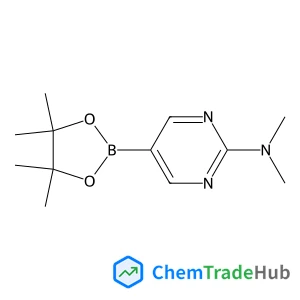
N,N-Dimethyl-5-(4,4,5,5-tetramethyl-1,3,2-dioxaborolan-2-yl)-2-pyrimidinamine
CAS Number:
1032759-30-0
Molecular Formula:
C12H20BN3O2
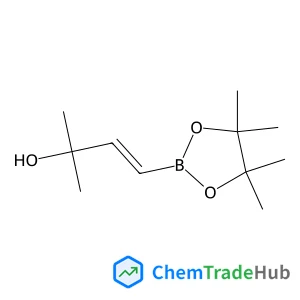
(E)-2-methyl-4-(4,4,5,5-tetramethyl-1,3,2-dioxaborolan-2-yl)but-3-en-2-ol
CAS Number:
581802-26-8
Molecular Formula:
C11H21BO3
Recommended Suppliers






Disclaimer
This page provides academic journal information for reference and research purposes only. We are not affiliated with any journal publishers and do not handle publication submissions. For publication-related inquiries, please contact the respective journal publishers directly.
If you notice any inaccuracies in the information displayed, please contact us at support@chemtradehub.com. We will promptly review and address your concerns.