












Highly diastereoselective ionic/radical domino reactions: single electron transfer induced cyclization of bis-sulfoxides‡
Literature Information
Publication Date
2007-06-21
DOI
10.1039/B705284G
Impact Factor
6.222
Authors
Jean-Philippe Goddard, Catherine Gomez, Franck Brebion, Sophie Beauvière, Louis Fensterbank, Max Malacria
View Original
Abstract
SET oxidation of bis-sulfinyl anions has enabled the uses of bis-sulfinyl radical as a synthetic equivalent of chiral acyl and methylene radicals involved in tandem reactions leading to the enantioselective construction of various carbo- and heterocyclic derivatives.
Recommended Journals
Related Literature
Electrochemical CO2 reduction on Au surfaces: mechanistic aspects regarding the formation of major and minor products
Etosha R. Cave, Joseph H. Montoya, Kendra P. Kuhl, David N. Abram, Toru Hatsukade, Chuan Shi
2017-06-06
Paper
DOI: 10.1039/C7CP02855E
Modeling the absorption spectrum of the permanganate ion in vacuum and in aqueous solution
Jógvan Magnus Haugaard Olsen, Erik Donovan Hedegård
2017-05-31
Paper
DOI: 10.1039/C7CP01194F
Thermodynamic analysis of alkali metal complex formation of polymer-bonded crown ether
Alexandra Bey, Oliver Dreyer
2017-06-01
Paper
DOI: 10.1039/C7CP02651J
Optimization of hydrophilic/hydrophobic phase separation in sPEEK membranes by hydrothermal treatments
H. Mendil-Jakani, I. Zamanillo López, V. H. Mareau, L. Gonon
2017-05-22
Paper
DOI: 10.1039/C7CP00087A
Positron annihilation characteristics, water uptake and proton conductivity of composite Nafion membranes
Chongshan Yin, Lingtao Wang, Jingjing Li, Yawei Zhou, Haining Zhang, Pengfei Fang, Chunqing He
2017-05-30
Paper
DOI: 10.1039/C7CP03052E
A promising single atom catalyst for CO oxidation: Ag on boron vacancies of h-BN sheets
Peng Lv, Shuo Li, Dongwei Ma, Ruqian Wu
2017-06-02
Paper
DOI: 10.1039/C7CP02430D
Femtosecond time-resolved photoelectron spectroscopy of the benzyl radical
L. Poisson
2017-04-12
Paper
DOI: 10.1039/C7CP01437F
Rates and equilibrium constants of the ligand-induced conformational transition of an HCN ion channel protein domain determined by DEER spectroscopy
Alberto Collauto, Royi Kaufmann, William N. Zagotta, Daniella Goldfarb
2017-05-26
Paper
DOI: 10.1039/C7CP01925D
Aggregation of cyclic polypeptoids bearing zwitterionic end-groups with attractive dipole–dipole and solvophobic interactions: a study by small-angle neutron scattering and molecular dynamics simulation
Pu Du, Ang Li, Xin Li, Yueheng Zhang, Changwoo Do, Lilin He, Steven W. Rick, Vijay T. John, Revati Kumar, Donghui Zhang
2017-04-12
Paper
DOI: 10.1039/C7CP01602F
Revealing the structure and functionality of graphene oxide and reduced graphene oxide/pyrene carboxylic acid interfaces by correlative spectral and imaging analysis
M. Potara, A. M. Craciun, R. Boukherroub
2017-05-24
Paper
DOI: 10.1039/C7CP02443F
You might also like
Compound Q&A
Are there alternatives to 1-(4-Chlorophenyl)-N-hydroxymethanimine (CAS: 3848-36-0) in synthesis?
When considering alternatives to 1-(4-Chlorophenyl)-N-hydroxymethanimine (CAS: 3...
3848-36-01-(4-Chlorophenyl)-N...
Compound Q&A
How should (1R,9S,10S,12S,14E,16S,19R,20R,21S,22R)-3,9,21-Trihydroxy-5,10,12,14,16,20,22-heptamethyl-23,24-dioxatetracyclo[17.3.1.1~6,9~.0~2,7~]tetracosa-2,5,7,14-tetraen-4-one (CAS: 183202-73-5) be stored?
This compound should be stored in a cool, dry place away from direct sunlight. I...
183202-73-5(1R,9S,10S,12S,14E,1...
Compound Q&A
How is 3-(4-Bromophenyl)-5-(2-fluorophenyl)-1,2,4-oxadiazole (CAS: 419553-16-5) typically synthesized?
3-(4-Bromophenyl)-5-(2-fluorophenyl)-1,2,4-oxadiazole is synthesized through a m...
419553-16-53-(4-Bromophenyl)-5-...
Compound Q&A
How is 5-Chloro-2-(4-chlorophenyl)-4-methyl-6-[3-(1-piperidinyl)propoxy]pyrimidine (CAS: 1639220-19-1) typically synthesized?
5-Chloro-2-(4-chlorophenyl)-4-methyl-6-[3-(1-piperidinyl)propoxy]pyrimidine (CAS...
1639220-19-15-Chloro-2-(4-chloro...
Compound Q&A
What industries use 2-Chloro-4-(difluoromethoxy)pyridine (CAS: 1206978-15-5)?
2-Chloro-4-(difluoromethoxy)pyridine is used in the pharmaceutical industry for ...
1206978-15-52-Chloro-4-(difluoro...
Compound Q&A
What regulatory guidelines apply to 3-Chloro-6-methylpyridazine (CAS: 1121-79-5)?
3-Chloro-6-methylpyridazine (CAS: 1121-79-5) is classified under the Globally Ha...
1121-79-53-Chloro-6-methylpyr...
Compound Q&A
Are there alternatives to Methyl 4,5-dimethyl-2-nitrobenzoate in synthesis?
Several alternatives can be used in the synthesis of Methyl 4,5-dimethyl-2-nitro...
90922-74-0Methyl 4,5-dimethyl-...
Compound Q&A
Are there alternatives to (2E,2'E)-3,3'-(1,4-Phenylene)bisacrylaldehyde in synthesis?
Alternatives to (2E,2'E)-3,3'-(1,4-Phenylene)bisacrylaldehyde include other acry...
63405-68-5(2E,2'E)-3,3'-(1,4-P...
Compound Q&A
What is 3-Amino-5-chloropyridin-2-ol hydrochloride (CAS: 1261906-29-9)?
3-Amino-5-chloropyridin-2-ol hydrochloride is an organic compound with the CAS n...
1261906-29-93-Amino-5-chloropyri...
Compound Q&A
What precautions should be taken when handling 6,7-Difluoro-2,3-dihydro-4H-chromen-4-one (CAS: 1092349-93-3)?
When handling 6,7-Difluoro-2,3-dihydro-4H-chromen-4-one, it is essential to wear...
1092349-93-36,7-Difluoro-2,3-dih...
Source Journal
Chemical Communications

CiteScore:
8.6
Self-citation Rate:
4.7%
Articles per Year:
2458
ChemComm publishes urgent research which is of outstanding significance and interest to experts in the field, while also appealing to the journal’s broad chemistry readership. Our communication format is ideally suited to short, urgent studies that are of such importance that they require accelerated publication. Our scope covers all topics in chemistry, and research at the interface of chemistry and other disciplines (such as materials science, nanoscience, physics, engineering and biology) where there is a significant novelty in the chemistry aspects. Major topic areas covered include: Analytical Chemistry Catalysis Chemical Biology and medicinal chemistry Computational Chemistry and Machine Learning Energy and sustainable chemistry Environmental Chemistry Green Chemistry Inorganic Chemistry Materials Chemistry Nanoscience Organic Chemistry Physical Chemistry Polymer Chemistry Supramolecular Chemistry
Recommended Compounds
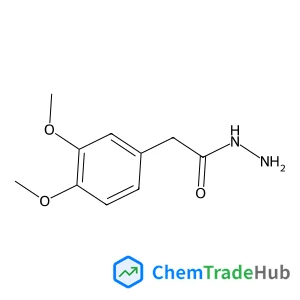
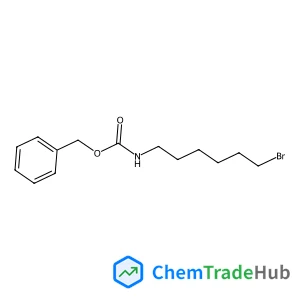

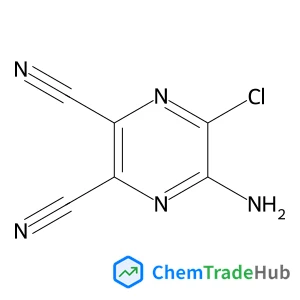
5-(3,4-Dimethoxybenzyl)-2,4-pyrimidinediamine hydrochloride (1:1)
CAS Number:
2507-23-5
Molecular Formula:
C13H17ClN4O2
Recommended Suppliers





Disclaimer
This page provides academic journal information for reference and research purposes only. We are not affiliated with any journal publishers and do not handle publication submissions. For publication-related inquiries, please contact the respective journal publishers directly.
If you notice any inaccuracies in the information displayed, please contact us at support@chemtradehub.com. We will promptly review and address your concerns.