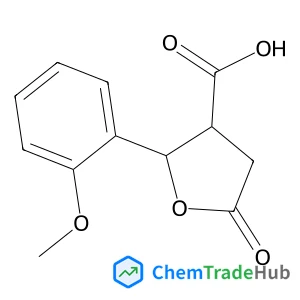
4-Cyclohexene-1,2-dicarboxylic acid, 1,2-dimethyl ester, (1R,2R)-rel-
CAS Number:
17673-68-6
Molecular Formula:
C10H14O4
Brendan Moore, Termeh Bashiri, Hatsuki Otani, Pavle Djuricanin, Rasoul Malekfar, Amir Hossein Farahbod, Takamasa Momose
Samples of H2O, HDO, and D2O were isolated in solid parahydrogen (pH2) matrices and irradiated by vacuum ultraviolet (VUV) radiation at 147 nm. Fourier-Transform Infrared (FTIR) spectra showed a clear depletion of D2O and an enrichment of both HDO and H2O by 147 nm irradiation. These irradiation-dependent changes are attributed to the production of OH and/or OD radicals through photodissociations of H2O, HDO, and D2O. The radicals subsequently react with the hydrogen matrix, leading to the observed enrichment of H2O. No trace of isolated OH or OD was detected in the FTIR spectra, indicating that the OH/OD radicals react with the surrounding matrix hydrogen molecules via quantum tunneling within our experimental timescale. The observed temporal changes in concentrations, especially the increase of HDO concentration during VUV irradiation, can be interpreted by a model with a rapid conversion from orthohydrogen (oH2) to pH2 in water–oH2 complexes upon VUV photodissociation, indicating either the acceleration of the nuclear spin conversion (NSC) of H2 due to the magnetic moment of the intermediate OH/OD radical, or the preferential reaction of the OH/OD radical with a nearby oH2 molecule over other pH2 molecules. We have also identified and quantified an anomalously slow NSC of H2O and D2O complexed with oH2 in solid pH2.
Luwei Sun, Haiping He, Liang Hu, Zhizhen Ye
DOI: 10.1039/C2CP43657D
Allan G. Hansen, Princia Salvatore, Kasper K. Karlsen, Richard J. Nichols, Jesper Wengel, Jens Ulstrup
DOI: 10.1039/C2CP42351K
Syed Raza Ali Raza, Young Tack Lee, Youn-Gyoung Chang, Pyo Jin Jeon, Jae Hoon Kim, Ryong Ha, Heon-Jin Choi, Seongil Im
DOI: 10.1039/C3CP44027C
Giulio Lolli, Nelli Muratova, Igor Kasatkin, Oksana Storcheva, Klaus Köhler, Martin Muhler, Robert Schlögl
DOI: 10.1039/C2CP41680H
Daniel Cardoso Rodrigues, Gustavo Fernandes Souza Andrade, Marcia Laudelina Arruda Temperini
DOI: 10.1039/C2CP43229C
Christopher E. Bertrand, Yang Zhang, Sow-Hsin Chen
DOI: 10.1039/C2CP43235H
Yee-Fun Lim, Kui Yao, Francis Eng Hock Tay, Kar Heng Seah
DOI: 10.1039/C2CP43873A
Pablo Ledezma, Andrew Stinchcombe, John Greenman, Ioannis Ieropoulos
DOI: 10.1039/C2CP44548D
Jakub Reiter, Sebastian Jeremias, Elie Paillard, Martin Winter, Stefano Passerini
DOI: 10.1039/C2CP43066E
Felix Deschler, Daniel Riedel, Bernhard Ecker
DOI: 10.1039/C2CP43876C
6-(3-Fluorophenyl)picolinic acid is generally considered safe for laboratory use...
(3R)-3-Pyrrolidinol is used in the pharmaceutical industry as a precursor for dr...
When handling (4R,5R)-4,5-Diethoxycarbonyl-2,2-dimethyldioxolane (CAS: 59779-75-...
1-(6-Chloroimidazo[1,2-b]pyridazin-3-yl)ethanone is often synthesized via a mult...
The market for N-Ethyl-3,4-dimethylbenzylamine (CAS: 39180-83-1) remains steady,...
Tert-butyl 3-(pyrrolidin-1-yl)azetidine-1-carboxylate is a chemical compound wit...
1-Bromo-3-chloro-2,4-dimethoxybenzene (CAS: 1228956-93-1) falls under the classi...
The safety of 8-Bromo-2-methyl-3,4-dihydroisoquinolin-1(2H)-one (CAS: 1368622-07...
Benzyl [(3S)-2,6-dioxo-3-piperidinyl]carbamate is generally safe when handled wi...
1-{[4-(4,4,5,5-Tetramethyl-1,3,2-dioxaborolan-2-yl)phenyl]sulfonyl}pyrrolidine s...

Physical Chemistry Chemical Physics (PCCP) is an international journal co-owned by 19 physical chemistry and physics societies from around the world. This journal publishes original, cutting-edge research in physical chemistry, chemical physics and biophysical chemistry. To be suitable for publication in PCCP, articles must include significant innovation and/or insight into physical chemistry; this is the most important criterion that reviewers and Editors will judge against when evaluating submissions. The journal has a broad scope and welcomes contributions spanning experiment, theory, computation and data science. Topical coverage includes spectroscopy, dynamics, kinetics, statistical mechanics, thermodynamics, electrochemistry, catalysis, surface science, quantum mechanics, quantum computing and machine learning. Interdisciplinary research areas such as polymers and soft matter, materials, nanoscience, energy, surfaces/interfaces, and biophysical chemistry are welcomed if they demonstrate significant innovation and/or insight into physical chemistry. Joined experimental/theoretical studies are particularly appreciated when complementary and based on up-to-date approaches.
![(2E)-4-[(1R,2S,8R,19S,21R)-14-Hydroxy-11-isopropenyl-8,23,23-trimethyl-5-(3-methyl-2-buten-1-yl)-16,20-dioxo-3,7,22-trioxaheptacyclo[17.4.1.1~8,12~.0~2,17~.0~2,21~.0~4,15~.0~6,13~]pentacosa-4(15),5,13
,17-tetraen-21-yl]-2-methyl-2-butenoic acid structure](https://static.chemtradehub.com/structs/173/173867-04-4-d2d3.webp "(2E)-4-[(1R,2S,8R,19S,21R)-14-Hydroxy-11-isopropenyl-8,23,23-trimethyl-5-(3-methyl-2-buten-1-yl)-16,20-dioxo-3,7,22-trioxaheptacyclo[17.4.1.1~8,12~.0~2,17~.0~2,21~.0~4,15~.0~6,13~]pentacosa-4(15),5,13
,17-tetraen-21-yl]-2-methyl-2-butenoic acid structure")
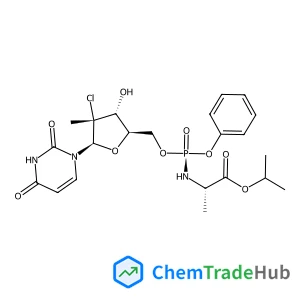
![Benzyl spiro[indole-3,4'-piperidine]-1(2H)-carboxylate hydrochloride (1:1) structure](https://static.chemtradehub.com/structs/159/159635-46-8-8de0.webp "Benzyl spiro[indole-3,4'-piperidine]-1(2H)-carboxylate hydrochloride (1:1) structure")