












Deeply-cooled water under strong confinement: neutron scattering investigations and the liquid–liquid critical point hypothesis
Literature Information
Publication Date
2012-11-26
DOI
10.1039/C2CP43235H
Impact Factor
3.676
Authors
Christopher E. Bertrand, Yang Zhang, Sow-Hsin Chen
View Original
Abstract
We present an overview of recent experimental investigations into the properties of strongly-confined water below the bulk freezing temperature. Under strong confinement, the crystallization of water is completely suppressed and the behavior of the confined liquid state can be measured at temperatures and pressures that are inaccessible to the bulk liquid. We focus on two phenomena that have recently been discovered in strongly confined water: the density minimum and the fragile-to-strong dynamic crossover. All experimental results seem to indicate that confined water undergoes a unique kind of transition below the bulk homogeneous nucleation limit. Much of the recent work on deeply-cooled water under strong confinement has been motivated by the liquid–liquid critical point (LLCP) hypothesis. We discuss this hypothesis in the context of the various experimental findings.
Related Literature
A bio-inspired strategy for the interfacial assembly of graphene oxide with in situ generated Ag/AgCl: designing sustainable hybrid photocatalysts
Gousia Begum
2017-02-14
Paper
DOI: 10.1039/C6CP07854K
Water and CO (co-)adsorption on pseudomorphic Pt films on Ru(0001) – a low-temperature scanning tunneling microscopy study
Martin Schilling, Sylvain Brimaud, R. Jürgen Behm
2017-08-04
Paper
DOI: 10.1039/C7CP03961A
High temperature activation of hematite nanorods for sunlight driven water oxidation reaction
Nathalie Minko Ito, Waldemir Moura Carvalho, Jr, Dereck Nills Ferreira Muche, Ricardo Hauch Ribeiro Castro, Gustavo Martini Dalpian
2017-08-24
Paper
DOI: 10.1039/C7CP04827K
Correction: Elucidation of transport mechanism and enhanced alkali ion transference numbers in mixed alkali metal–organic ionic molten salts
Fangfang Chen
2017-09-11
Correction
DOI: 10.1039/C7CP90203D
Tunable phenol remediation from wastewater using SWCNT-based, sub-nanometer porous membranes: reactive molecular dynamics simulations and DFT calculations
F. Moradi, M. Darvish Ganji, Y. Sarrafi
2017-02-23
Paper
DOI: 10.1039/C6CP08525C
Thermal compaction of the intrinsically disordered protein tau: entropic, structural, and hydrophobic factors
Anna Battisti, Gabriele Ciasca, Alessandro Grottesi, Alexander Tenenbaum
2017-02-23
Paper
DOI: 10.1039/C6CP07683A
The transient manifold structure of the p53 extreme C-terminal domain: insight into disorder, recognition, and binding promiscuity by molecular dynamics simulations
E. Fadda, M. G. Nixon
2017-06-02
Paper
DOI: 10.1039/C7CP02485A
Photophysical characterization and time-resolved spectroscopy of a anthradithiophene dimer: exploring the role of conformation in singlet fission
Jacob C. Dean, Ruomeng Zhang, Rawad K. Hallani, Ryan D. Pensack, Samuel N. Sanders, Daniel G. Oblinsky, Sean R. Parkin, Luis M. Campos, John E. Anthony, Gregory D. Scholes
2017-08-18
Paper
DOI: 10.1039/C7CP03774K
Amphiphilic nanosheet self-assembly at the water/oil interface: computer simulations
Wenjun Xiang, Shuangliang Zhao, Xianyu Song, Shenwen Fang, Fen Wang, Cheng Zhong, Zhaoyang Luo
2017-02-10
Paper
DOI: 10.1039/C6CP08654C
You might also like
Compound Q&A
Is 6-(3-Fluorophenyl)picolinic acid (CAS: 887982-40-3) safe?
6-(3-Fluorophenyl)picolinic acid is generally considered safe for laboratory use...
887982-40-36-(3-Fluorophenyl)pi...
Compound Q&A
What industries use (3R)-3-Pyrrolidinol (CAS: 2799-21-5)?
(3R)-3-Pyrrolidinol is used in the pharmaceutical industry as a precursor for dr...
2799-21-5(3R)-3-Pyrrolidinol
Compound Q&A
What precautions should be taken when handling (4R,5R)-4,5-Diethoxycarbonyl-2,2-dimethyldioxolane (CAS: 59779-75-8)?
When handling (4R,5R)-4,5-Diethoxycarbonyl-2,2-dimethyldioxolane (CAS: 59779-75-...
59779-75-8(4R,5R)-4,5-Diethoxy...
Compound Q&A
How is 1-(6-Chloroimidazo[1,2-b]pyridazin-3-yl)ethanone (CAS: 90734-71-7) typically synthesized?
1-(6-Chloroimidazo[1,2-b]pyridazin-3-yl)ethanone is often synthesized via a mult...
90734-71-71-(6-Chloroimidazo[1...
Compound Q&A
What is the market or research trend for N-Ethyl-3,4-dimethylbenzylamine (CAS: 39180-83-1)?
The market for N-Ethyl-3,4-dimethylbenzylamine (CAS: 39180-83-1) remains steady,...
39180-83-1N-Ethyl-3,4-dimethyl...
Compound Q&A
What is Tert-butyl 3-(pyrrolidin-1-yl)azetidine-1-carboxylate (CAS: 1019008-21-9)?
Tert-butyl 3-(pyrrolidin-1-yl)azetidine-1-carboxylate is a chemical compound wit...
1019008-21-9Tert-butyl 3-(pyrrol...
Compound Q&A
What regulatory guidelines apply to 1-Bromo-3-chloro-2,4-dimethoxybenzene (CAS: 1228956-93-1)?
1-Bromo-3-chloro-2,4-dimethoxybenzene (CAS: 1228956-93-1) falls under the classi...
1228956-93-11-Bromo-3-chloro-2,4...
Compound Q&A
Is 8-Bromo-2-methyl-3,4-dihydroisoquinolin-1(2H)-one (CAS: 1368622-07-4) safe?
The safety of 8-Bromo-2-methyl-3,4-dihydroisoquinolin-1(2H)-one (CAS: 1368622-07...
1368622-07-48-Bromo-2-methyl-3,4...
Compound Q&A
Is Benzyl [(3S)-2,6-dioxo-3-piperidinyl]carbamate (CAS: 22785-43-9) safe?
Benzyl [(3S)-2,6-dioxo-3-piperidinyl]carbamate is generally safe when handled wi...
22785-43-9Benzyl [(3S)-2,6-dio...
Compound Q&A
How should 1-{[4-(4,4,5,5-Tetramethyl-1,3,2-dioxaborolan-2-yl)phenyl]sulfonyl}pyrrolidine (CAS: 928657-21-0) be stored?
1-{[4-(4,4,5,5-Tetramethyl-1,3,2-dioxaborolan-2-yl)phenyl]sulfonyl}pyrrolidine s...
928657-21-01-{[4-(4,4,5,5-Tetra...
Source Journal
Physical Chemistry Chemical Physics

CiteScore:
5.5
Self-citation Rate:
10.3%
Articles per Year:
3036
Physical Chemistry Chemical Physics (PCCP) is an international journal co-owned by 19 physical chemistry and physics societies from around the world. This journal publishes original, cutting-edge research in physical chemistry, chemical physics and biophysical chemistry. To be suitable for publication in PCCP, articles must include significant innovation and/or insight into physical chemistry; this is the most important criterion that reviewers and Editors will judge against when evaluating submissions. The journal has a broad scope and welcomes contributions spanning experiment, theory, computation and data science. Topical coverage includes spectroscopy, dynamics, kinetics, statistical mechanics, thermodynamics, electrochemistry, catalysis, surface science, quantum mechanics, quantum computing and machine learning. Interdisciplinary research areas such as polymers and soft matter, materials, nanoscience, energy, surfaces/interfaces, and biophysical chemistry are welcomed if they demonstrate significant innovation and/or insight into physical chemistry. Joined experimental/theoretical studies are particularly appreciated when complementary and based on up-to-date approaches.
Recommended Compounds
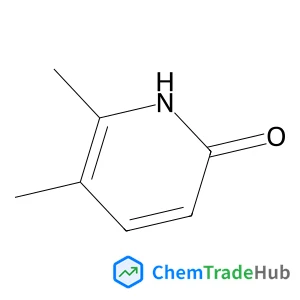
![Benzyl spiro[indole-3,4'-piperidine]-1(2H)-carboxylate hydrochloride (1:1) structure](https://static.chemtradehub.com/structs/159/159635-46-8-8de0.webp "Benzyl spiro[indole-3,4'-piperidine]-1(2H)-carboxylate hydrochloride (1:1) structure")
Benzyl spiro[indole-3,4'-piperidine]-1(2H)-carboxylate hydrochloride (1:1)
CAS Number:
159635-46-8
Molecular Formula:
C20H23ClN2O2

Recommended Suppliers





Disclaimer
This page provides academic journal information for reference and research purposes only. We are not affiliated with any journal publishers and do not handle publication submissions. For publication-related inquiries, please contact the respective journal publishers directly.
If you notice any inaccuracies in the information displayed, please contact us at support@chemtradehub.com. We will promptly review and address your concerns.