












SERS performance of gold nanotubes obtained by sputtering onto polycarbonate track-etched membranes
Literature Information
Publication Date
2012-11-20
DOI
10.1039/C2CP43229C
Impact Factor
3.676
Authors
Daniel Cardoso Rodrigues, Gustavo Fernandes Souza Andrade, Marcia Laudelina Arruda Temperini
View Original
Abstract
Surface-enhanced Raman scattering (SERS) is a powerful and versatile tool for studying molecules on metallic surfaces with great impact on areas such as electrochemistry, catalysis and related subjects. The search for new SERS-active substrates with high performance, namely high enhancement factors and reproducibility, is currently the main focus of several research groups. Here is shown an alternative easy and inexpensive synthetic approach to a SERS-substrate comprised of gold nanotubes obtained by the sputtering onto polycarbonate track-etched membranes used as template. Its SERS performance was evaluated by mapping (10 × 10) μm2 areas and resulted in average enhancement factors that span from 2.3 × 10³ to 1.2 × 10⁵ with a maximum enhancement factor of 2.5 × 10⁵. The enhancement depended strongly on the template pore diameter, with the best performance obtained when membranes with pore diameters of 400 nm were used as template. Further analysis showed that the larger enhancements came from coalesced gold nanotubes and detection of the dye rhodamine 6G at concentrations as low as 0.1 nM was possible. These results put this substrate as a valuable and easy-to-fabricate tool for studying and detecting molecules on surfaces. The proposed methodology could be easily adapted to other metals, such as silver and copper.
Related Literature
Hydrogen bonding assisted reversible-deactivation radical copolymerization of 4-vinylpyridine and styrene: a facile approach for adjusting polymerization behavior, polymer composition, etc.
Xiaoji Zhou, Wenxiang Wang, Huali Yu, Junfei Zhao, Zhengbiao Zhang, Xiulin Zhu
2013-04-08
Paper
DOI: 10.1039/C3PY00255A
Tunable thermo-, pH- and light-responsive copolymer micelles
Wen Guo, Hui Zou
2013-05-14
Communication
DOI: 10.1039/C3PY00478C
π-Congested poly(paraphenylene) from 2,2′,6,6′-tetraphenyl-1,1′-biphenyl units: synthesis and structural characterization
Florian Schlütter, Tomohiko Nishiuchi, Volker Enkelmann, Klaus Müllen
2013-03-25
Communication
DOI: 10.1039/C3PY00166K
pH-responsive and biodegradable polymeric micelles based on poly(β-amino ester)-graft-phosphorylcholine for doxorubicin delivery
Haibo Wang, Fangming Xu, Yin Wang, Xiangsheng Liu, Qiao Jin, Jian Ji
2013-03-01
Paper
DOI: 10.1039/C3PY00139C
Photo-responsive linear and cross-linked supramolecular polymers based on host–guest interactions
Shengyi Dong, Lingyan Gao, Jinying Li, Donghua Xu, Qizhong Zhou
2013-05-01
Paper
DOI: 10.1039/C3PY00494E
Gradient copolymers of styrene–methyl acrylate and styrene–acrylic acid by organostibine-mediated controlled/living radical polymerization and their glass transition behaviors
Jinping Zhang, Jun Li, Liyan Huang, Zhengping Liu
2013-06-06
Paper
DOI: 10.1039/C3PY00484H
Synthesis and characterization of a new multifunctional polymeric prodrug paclitaxel–polyphosphoester–folic acid for targeted drug delivery
Guoyi Zhang, Mingzu Zhang, Jinlin He, Peihong Ni
2013-05-31
Paper
DOI: 10.1039/C3PY00419H
Helix oscillation of polyacetylene esters detected by dynamic 1H NMR, IR, and UV-vis methods in solution
Yoshiaki Yoshida, Yasuteru Mawatari, Asahi Motoshige, Ranko Motodshige, Toshifumi Hiraoki, Masayoshi Tabata
2013-03-18
Paper
DOI: 10.1039/C3PY00295K
2-Amino-1,3-propane diols: a versatile platform for the synthesis of aliphatic cyclic carbonate monomers
Shrinivas Venkataraman, Natalia Veronica, Zhi Xiang Voo, James L. Hedrick, Yi Yan Yang
2013-03-22
Communication
DOI: 10.1039/C3PY00318C
A nondestructive, statistical method for determination of initiation efficiency: dipentaerythritol-aided synthesis of ternary ABC3 miktoarm stars using a combined “arm-first” and “core-first” approach
Alexander A. Steinschulte, Bjoern Schulte, Natascha Drude, Michael Erberich, Christian Herbert, Jun Okuda, Martin Möller, Felix A. Plamper
2013-05-01
Paper
DOI: 10.1039/C3PY00444A
You might also like
Compound Q&A
Is 6-(3-Fluorophenyl)picolinic acid (CAS: 887982-40-3) safe?
6-(3-Fluorophenyl)picolinic acid is generally considered safe for laboratory use...
887982-40-36-(3-Fluorophenyl)pi...
Compound Q&A
What industries use (3R)-3-Pyrrolidinol (CAS: 2799-21-5)?
(3R)-3-Pyrrolidinol is used in the pharmaceutical industry as a precursor for dr...
2799-21-5(3R)-3-Pyrrolidinol
Compound Q&A
What precautions should be taken when handling (4R,5R)-4,5-Diethoxycarbonyl-2,2-dimethyldioxolane (CAS: 59779-75-8)?
When handling (4R,5R)-4,5-Diethoxycarbonyl-2,2-dimethyldioxolane (CAS: 59779-75-...
59779-75-8(4R,5R)-4,5-Diethoxy...
Compound Q&A
How is 1-(6-Chloroimidazo[1,2-b]pyridazin-3-yl)ethanone (CAS: 90734-71-7) typically synthesized?
1-(6-Chloroimidazo[1,2-b]pyridazin-3-yl)ethanone is often synthesized via a mult...
90734-71-71-(6-Chloroimidazo[1...
Compound Q&A
What is the market or research trend for N-Ethyl-3,4-dimethylbenzylamine (CAS: 39180-83-1)?
The market for N-Ethyl-3,4-dimethylbenzylamine (CAS: 39180-83-1) remains steady,...
39180-83-1N-Ethyl-3,4-dimethyl...
Compound Q&A
What is Tert-butyl 3-(pyrrolidin-1-yl)azetidine-1-carboxylate (CAS: 1019008-21-9)?
Tert-butyl 3-(pyrrolidin-1-yl)azetidine-1-carboxylate is a chemical compound wit...
1019008-21-9Tert-butyl 3-(pyrrol...
Compound Q&A
What regulatory guidelines apply to 1-Bromo-3-chloro-2,4-dimethoxybenzene (CAS: 1228956-93-1)?
1-Bromo-3-chloro-2,4-dimethoxybenzene (CAS: 1228956-93-1) falls under the classi...
1228956-93-11-Bromo-3-chloro-2,4...
Compound Q&A
Is 8-Bromo-2-methyl-3,4-dihydroisoquinolin-1(2H)-one (CAS: 1368622-07-4) safe?
The safety of 8-Bromo-2-methyl-3,4-dihydroisoquinolin-1(2H)-one (CAS: 1368622-07...
1368622-07-48-Bromo-2-methyl-3,4...
Compound Q&A
Is Benzyl [(3S)-2,6-dioxo-3-piperidinyl]carbamate (CAS: 22785-43-9) safe?
Benzyl [(3S)-2,6-dioxo-3-piperidinyl]carbamate is generally safe when handled wi...
22785-43-9Benzyl [(3S)-2,6-dio...
Compound Q&A
How should 1-{[4-(4,4,5,5-Tetramethyl-1,3,2-dioxaborolan-2-yl)phenyl]sulfonyl}pyrrolidine (CAS: 928657-21-0) be stored?
1-{[4-(4,4,5,5-Tetramethyl-1,3,2-dioxaborolan-2-yl)phenyl]sulfonyl}pyrrolidine s...
928657-21-01-{[4-(4,4,5,5-Tetra...
Source Journal
Physical Chemistry Chemical Physics

CiteScore:
5.5
Self-citation Rate:
10.3%
Articles per Year:
3036
Physical Chemistry Chemical Physics (PCCP) is an international journal co-owned by 19 physical chemistry and physics societies from around the world. This journal publishes original, cutting-edge research in physical chemistry, chemical physics and biophysical chemistry. To be suitable for publication in PCCP, articles must include significant innovation and/or insight into physical chemistry; this is the most important criterion that reviewers and Editors will judge against when evaluating submissions. The journal has a broad scope and welcomes contributions spanning experiment, theory, computation and data science. Topical coverage includes spectroscopy, dynamics, kinetics, statistical mechanics, thermodynamics, electrochemistry, catalysis, surface science, quantum mechanics, quantum computing and machine learning. Interdisciplinary research areas such as polymers and soft matter, materials, nanoscience, energy, surfaces/interfaces, and biophysical chemistry are welcomed if they demonstrate significant innovation and/or insight into physical chemistry. Joined experimental/theoretical studies are particularly appreciated when complementary and based on up-to-date approaches.
Recommended Compounds
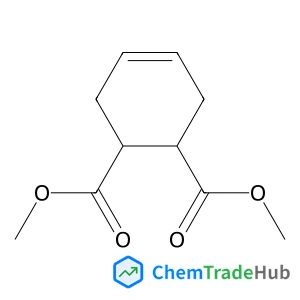
4-Cyclohexene-1,2-dicarboxylic acid, 1,2-dimethyl ester, (1R,2R)-rel-
CAS Number:
17673-68-6
Molecular Formula:
C10H14O4
![2-[({[(2-Methyl-2-propanyl)oxy]carbonyl}amino)methyl]isonicotinic acid structure](https://static.chemtradehub.com/structs/473/473924-63-9-973b.webp "2-[({[(2-Methyl-2-propanyl)oxy]carbonyl}amino)methyl]isonicotinic acid structure")
2-[({[(2-Methyl-2-propanyl)oxy]carbonyl}amino)methyl]isonicotinic acid
CAS Number:
473924-63-9
Molecular Formula:
C12H16N2O4

Recommended Suppliers




Disclaimer
This page provides academic journal information for reference and research purposes only. We are not affiliated with any journal publishers and do not handle publication submissions. For publication-related inquiries, please contact the respective journal publishers directly.
If you notice any inaccuracies in the information displayed, please contact us at support@chemtradehub.com. We will promptly review and address your concerns.