












Single atom-doped arsenene as electrocatalyst for reducing nitrogen to ammonia: a DFT study
Literature Information
Publication Date
2020-10-26
DOI
10.1039/D0CP04315J
Impact Factor
3.676
Authors
Ziwei Xu, Ruofei Song, Mingyuan Wang, Xiangzhao Zhang, Guiwu Liu, Guanjun Qiao
View Original
Abstract
Due to the wide application of NH3 in the energy and chemical industry, the rational design of a highly efficient and low-cost electrocatalyst for nitrogen fixation at moderate conditions is highly desirable to meet the increasing demand for sustainable energy production in the modern society. Herein, we have systematically studied the catalytic performance of transition metal (TM) atom (i.e., V, Cr, Fe, Co, Cu, Ru, Pd, Ag, Pt, Au)-doped arsenene nanosheet, a new two-dimensional (2D) nanomaterial in VA group, as a heterogeneous catalyst for nitrogen reduction reaction (NRR). By density functional theory (DFT) calculation and systematic theoretical screening, our study predicts that the systems of V-, Fe-, Co- and Ru-doped arsenene have promising potentials as NRR electrocatalysts with high-loading TM and highly stable adsorption of N2 molecule. Particularly, the V-doped system exhibits two feasible configurations for N2 adsorption and an ultralow overpotential (0.10 V) via the enzymatic pathway, which is very competitive among similar reported electrocatalysts. This theoretical study not only extends the electrocatalyst family for nitrogen fixation, but also further deepens our physical insights into catalytic improvement, which can be expected to guide the rational design of novel NRR catalysts.
Related Literature
Oxalamide-based bisdiamidophosphites: synthesis, coordination, and application in asymmetric metallocatalysis
Konstantin N. Gavrilov, Igor S. Mikhel, Sergey V. Zheglov, Vladislav K. Gavrilov, Ilya V. Chuchelkin, Ilya D. Firsin, Kirill P. Birin, Ivan S. Pytskii, Ksenia A. Paseshnichenko, Victor A. Tafeenko, Alexei A. Shiryaev
2019-03-28
Research Article
DOI: 10.1039/C9QO00237E
Visible-light-induced oxidative ring expansion of indoles with amidines
Ling-Ling Zhang, Wen-Bin Cao, Xiao-Ping Xu, Shun-Jun Ji
2019-04-02
Research Article
DOI: 10.1039/C9QO00379G
Synthesis of 3-((arylsulfonyl)methyl)indolin-2-ones via insertion of sulfur dioxide using anilines as the aryl source
Tong Liu, Danqing Zheng
2017-02-17
Research Article
DOI: 10.1039/C7QO00075H
A facile method to construct a 2,4,9-triazaadamantane skeleton and synthesize nitramine derivatives
Tianjiao Hou, Jian Zhang, Chenjiao Wang, Jun Luo
2017-06-13
Research Article
DOI: 10.1039/C7QO00357A
Organocatalytic enantioselective direct vinylogous Michael addition of γ-substituted deconjugate butenolides to azadienes
Wei Lin, Xiao Lin, Yuyu Cheng, Xiaoyong Chang, San Zhou, Pengfei Li, Wenjun Li
2019-05-22
Research Article
DOI: 10.1039/C9QO00597H
Intramolecular aminocyanation of alkenes promoted by hypervalent iodine
Hang Shen, Qingfu Deng, Ruojuan Liu, Yangyang Feng, Congke Zheng
2017-06-12
Research Article
DOI: 10.1039/C7QO00214A
(E)-Selective Friedel–Crafts acylation of alkynes to β-chlorovinyl ketones: defying isomerizations in batch reactions by flow chemistry approaches
Hyungmo Koo, Hun Young Kim, Kyungsoo Oh
2019-04-11
Research Article
DOI: 10.1039/C9QO00217K
Iridium-catalyzed asymmetric hydrogenation of quinazolinones
Guang-Shou Feng, Zi-Biao Zhao, Lei Shi
2019-04-29
Research Article
DOI: 10.1039/C9QO00443B
The effects of the heteroatom and position on excited-state intramolecular proton transfer of new hydroxyphenyl benzoxazole derivatives: a time-dependent density functional theory study
Wei Guo, Panwang Zhou, Zhe Tang
2019-04-01
Research Article
DOI: 10.1039/C9QO00295B
You might also like
Compound Q&A
Are there alternatives to 1-(4-Chlorophenyl)-N-hydroxymethanimine (CAS: 3848-36-0) in synthesis?
When considering alternatives to 1-(4-Chlorophenyl)-N-hydroxymethanimine (CAS: 3...
3848-36-01-(4-Chlorophenyl)-N...
Compound Q&A
How should (1R,9S,10S,12S,14E,16S,19R,20R,21S,22R)-3,9,21-Trihydroxy-5,10,12,14,16,20,22-heptamethyl-23,24-dioxatetracyclo[17.3.1.1~6,9~.0~2,7~]tetracosa-2,5,7,14-tetraen-4-one (CAS: 183202-73-5) be stored?
This compound should be stored in a cool, dry place away from direct sunlight. I...
183202-73-5(1R,9S,10S,12S,14E,1...
Compound Q&A
How is 3-(4-Bromophenyl)-5-(2-fluorophenyl)-1,2,4-oxadiazole (CAS: 419553-16-5) typically synthesized?
3-(4-Bromophenyl)-5-(2-fluorophenyl)-1,2,4-oxadiazole is synthesized through a m...
419553-16-53-(4-Bromophenyl)-5-...
Compound Q&A
How is 5-Chloro-2-(4-chlorophenyl)-4-methyl-6-[3-(1-piperidinyl)propoxy]pyrimidine (CAS: 1639220-19-1) typically synthesized?
5-Chloro-2-(4-chlorophenyl)-4-methyl-6-[3-(1-piperidinyl)propoxy]pyrimidine (CAS...
1639220-19-15-Chloro-2-(4-chloro...
Compound Q&A
What industries use 2-Chloro-4-(difluoromethoxy)pyridine (CAS: 1206978-15-5)?
2-Chloro-4-(difluoromethoxy)pyridine is used in the pharmaceutical industry for ...
1206978-15-52-Chloro-4-(difluoro...
Compound Q&A
What regulatory guidelines apply to 3-Chloro-6-methylpyridazine (CAS: 1121-79-5)?
3-Chloro-6-methylpyridazine (CAS: 1121-79-5) is classified under the Globally Ha...
1121-79-53-Chloro-6-methylpyr...
Compound Q&A
Are there alternatives to Methyl 4,5-dimethyl-2-nitrobenzoate in synthesis?
Several alternatives can be used in the synthesis of Methyl 4,5-dimethyl-2-nitro...
90922-74-0Methyl 4,5-dimethyl-...
Compound Q&A
Are there alternatives to (2E,2'E)-3,3'-(1,4-Phenylene)bisacrylaldehyde in synthesis?
Alternatives to (2E,2'E)-3,3'-(1,4-Phenylene)bisacrylaldehyde include other acry...
63405-68-5(2E,2'E)-3,3'-(1,4-P...
Compound Q&A
What is 3-Amino-5-chloropyridin-2-ol hydrochloride (CAS: 1261906-29-9)?
3-Amino-5-chloropyridin-2-ol hydrochloride is an organic compound with the CAS n...
1261906-29-93-Amino-5-chloropyri...
Compound Q&A
What precautions should be taken when handling 6,7-Difluoro-2,3-dihydro-4H-chromen-4-one (CAS: 1092349-93-3)?
When handling 6,7-Difluoro-2,3-dihydro-4H-chromen-4-one, it is essential to wear...
1092349-93-36,7-Difluoro-2,3-dih...
Source Journal
Physical Chemistry Chemical Physics

CiteScore:
5.5
Self-citation Rate:
10.3%
Articles per Year:
3036
Physical Chemistry Chemical Physics (PCCP) is an international journal co-owned by 19 physical chemistry and physics societies from around the world. This journal publishes original, cutting-edge research in physical chemistry, chemical physics and biophysical chemistry. To be suitable for publication in PCCP, articles must include significant innovation and/or insight into physical chemistry; this is the most important criterion that reviewers and Editors will judge against when evaluating submissions. The journal has a broad scope and welcomes contributions spanning experiment, theory, computation and data science. Topical coverage includes spectroscopy, dynamics, kinetics, statistical mechanics, thermodynamics, electrochemistry, catalysis, surface science, quantum mechanics, quantum computing and machine learning. Interdisciplinary research areas such as polymers and soft matter, materials, nanoscience, energy, surfaces/interfaces, and biophysical chemistry are welcomed if they demonstrate significant innovation and/or insight into physical chemistry. Joined experimental/theoretical studies are particularly appreciated when complementary and based on up-to-date approaches.
Recommended Compounds
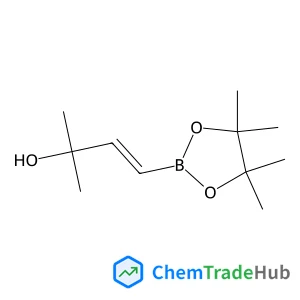
(E)-2-methyl-4-(4,4,5,5-tetramethyl-1,3,2-dioxaborolan-2-yl)but-3-en-2-ol
CAS Number:
581802-26-8
Molecular Formula:
C11H21BO3
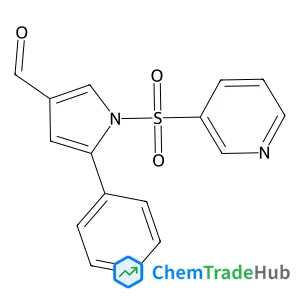
5-Phenyl-1-(pyridin-3-ylsulfonyl)-1H-pyrrole-3-carbaldehyde
CAS Number:
881676-90-0
Molecular Formula:
C16H12N2O3S
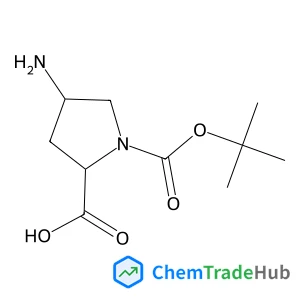
(2R,4R)-1-Boc-4-Aminopyrrolidine-2-carboxylic acid
CAS Number:
132622-98-1
Molecular Formula:
C10H18N2O4
Recommended Suppliers




Disclaimer
This page provides academic journal information for reference and research purposes only. We are not affiliated with any journal publishers and do not handle publication submissions. For publication-related inquiries, please contact the respective journal publishers directly.
If you notice any inaccuracies in the information displayed, please contact us at support@chemtradehub.com. We will promptly review and address your concerns.