












![2-Methylbenzo[h]quinoline structure](https://static.chemtradehub.com/structs/605/605-88-9-ac43.webp "2-Methylbenzo[h]quinoline structure")
Ultrafast carrier relaxation dynamics of photoexcited GaAs and GaAs/AlGaAs nanowire array
Literature Information
Publication Date
2020-10-22
DOI
10.1039/D0CP04250A
Impact Factor
3.676
Authors
Zhaogang Nie, Bo Wang, Dengkui Wang, Jilong Tang, Xiaohua Wang, Jiahua Zhang, Guichuan Xing, Wenchun Zhang, Zhipeng Wei
View Original
Abstract
Femtosecond optical pump–probe spectroscopy is employed to elucidate the ultrafast carrier nonradiative relaxation dynamics of bare GaAs and a core–shell GaAs/AlGaAs semiconductor nanowire array. Different from the single nanowire conventionally used for the study of ultrafast dynamics, a simple spin coating and peeling off method was performed to prepare transparent organic films containing a vertical oriented nanowire array for transient absorption measurement. The transient experiment provides the direct observation of carrier thermalization, carrier cooling, thermal dissipation and band-gap energy evolutions along with the carrier relaxations. Carrier thermalization occurs within sub-0.5 ps and proceeds almost independently on the AlGaAs-coating, while the time constants of carrier cooling and thermal dissipation are increased by an order of magnitude due to the AlGaAs-coating effect. The concomitant band-gap evolutions in GaAs and GaAs/AlGaAs include an initial rapid red-shift in thermalization period, followed by a slow blue and/or red shift in carrier cooling, and then by an even slower blue shift in thermal dissipation. The evolution is explained by the competition of band-gap renormalization, plasma screening and band-filling. These findings are significant for understanding the basic physics of carrier scattering, and also for the development of flexible optoelectronic devices.
Related Literature
2-Phenallyl as a versatile protecting group for the asymmetric one-pot three-component synthesis of propargylamines
Nina Gommermann, Paul Knochel
2005-07-26
Communication
DOI: 10.1039/B507810E
Total synthesis of buergerinin F via effective construction of the asymmetric quaternary carbons using an enantioselective aldol reaction
Isamu Shiina, Yo-ichi Kawakita, Ryoutarou Ibuka, Kazutoshi Yokoyama, Yu-suke Yamai
2005-07-14
Communication
DOI: 10.1039/B507401K
Efficient two-step synthesis of 3-halo-3-enals or 2-halo-2-alkenyl ketones from propargylic bromides via a unique cationic 1,2-aryl or proton shift in electrophilic addition reaction of 2,3-allenols with X+
Chunling Fu, Jing Li
2005-07-13
Communication
DOI: 10.1039/B508069J
Injectable biodegradable hydrogels composed of hyaluronic acid–tyramine conjugates for drug delivery and tissue engineering
Motoichi Kurisawa, Joo Eun Chung, Yi Yan Yang, Shu Jun Gao, Hiroshi Uyama
2005-07-28
Communication
DOI: 10.1039/B506989K
Palladium(0) alkyne complexes as active species: a DFT investigation
Mårten Ahlquist, Giancarlo Fabrizi, Sandro Cacchi, Per-Ola Norrby
2005-07-20
Communication
DOI: 10.1039/B507784B
The vicinal F–C–C–F moiety as a tool for influencing peptide conformation
Martin Schüler, David O'Hagan, Alexandra M. Z. Slawin
2005-07-14
Communication
DOI: 10.1039/B506010A
Precise synthesis of poly(macromonomer)s containing sugars by repetitive ring-opening metathesis polymerisation
James J. Murphy, Kotohiro Nomura
2005-07-13
Communication
DOI: 10.1039/B506877K
Enantioselective allylation of ketones catalyzed by chiral In(iii)-PYBOX complexes
Mei-Ling Hong, Shun-Jun Ji, Yong-Chua Teo
2005-07-25
Communication
DOI: 10.1039/B507768K
The synthesis of enantiomerically pure 4-substituted [2.2]paracyclophane derivatives by sulfoxide–metal exchange
Peter B. Hitchcock, Gareth J. Rowlands, Rakesh Parmar
2005-07-25
Communication
DOI: 10.1039/B507394D
You might also like
Compound Q&A
How should waste containing N-Methoxy-N-methyl-1,3-thiazole-5-carboxamide (CAS: 898825-89-3) be handled?
Waste containing N-Methoxy-N-methyl-1,3-thiazole-5-carboxamide (CAS: 898825-89-3...
898825-89-3N-Methoxy-N-methyl-1...
Compound Q&A
How should N-(4-Biphenylyl)dibenzo[b,d]furan-4-amine (CAS: 1318338-47-4) be stored?
N-(4-Biphenylyl)dibenzo[b,d]furan-4-amine should be stored in a tightly sealed c...
1318338-47-4N-(4-Biphenylyl)dibe...
Compound Q&A
What is the market or research trend for 3-Acetamido-5-amino-2,4,6-triiodobenzoic acid (CAS: 1713-07-1)?
The market for 3-Acetamido-5-amino-2,4,6-triiodobenzoic acid (CAS: 1713-07-1) is...
1713-07-13-Acetamido-5-amino-...
Compound Q&A
How should Benzyl 2-O-acetyl-3,4,6-tri-O-benzyl-beta-D-galactopyranoside (CAS: 61820-03-9) be stored?
Benzyl 2-O-acetyl-3,4,6-tri-O-benzyl-beta-D-galactopyranoside (CAS: 61820-03-9) ...
61820-03-9Benzyl 2-O-acetyl-3,...
Compound Q&A
What regulatory guidelines apply to 2-Ethylpiperazine dihydrochloride (CAS: 438050-52-3)?
2-Ethylpiperazine dihydrochloride (CAS: 438050-52-3) is regulated under the Glob...
438050-52-32-Ethylpiperazine di...
Compound Q&A
What regulatory guidelines apply to 1,1'-[1,3-Phenylenebis(methylene)]bis(3-methyl-1H-pyrrole-2,5-dione) (CAS: 119462-56-5)?
1,1'-[1,3-Phenylenebis(methylene)]bis(3-methyl-1H-pyrrole-2,5-dione) (CAS: 11946...
119462-56-51,1'-[1,3-Phenyleneb...
Compound Q&A
Are there alternatives to 5-Fluoro-2-(1-pyrrolidinyl)pyridine (CAS: 1287217-79-1) in synthesis?
Several alternatives can be used in the synthesis of 5-Fluoro-2-(1-pyrrolidinyl)...
1287217-79-15-Fluoro-2-(1-pyrrol...
Compound Q&A
What precautions should be taken when handling 1-((2R,3R,4R,5R)-5-((bis(4-methoxyphenyl)(phenyl)methoxy)methyl)-4-hydroxy-3-methoxytetrahydrofuran-2-yl)-5-methylpyrimidine-2,4(1H,3H)-dione (CAS: 153631-19-7)?
Proper personal protective equipment (PPE) must be worn when handling this compo...
153631-19-71-((2R,3R,4R,5R)-5-(...
Compound Q&A
What precautions should be taken when handling 6-Bromoimidazo[1,2-a]pyridin-8-amine (CAS: 676371-00-9)?
When handling 6-Bromoimidazo[1,2-a]pyridin-8-amine, it is important to wear appr...
676371-00-96-Bromoimidazo[1,2-a...
Compound Q&A
Are there alternatives to (2S,4R)-4-(4-Nitrobenzyl)pyrrolidine-2-carboxylic acid hydrochloride (CAS: 1049740-22-8) in synthesis?
Alternatives to (2S,4R)-4-(4-Nitrobenzyl)pyrrolidine-2-carboxylic acid hydrochlo...
1049740-22-8(2S,4R)-4-(4-Nitrobe...
Source Journal
Physical Chemistry Chemical Physics

CiteScore:
5.5
Self-citation Rate:
10.3%
Articles per Year:
3036
Physical Chemistry Chemical Physics (PCCP) is an international journal co-owned by 19 physical chemistry and physics societies from around the world. This journal publishes original, cutting-edge research in physical chemistry, chemical physics and biophysical chemistry. To be suitable for publication in PCCP, articles must include significant innovation and/or insight into physical chemistry; this is the most important criterion that reviewers and Editors will judge against when evaluating submissions. The journal has a broad scope and welcomes contributions spanning experiment, theory, computation and data science. Topical coverage includes spectroscopy, dynamics, kinetics, statistical mechanics, thermodynamics, electrochemistry, catalysis, surface science, quantum mechanics, quantum computing and machine learning. Interdisciplinary research areas such as polymers and soft matter, materials, nanoscience, energy, surfaces/interfaces, and biophysical chemistry are welcomed if they demonstrate significant innovation and/or insight into physical chemistry. Joined experimental/theoretical studies are particularly appreciated when complementary and based on up-to-date approaches.
Recommended Compounds
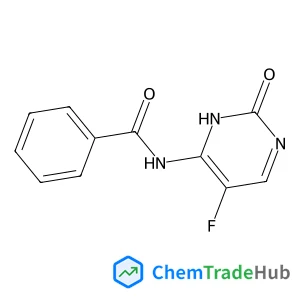
N-(5-Fluoro-2-oxo-2,3-dihydro-4-pyrimidinyl)benzamide
CAS Number:
10357-07-0
Molecular Formula:
C11H8FN3O2

![[(5-Methyl-1,3,4-thiadiazol-2-yl)sulfanyl]acetic acid structure](https://static.chemtradehub.com/structs/509/50918-26-8-4ce8.webp "[(5-Methyl-1,3,4-thiadiazol-2-yl)sulfanyl]acetic acid structure")
[(5-Methyl-1,3,4-thiadiazol-2-yl)sulfanyl]acetic acid
CAS Number:
50918-26-8
Molecular Formula:
C5H6N2O2S2

Recommended Suppliers





Disclaimer
This page provides academic journal information for reference and research purposes only. We are not affiliated with any journal publishers and do not handle publication submissions. For publication-related inquiries, please contact the respective journal publishers directly.
If you notice any inaccuracies in the information displayed, please contact us at support@chemtradehub.com. We will promptly review and address your concerns.