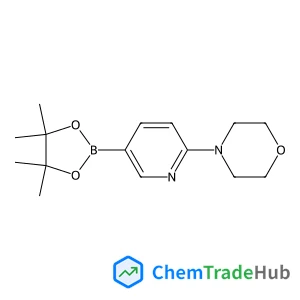
4-(5-(4,4,5,5-tetramethyl-1,3,2-dioxaborolan-2-yl)pyridin-2-yl)morpholine
CAS Number:
485799-04-0
Molecular Formula:
C15H23BN2O3
Angélique Marie, Bilel Said, Anne Galarneau, Timo Stettner, Andrea Balducci, Maxime Bayle, Bernard Humbert, Jean Le Bideau
In the frame of the development of solid ionogel electrolytes with enhanced ion transport properties, this paper investigates ionogel systems constituted by ∼80 wt% of ionic liquids (ILs) confined in meso-/macroporous silica monolith materials. The anion–cation coordination for two closely related ILs, either aprotic (AIL) butylmethylpyrrolidinium or protic (PIL) butylpyrrolidinium, both with bis(trifluoromethylsulfonyl)imide (TFSI) anions, with and without lithium cations, is studied in depth. The ILs are confined within silica with well-defined mesoporosities (8 to 16 nm). The effects of this confinement, onto melting points, onto conductivity followed by impedance spectroscopy, and onto lithium–TFSI coordination followed by Raman spectroscopy, are presented. Opposite effects have been observed on the melting temperature: it increased for the AIL (+2 °C) upon confinement, while it decreased for the PIL (−2 °C). With lithium, the confinement led to an increase of the melting temperature (+1 °C) for the PIL and AIL. Regarding ionic conductivities, a relative maximum was observed at 40 °C for a mesopore diameter of 10 nm for the AIL with 0.5 M lithium, while it was not clearly visible for the PIL. These differences are discussed in view of the charge balance at the interface between silanols and ILs: the presence of a PIL, contrary to an AIL, is expected to modify the acidity of the silica. Raman data showed that the coordination number of lithium by TFSI is reduced upon AIL confinement, although this was not observed for PILs. At last, this work highlights the impact of the acidity of a PIL on the chemistry occurring at the interface of the host network within ionogels.
Daren J. Caruana, Katherine B. Holt
DOI: 10.1039/B917817A
Claire E. White, John L. Provis, Thomas Proffen, Daniel P. Riley, Jannie S. J. van Deventer
DOI: 10.1039/B922993K
Ferdi Schüth, Helmut Knözinger
DOI: 10.1039/B821505G
Li-Yuan Fan, Shu-Hong Yu
DOI: 10.1039/B823379A
DOI: 10.1039/B823331D
Nils Huse, Haidan Wen, Dennis Nordlund
DOI: 10.1039/B822210J
Joseph M. Beames, Andrew J. Hudson
DOI: 10.1039/B923202H
Silvia Borsacchi, Donata Catalano, Carlo Alberto Veracini
DOI: 10.1039/B901895F
Rainer Ostermann, Sébastien Sallard, Bernd M. Smarsly
DOI: 10.1039/B820651C
Ugo Cosentino, Demetrio Pitea, Giorgio Moro, Gloria A. A. Saracino, Alessandra Villa
DOI: 10.1039/B902049G
Waste containing 2-Ethyl-4-Methyl-1H-Imidazole-5-Carbaldehyde (CAS: 88634-80-4) ...
Triethoxy(octyl)silane (CAS: 1385031-14-0) is widely used in the pharmaceuticals...
Several alternatives to 3-iodo-7-nitro-1H-indazole (CAS: 864724-64-1) exist in t...
Yes, there are alternatives to Benzene, bis[(trimethoxysilyl)ethyl] (CAS: 266317...
Isothiazole-3-carbonitrile (CAS: 1452-17-1) is generally considered safe when us...
(3-Chlorophenyl)methanol (CAS: 873-63-2) is considered low to moderately toxic. ...
(2S,3S)-2-Hydroxy-3-({[(2-methyl-2-propanyl)oxy]carbonyl}amino)-3-(2-naphthyl)pr...
Proper handling of methyl 2-(bromomethyl)-5-methoxybenzoate requires the use of ...
6,8-Dibromoimidazo[1,2-a]pyridine-2-carboxylic acid (CAS: 904805-36-3) is an aro...
3-Amino-5-bromo-2-pyridinecarbonitrile is considered safe when handled under pro...

Physical Chemistry Chemical Physics (PCCP) is an international journal co-owned by 19 physical chemistry and physics societies from around the world. This journal publishes original, cutting-edge research in physical chemistry, chemical physics and biophysical chemistry. To be suitable for publication in PCCP, articles must include significant innovation and/or insight into physical chemistry; this is the most important criterion that reviewers and Editors will judge against when evaluating submissions. The journal has a broad scope and welcomes contributions spanning experiment, theory, computation and data science. Topical coverage includes spectroscopy, dynamics, kinetics, statistical mechanics, thermodynamics, electrochemistry, catalysis, surface science, quantum mechanics, quantum computing and machine learning. Interdisciplinary research areas such as polymers and soft matter, materials, nanoscience, energy, surfaces/interfaces, and biophysical chemistry are welcomed if they demonstrate significant innovation and/or insight into physical chemistry. Joined experimental/theoretical studies are particularly appreciated when complementary and based on up-to-date approaches.
![N,N'-1,2-Ethanediylbis[2-(vinylsulfonyl)acetamide] structure](https://static.chemtradehub.com/structs/667/66710-66-5-b556.webp "N,N'-1,2-Ethanediylbis[2-(vinylsulfonyl)acetamide] structure")
![Ethyl 3-((6-(4,5-dihydro-1H-benzo[d]azepin-3(2H)-yl)-2-(pyridin-2-yl)pyrimidin-4-yl)amino)propanoate structure](https://static.chemtradehub.com/structs/137/1373423-53-0-496a.webp "Ethyl 3-((6-(4,5-dihydro-1H-benzo[d]azepin-3(2H)-yl)-2-(pyridin-2-yl)pyrimidin-4-yl)amino)propanoate structure")