


Hydrogen in methanol catalysts by neutron imaging
Literature Information
Publication Date
2020-09-21
DOI
10.1039/D0CP03414B
Impact Factor
3.676
Authors
Hans Geerlings, Pavel Trtik, Anders Kaestner
View Original
Abstract
Although of pivotal importance in heterogeneous hydrogenation reactions, the amount of hydrogen on catalysts during reactions is seldom known. We demonstrate the use of neutron imaging to follow and quantify hydrogen containing species in Cu/ZnO catalysts operando during methanol synthesis. The steady-state measurements reveal that the amount of hydrogen containing intermediates is related to the reaction yields of CO and methanol, as expected from simple considerations of the likely reaction mechanism. The time-resolved measurements indicate that these intermediates, despite indispensable within the course of the reaction, slow down the overall reaction steps. Hydrogen–deuterium exchange experiments indicate that hydrogen reduction of Cu/ZnO nano-composites modifies the catalyst in such a way that at operating temperatures, hydrogen is dynamically absorbed in the ZnO-nanoparticles. This explains the extraordinary good catalysis of copper if supported on ZnO by its ability to act as a hydrogen reservoir supplying hydrogen to the surface covered by CO2, intermediates, and products during catalysis.
Recommended Journals

Heteroatom Chemistry

Critical Reviews in Solid State and Materials Sciences

Electroanalysis

Acta Metallurgica Sinica-English Letters

Medicinal Chemistry Research

Journal of the Indian Institute of Science

Chinese Journal of Chemistry

Cellulose

Journal of Chemical Sciences

Herald of the Russian Academy of Sciences
Related Literature
The photophysics of selectively metallated arrays of quinoxaline-fused tetraarylporphyrins
James A. Hutchison, Paul J. Sintic, Maxwell J. Crossley, Toshihiko Nagamura, Kenneth P. Ghiggino
2009-03-03
Paper
DOI: 10.1039/B820969C
Bifunctional polyacrylamide based polymers for the specific binding of hexahistidine tagged proteins on gold surfaces
Lucas B. Thompson, Nathan H. Mack, Ralph G. Nuzzo
2009-12-04
Paper
DOI: 10.1039/B920713A
Wettability conversion of colloidal TiO2nanocrystal thin films with UV-switchable hydrophilicity
2009-03-26
Paper
DOI: 10.1039/B823331D
Templates for wax deposition?
Miguel A. San-Miguel, P. Mark Rodger
2010-02-24
Paper
DOI: 10.1039/B920945J
Dipole effects on molecular and electronic structures in a novel conjugate of oligo(phenyleneethynylene) and helical peptide
Hidenori Nakayama, Tomoyuki Morita, Shunsaku Kimura
2009-03-10
Paper
DOI: 10.1039/B817685J
Heterogeneous films of ordered CeO2/Ni concentric nanostructures for fuelcell applications
Chunjuan Zhang, Jessica Grandner, Ran Liu, Bryan W. Eichhorn
2009-12-01
Paper
DOI: 10.1039/B918587A
Electrochemistry of LiMn2O4nanoparticles made by flame spray pyrolysis
R. Büchel, M. Nakayama, P. Novák
2009-03-25
Paper
DOI: 10.1039/B821572N
Investigations of the waterclusters of the protected amino acid Ac-Phe-OMe by applying IR/UV double resonance spectroscopy: microsolvation of the backbone
Holger Fricke, Kirsten Schwing, Andreas Gerlach, Claus Unterberg, Markus Gerhards
2010-03-10
Paper
DOI: 10.1039/C000424C
You might also like
Compound Q&A
How should waste containing 2-Ethyl-4-Methyl-1H-Imidazole-5-Carbaldehyde (CAS: 88634-80-4) be handled?
Waste containing 2-Ethyl-4-Methyl-1H-Imidazole-5-Carbaldehyde (CAS: 88634-80-4) ...
88634-80-42-Ethyl-4-Methyl-1H-...
Compound Q&A
What industries use Triethoxy(octyl)silane (CAS: 1385031-14-0)?
Triethoxy(octyl)silane (CAS: 1385031-14-0) is widely used in the pharmaceuticals...
1385031-14-0Triethoxy(octyl)sila...
Compound Q&A
Are there alternatives to 3-iodo-7-nitro-1H-indazole (CAS: 864724-64-1) in synthesis?
Several alternatives to 3-iodo-7-nitro-1H-indazole (CAS: 864724-64-1) exist in t...
864724-64-13-iodo-7-nitro-1H-in...
Compound Q&A
Are there alternatives to Benzene, bis[(trimethoxysilyl)ethyl] (CAS: 266317-71-9) in synthesis?
Yes, there are alternatives to Benzene, bis[(trimethoxysilyl)ethyl] (CAS: 266317...
266317-71-9Benzene, bis[(trimet...
Compound Q&A
Is Isothiazole-3-carbonitrile (CAS: 1452-17-1) safe?
Isothiazole-3-carbonitrile (CAS: 1452-17-1) is generally considered safe when us...
1452-17-1Isothiazole-3-carbon...
Compound Q&A
Is (3-Chlorophenyl)methanol (CAS: 873-63-2) safe?
(3-Chlorophenyl)methanol (CAS: 873-63-2) is considered low to moderately toxic. ...
873-63-2(3-Chlorophenyl)meth...
Compound Q&A
How is (2S,3S)-2-Hydroxy-3-({[(2-methyl-2-propanyl)oxy]carbonyl}amino)-3-(2-naphthyl)propanoic acid (CAS: 959583-98-3) typically synthesized?
(2S,3S)-2-Hydroxy-3-({[(2-methyl-2-propanyl)oxy]carbonyl}amino)-3-(2-naphthyl)pr...
959583-98-3(2S,3S)-2-Hydroxy-3-...
Compound Q&A
What precautions should be taken when handling Methyl 2-(bromomethyl)-5-methoxybenzoate (CAS: 788081-99-2)?
Proper handling of methyl 2-(bromomethyl)-5-methoxybenzoate requires the use of ...
788081-99-2Methyl 2-(bromomethy...
Compound Q&A
What is 6,8-Dibromoimidazo[1,2-a]pyridine-2-carboxylic acid (CAS: 904805-36-3)?
6,8-Dibromoimidazo[1,2-a]pyridine-2-carboxylic acid (CAS: 904805-36-3) is an aro...
904805-36-36,8-Dibromoimidazo[1...
Compound Q&A
Is 3-Amino-5-bromo-2-pyridinecarbonitrile (CAS: 573675-27-1) safe?
3-Amino-5-bromo-2-pyridinecarbonitrile is considered safe when handled under pro...
573675-27-13-Amino-5-bromo-2-py...
Source Journal
Physical Chemistry Chemical Physics

CiteScore:
5.5
Self-citation Rate:
10.3%
Articles per Year:
3036
Physical Chemistry Chemical Physics (PCCP) is an international journal co-owned by 19 physical chemistry and physics societies from around the world. This journal publishes original, cutting-edge research in physical chemistry, chemical physics and biophysical chemistry. To be suitable for publication in PCCP, articles must include significant innovation and/or insight into physical chemistry; this is the most important criterion that reviewers and Editors will judge against when evaluating submissions. The journal has a broad scope and welcomes contributions spanning experiment, theory, computation and data science. Topical coverage includes spectroscopy, dynamics, kinetics, statistical mechanics, thermodynamics, electrochemistry, catalysis, surface science, quantum mechanics, quantum computing and machine learning. Interdisciplinary research areas such as polymers and soft matter, materials, nanoscience, energy, surfaces/interfaces, and biophysical chemistry are welcomed if they demonstrate significant innovation and/or insight into physical chemistry. Joined experimental/theoretical studies are particularly appreciated when complementary and based on up-to-date approaches.
Recommended Compounds
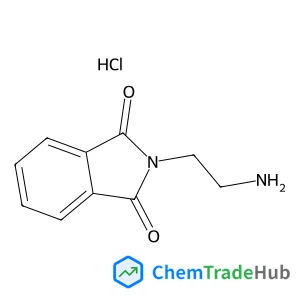
2-(2-Aminoethyl)-1H-isoindole-1,3(2H)-dione hydrochloride (1:1)
CAS Number:
30250-67-0
Molecular Formula:
C10H11ClN2O2
Recommended Suppliers






Disclaimer
This page provides academic journal information for reference and research purposes only. We are not affiliated with any journal publishers and do not handle publication submissions. For publication-related inquiries, please contact the respective journal publishers directly.
If you notice any inaccuracies in the information displayed, please contact us at support@chemtradehub.com. We will promptly review and address your concerns.