


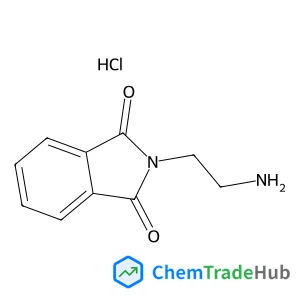
2-(2-Aminoethyl)-1H-isoindole-1,3(2H)-dione hydrochloride (1:1)
CAS Number:
30250-67-0
Molecular Formula:
C10H11ClN2O2
Lucas B. Thompson, Nathan H. Mack, Ralph G. Nuzzo
We describe a modified bifunctional analogue of polyacrylamide that spontaneously forms self-assembled polymeric thin films on Au surfaces. The film is engineered to specifically bind histidine tagged proteins (6His), while simultaneously remaining inherently resistant to the non-specific adsorption of proteins in solution. The backbone of a polyacrylamide-co-n-acryloxysuccinimide copolymer is functionalized via tandem active ester (NHS) couplings with 3-(methylthio)propylamine (MTP) and nitrilotriacetic acid (NTA). The resulting functionalized polymers form stable and exceptionally hydrophilic thin films that are ∼2–5 nm thick, a mass coverage that varies with the MTP graft density. These films are characterized using a variety of techniques (X-ray photoelectron spectroscopy (XPS), reflection absorption infrared spectroscopy (RAIRS), ellipsometry, surface plasmon resonance (SPR), and matrix assisted laser desorption ionization (MALDI)) to establish their structure and function. The protein resistance of the films, as demonstrated by their exposure to solutions of bovine serum albumin (BSA), can be modulated by the amount of MTP grafted to the polymer, which in turn, affects their mass coverage. We show that it is possible to specifically capture hexahistidine tagged proteins with low incidences of nonspecific adsorption using these materials, a discrimination quantified using surface plasmon resonance (SPR) at concentrations down to ∼20 nM. These polymers also bind strongly to the surfaces of Au nanoparticles, stabilizing them against aggregation, providing them with a similar capacity to selectively bind 6His tagged proteins that can then be speciated using MALDI.

Herald of the Russian Academy of Sciences

Bioorganic & Medicinal Chemistry

Journal of the Indian Institute of Science

Journal of Chemical Sciences

Journal of Asian Natural Products Research

Polycyclic Aromatic Compounds

Bioorganic & Medicinal Chemistry Letters

Atomization and Sprays

Cellulose

Chinese Journal of Chemistry
Christel Olivier Lenge Mbuya, Chike George Okoye-Chine, Katu Ramutsindela, Linda L. Jewell, Mike Scurrell
DOI: 10.1039/D2RE00024E
David M. Walker, Joel M. Hawkins, Saif A. Khan
DOI: 10.1039/D1RE00462J
Ala'a F. Eftaiha, Abdussalam K. Qaroush, Areej K. Hasan, Wissam Helal, Feda'a M. Al-Qaisi
DOI: 10.1039/D2RE00157H
Alessandra Sivo, Tae Keun Kim, Vincenzo Ruta, Renzo Luisi, Jose Osorio-Tejada, Marc Escriba-Gelonch, Volker Hessel, Mattia Sponchioni, Gianvito Vilé
DOI: 10.1039/D2RE00242F
Snehasis Dutta, Trilochan Gadly, Amey P. Wadawale, Mayur Darekar, Sulekha Mukhopadhay, Sunil K. Ghosh, Birija S. Patro
DOI: 10.1039/D2RE00047D
Suitao Qi, Kevin J. Smith, Yiming Zhou
DOI: 10.1039/D2RE00345G
DOI: 10.1039/D2RE00183G
Yuuki Mochizuki, Javzandolgor Bud, Enkhsaruul Byambajav, Naoto Tsubouchi
DOI: 10.1039/D2RE00003B
Nicolas Mattias Del Rio Fuenzalida, Eirin Alme, Frida Johanne Lundevall, Hans-René Bjørsvik
DOI: 10.1039/D2RE00071G
Waste containing 2-Ethyl-4-Methyl-1H-Imidazole-5-Carbaldehyde (CAS: 88634-80-4) ...
Triethoxy(octyl)silane (CAS: 1385031-14-0) is widely used in the pharmaceuticals...
Several alternatives to 3-iodo-7-nitro-1H-indazole (CAS: 864724-64-1) exist in t...
Yes, there are alternatives to Benzene, bis[(trimethoxysilyl)ethyl] (CAS: 266317...
Isothiazole-3-carbonitrile (CAS: 1452-17-1) is generally considered safe when us...
(3-Chlorophenyl)methanol (CAS: 873-63-2) is considered low to moderately toxic. ...
(2S,3S)-2-Hydroxy-3-({[(2-methyl-2-propanyl)oxy]carbonyl}amino)-3-(2-naphthyl)pr...
Proper handling of methyl 2-(bromomethyl)-5-methoxybenzoate requires the use of ...
6,8-Dibromoimidazo[1,2-a]pyridine-2-carboxylic acid (CAS: 904805-36-3) is an aro...
3-Amino-5-bromo-2-pyridinecarbonitrile is considered safe when handled under pro...

Physical Chemistry Chemical Physics (PCCP) is an international journal co-owned by 19 physical chemistry and physics societies from around the world. This journal publishes original, cutting-edge research in physical chemistry, chemical physics and biophysical chemistry. To be suitable for publication in PCCP, articles must include significant innovation and/or insight into physical chemistry; this is the most important criterion that reviewers and Editors will judge against when evaluating submissions. The journal has a broad scope and welcomes contributions spanning experiment, theory, computation and data science. Topical coverage includes spectroscopy, dynamics, kinetics, statistical mechanics, thermodynamics, electrochemistry, catalysis, surface science, quantum mechanics, quantum computing and machine learning. Interdisciplinary research areas such as polymers and soft matter, materials, nanoscience, energy, surfaces/interfaces, and biophysical chemistry are welcomed if they demonstrate significant innovation and/or insight into physical chemistry. Joined experimental/theoretical studies are particularly appreciated when complementary and based on up-to-date approaches.
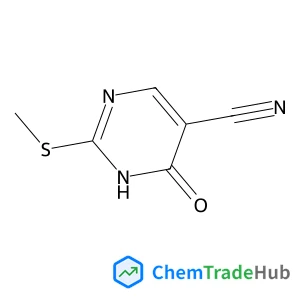
![N-[(5,6-Dichloro-1H-benzimidazol-2-yl)methyl]-9-(1-methyl-1H-pyrazol-4-yl)-2-(4-morpholinyl)-9H-purin-6-amine structure](https://static.chemtradehub.com/structs/238/2387704-62-1-25f4.webp "N-[(5,6-Dichloro-1H-benzimidazol-2-yl)methyl]-9-(1-methyl-1H-pyrazol-4-yl)-2-(4-morpholinyl)-9H-purin-6-amine structure")
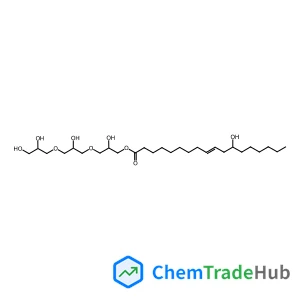
![N-[(9H-Fluoren-9-ylmethoxy)carbonyl]-beta-phenyl-L-phenylalanine structure](https://static.chemtradehub.com/structs/201/201484-50-6-c2fc.webp "N-[(9H-Fluoren-9-ylmethoxy)carbonyl]-beta-phenyl-L-phenylalanine structure")





