












On the thermodynamic stability of bubbles, immiscible droplets, and cavities
Literature Information
Publication Date
2020-07-24
DOI
10.1039/D0CP02517H
Impact Factor
3.676
Authors
View Original
Abstract
Nanobubbles filled with air or a variety of pure gases are observed to persist in bulk water for weeks and months. Nanoemulsions consisting of oil droplets in water are also remarkably stable against coagulation, with lifetimes up to weeks even if not coated with surfactants. The inverse system of nanodroplets of water in oil is also accessible for study and application. Voids on the nanoscale are formed in simulations of water under strong tension and are stable during the time of the simulation. The stability of these nano-entities is ultimately determined by the molecular-level structure of their interfaces. However, a thermodynamic theory might also be capable of providing some insight. We therefore consider spherical gas nanobubbles, immiscible liquid nanodroplets, and nanocavities formed in water under negative pressure on the same footing, and give a unified thermodynamic analysis of these systems. In all cases, mechanical equilibrium (local free energy maximum or minimum) is expressed by the Laplace equation, and thermodynamic stability (local free energy minimum) follows from the radius dependence of surface tension. All of them would be unstable if their surface tensions were constant. Data from the literature allow construction of numerical examples for cavities and gas nanobubbles. Spectroscopic data are cited in support of an interfacial water structure in gas nanobubbles and water droplets in oil that differ from their flat surface counterparts. The observed longevity of nanobubbles in particular has been thought to violate fundamental principles of diffusion and solubility. A close look at the Laplace equation and its derivation shows why this widespread belief is incorrect.
Related Literature
Microwave spectra of mixtures of non-absorbing solid particles and absorbing liquids
Paul D. I. Fletcher, Della D. Grice, Stephen J. Haswell
2008-12-16
Paper
DOI: 10.1039/B817507A
ENDOR and HYSCORE analysis and DFT-assisted identification of the third major stable radical in sucrose single crystals X-irradiated at room temperature
Ewald Pauwels, Henk Vrielinck, Einar Sagstuen, Sabine Van Doorslaer, Freddy Callens, Michel Waroquier
2009-01-13
Paper
DOI: 10.1039/B816641B
Quantum-mechanical wavepacket propagation in a sparse, adaptive basis of interpolating Gaussians with collocation
J. Sielk, H. F. von Horsten, F. Krüger, R. Schneider, B. Hartke
2008-11-17
Paper
DOI: 10.1039/B814315C
Blinking photoluminescence properties of single TiO2 nanodiscs: interfacial electron transfer dynamics
Seung-Do Oh, Yung Doug Suh, Hiroyuki Yoshikawa, Minjoong Yoon
2008-11-06
Paper
DOI: 10.1039/B812361F
Infrared spectroscopic study of the effect of oleic acid on the deliquescence behaviour of ammonium sulfate aerosol particles
Juan J. Nájera, Andrew B. Horn
2008-11-06
Paper
DOI: 10.1039/B812182F
The influence of the film thickness of nanostructured α-Fe2O3 on water photooxidation
Flavio Leandro Souza, Kirian Pimenta Lopes, Elson Longo, Edson Roberto Leite
2009-01-08
Paper
DOI: 10.1039/B811946E
Ion transfer across a liquid membrane. General solution for the current-potential response of any voltammetric technique
A. Molina, C. Serna, J. Gonzalez, J. A. Ortuño, E. Torralba
2009-01-12
Paper
DOI: 10.1039/B816843C
Interaction of graphene with FCC–Co(111)
J. C. W. Swart, E. van Steen, I. M. Ciobícă, R. A. van Santen
2008-12-05
Paper
DOI: 10.1039/B814664K
Study of substituent effects for aliphatic CH3–X compounds by resonant Auger spectroscopy
Oksana Travnikova, Svante Svensson, Denis Céolin, Zhuo Bao, Maria Novella Piancastelli
2008-12-03
Paper
DOI: 10.1039/B805912H
You might also like
Compound Q&A
Are there alternatives to 1-(4-Chlorophenyl)-N-hydroxymethanimine (CAS: 3848-36-0) in synthesis?
When considering alternatives to 1-(4-Chlorophenyl)-N-hydroxymethanimine (CAS: 3...
3848-36-01-(4-Chlorophenyl)-N...
Compound Q&A
How should (1R,9S,10S,12S,14E,16S,19R,20R,21S,22R)-3,9,21-Trihydroxy-5,10,12,14,16,20,22-heptamethyl-23,24-dioxatetracyclo[17.3.1.1~6,9~.0~2,7~]tetracosa-2,5,7,14-tetraen-4-one (CAS: 183202-73-5) be stored?
This compound should be stored in a cool, dry place away from direct sunlight. I...
183202-73-5(1R,9S,10S,12S,14E,1...
Compound Q&A
How is 3-(4-Bromophenyl)-5-(2-fluorophenyl)-1,2,4-oxadiazole (CAS: 419553-16-5) typically synthesized?
3-(4-Bromophenyl)-5-(2-fluorophenyl)-1,2,4-oxadiazole is synthesized through a m...
419553-16-53-(4-Bromophenyl)-5-...
Compound Q&A
How is 5-Chloro-2-(4-chlorophenyl)-4-methyl-6-[3-(1-piperidinyl)propoxy]pyrimidine (CAS: 1639220-19-1) typically synthesized?
5-Chloro-2-(4-chlorophenyl)-4-methyl-6-[3-(1-piperidinyl)propoxy]pyrimidine (CAS...
1639220-19-15-Chloro-2-(4-chloro...
Compound Q&A
What industries use 2-Chloro-4-(difluoromethoxy)pyridine (CAS: 1206978-15-5)?
2-Chloro-4-(difluoromethoxy)pyridine is used in the pharmaceutical industry for ...
1206978-15-52-Chloro-4-(difluoro...
Compound Q&A
What regulatory guidelines apply to 3-Chloro-6-methylpyridazine (CAS: 1121-79-5)?
3-Chloro-6-methylpyridazine (CAS: 1121-79-5) is classified under the Globally Ha...
1121-79-53-Chloro-6-methylpyr...
Compound Q&A
Are there alternatives to Methyl 4,5-dimethyl-2-nitrobenzoate in synthesis?
Several alternatives can be used in the synthesis of Methyl 4,5-dimethyl-2-nitro...
90922-74-0Methyl 4,5-dimethyl-...
Compound Q&A
Are there alternatives to (2E,2'E)-3,3'-(1,4-Phenylene)bisacrylaldehyde in synthesis?
Alternatives to (2E,2'E)-3,3'-(1,4-Phenylene)bisacrylaldehyde include other acry...
63405-68-5(2E,2'E)-3,3'-(1,4-P...
Compound Q&A
What is 3-Amino-5-chloropyridin-2-ol hydrochloride (CAS: 1261906-29-9)?
3-Amino-5-chloropyridin-2-ol hydrochloride is an organic compound with the CAS n...
1261906-29-93-Amino-5-chloropyri...
Compound Q&A
What precautions should be taken when handling 6,7-Difluoro-2,3-dihydro-4H-chromen-4-one (CAS: 1092349-93-3)?
When handling 6,7-Difluoro-2,3-dihydro-4H-chromen-4-one, it is essential to wear...
1092349-93-36,7-Difluoro-2,3-dih...
Source Journal
Physical Chemistry Chemical Physics

CiteScore:
5.5
Self-citation Rate:
10.3%
Articles per Year:
3036
Physical Chemistry Chemical Physics (PCCP) is an international journal co-owned by 19 physical chemistry and physics societies from around the world. This journal publishes original, cutting-edge research in physical chemistry, chemical physics and biophysical chemistry. To be suitable for publication in PCCP, articles must include significant innovation and/or insight into physical chemistry; this is the most important criterion that reviewers and Editors will judge against when evaluating submissions. The journal has a broad scope and welcomes contributions spanning experiment, theory, computation and data science. Topical coverage includes spectroscopy, dynamics, kinetics, statistical mechanics, thermodynamics, electrochemistry, catalysis, surface science, quantum mechanics, quantum computing and machine learning. Interdisciplinary research areas such as polymers and soft matter, materials, nanoscience, energy, surfaces/interfaces, and biophysical chemistry are welcomed if they demonstrate significant innovation and/or insight into physical chemistry. Joined experimental/theoretical studies are particularly appreciated when complementary and based on up-to-date approaches.
Recommended Compounds

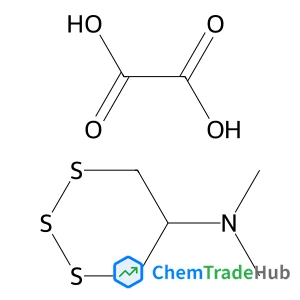
Oxalic acid compound with cyclohexylsulfamothioic O-acid (11)
CAS Number:
31895-22-4
Molecular Formula:
C7H13NO4S3
Recommended Suppliers






Disclaimer
This page provides academic journal information for reference and research purposes only. We are not affiliated with any journal publishers and do not handle publication submissions. For publication-related inquiries, please contact the respective journal publishers directly.
If you notice any inaccuracies in the information displayed, please contact us at support@chemtradehub.com. We will promptly review and address your concerns.