












Microwave spectra of mixtures of non-absorbing solid particles and absorbing liquids
Literature Information
Publication Date
2008-12-16
DOI
10.1039/B817507A
Impact Factor
3.676
Authors
Paul D. I. Fletcher, Della D. Grice, Stephen J. Haswell
View Original
Abstract
Microwave spectroscopy of condensed phases is sensitive to sample compositional factors such as water or fat content, solids content and salt concentration which leads to applications for in-line process monitoring. In this paper we show that microwave spectra can also be sensitive to sample structure at fixed composition which has implications for analytical applications involving samples which are multi-phase mixtures. We have measured microwave spectra for samples containing a constant volume fraction of non-absorbing glass spheres immersed within an absorbing liquid phase; the only difference between samples is the mean diameter of the glass spheres. The large differences in the spectra for different diameters is successfully modelled in terms of the relative volume fractions of glass and absorbing liquid within a measurement penetration depth adjacent to the microwave measuring probe.
Related Literature
Synthesis and properties of a well-defined copolymer of chlorotrifluoroethylene and N-vinylpyrrolidone by xanthate-mediated radical copolymerization under 60Co γ-ray irradiation
Pucheng Wang, Jingwen Dai, Lei Liu, Qibao Dong, Hu Wang, Ruke Bai
2014-07-24
Paper
DOI: 10.1039/C4PY00902A
Enhancing the melt stability of polylactide stereocomplexes using a solid-state cross-linking strategy during a melt-blending process
Huili Liu, Dongyu Bai, Qin Zhang, Ke Wang, Hua Deng, Feng Chen, Qiang Fu
2014-06-19
Paper
DOI: 10.1039/C4PY00700J
Z-type and R-type macro-RAFT agents in RAFT dispersion polymerization – another mechanism perspective on PISA
Mingguang Yu, Jianbo Tan
2016-05-02
Paper
DOI: 10.1039/C6PY00605A
Polyphenylenes and the related copolymer membranes for electrochemical device applications
X. Zhang, T. Higashihara, M. Ueda, L. Wang
2014-08-08
Review Article
DOI: 10.1039/C4PY00898G
Chain-growth cationic polymerization of 2-halogenated thiophenes promoted by Brønsted acids
Arumugam Balasubramanian, Ting-Chia Ku, Hong-Pin Shih, Alishetty Suman, Huang-Jyun Lin, Ting-Wen Shih, Chien-Chung Han
2014-06-16
Paper
DOI: 10.1039/C4PY00521J
You might also like
Compound Q&A
Are there alternatives to 1-(4-Chlorophenyl)-N-hydroxymethanimine (CAS: 3848-36-0) in synthesis?
When considering alternatives to 1-(4-Chlorophenyl)-N-hydroxymethanimine (CAS: 3...
3848-36-01-(4-Chlorophenyl)-N...
Compound Q&A
How should (1R,9S,10S,12S,14E,16S,19R,20R,21S,22R)-3,9,21-Trihydroxy-5,10,12,14,16,20,22-heptamethyl-23,24-dioxatetracyclo[17.3.1.1~6,9~.0~2,7~]tetracosa-2,5,7,14-tetraen-4-one (CAS: 183202-73-5) be stored?
This compound should be stored in a cool, dry place away from direct sunlight. I...
183202-73-5(1R,9S,10S,12S,14E,1...
Compound Q&A
How is 3-(4-Bromophenyl)-5-(2-fluorophenyl)-1,2,4-oxadiazole (CAS: 419553-16-5) typically synthesized?
3-(4-Bromophenyl)-5-(2-fluorophenyl)-1,2,4-oxadiazole is synthesized through a m...
419553-16-53-(4-Bromophenyl)-5-...
Compound Q&A
How is 5-Chloro-2-(4-chlorophenyl)-4-methyl-6-[3-(1-piperidinyl)propoxy]pyrimidine (CAS: 1639220-19-1) typically synthesized?
5-Chloro-2-(4-chlorophenyl)-4-methyl-6-[3-(1-piperidinyl)propoxy]pyrimidine (CAS...
1639220-19-15-Chloro-2-(4-chloro...
Compound Q&A
What industries use 2-Chloro-4-(difluoromethoxy)pyridine (CAS: 1206978-15-5)?
2-Chloro-4-(difluoromethoxy)pyridine is used in the pharmaceutical industry for ...
1206978-15-52-Chloro-4-(difluoro...
Compound Q&A
What regulatory guidelines apply to 3-Chloro-6-methylpyridazine (CAS: 1121-79-5)?
3-Chloro-6-methylpyridazine (CAS: 1121-79-5) is classified under the Globally Ha...
1121-79-53-Chloro-6-methylpyr...
Compound Q&A
Are there alternatives to Methyl 4,5-dimethyl-2-nitrobenzoate in synthesis?
Several alternatives can be used in the synthesis of Methyl 4,5-dimethyl-2-nitro...
90922-74-0Methyl 4,5-dimethyl-...
Compound Q&A
Are there alternatives to (2E,2'E)-3,3'-(1,4-Phenylene)bisacrylaldehyde in synthesis?
Alternatives to (2E,2'E)-3,3'-(1,4-Phenylene)bisacrylaldehyde include other acry...
63405-68-5(2E,2'E)-3,3'-(1,4-P...
Compound Q&A
What is 3-Amino-5-chloropyridin-2-ol hydrochloride (CAS: 1261906-29-9)?
3-Amino-5-chloropyridin-2-ol hydrochloride is an organic compound with the CAS n...
1261906-29-93-Amino-5-chloropyri...
Compound Q&A
What precautions should be taken when handling 6,7-Difluoro-2,3-dihydro-4H-chromen-4-one (CAS: 1092349-93-3)?
When handling 6,7-Difluoro-2,3-dihydro-4H-chromen-4-one, it is essential to wear...
1092349-93-36,7-Difluoro-2,3-dih...
Source Journal
Physical Chemistry Chemical Physics

CiteScore:
5.5
Self-citation Rate:
10.3%
Articles per Year:
3036
Physical Chemistry Chemical Physics (PCCP) is an international journal co-owned by 19 physical chemistry and physics societies from around the world. This journal publishes original, cutting-edge research in physical chemistry, chemical physics and biophysical chemistry. To be suitable for publication in PCCP, articles must include significant innovation and/or insight into physical chemistry; this is the most important criterion that reviewers and Editors will judge against when evaluating submissions. The journal has a broad scope and welcomes contributions spanning experiment, theory, computation and data science. Topical coverage includes spectroscopy, dynamics, kinetics, statistical mechanics, thermodynamics, electrochemistry, catalysis, surface science, quantum mechanics, quantum computing and machine learning. Interdisciplinary research areas such as polymers and soft matter, materials, nanoscience, energy, surfaces/interfaces, and biophysical chemistry are welcomed if they demonstrate significant innovation and/or insight into physical chemistry. Joined experimental/theoretical studies are particularly appreciated when complementary and based on up-to-date approaches.
Recommended Compounds

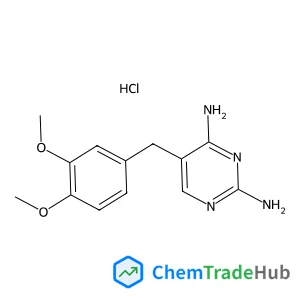
5-(3,4-Dimethoxybenzyl)-2,4-pyrimidinediamine hydrochloride (1:1)
CAS Number:
2507-23-5
Molecular Formula:
C13H17ClN4O2
Recommended Suppliers





Disclaimer
This page provides academic journal information for reference and research purposes only. We are not affiliated with any journal publishers and do not handle publication submissions. For publication-related inquiries, please contact the respective journal publishers directly.
If you notice any inaccuracies in the information displayed, please contact us at support@chemtradehub.com. We will promptly review and address your concerns.