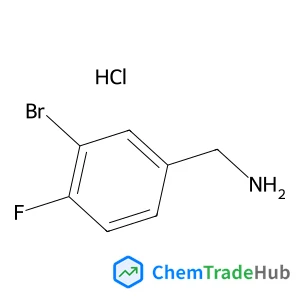
1-(3-Bromo-4-fluorophenyl)methanamine hydrochloride (1:1)
CAS Number:
202865-68-7
Molecular Formula:
C7H8BrClFN
J. Sielk, H. F. von Horsten, F. Krüger, R. Schneider, B. Hartke
We present an extension of our earlier work on adaptive quantum wavepacket dynamics [B. Hartke, Phys. Chem. Chem. Phys., 2006, 8, 3627]. In this dynamically pruned basis representation the wavepacket is only stored at places where it has non-negligible contributions. Here we enhance the former 1D proof-of-principle implementation to higher dimensions and optimize it by a new basis set, interpolating Gaussians with collocation. As a further improvement the TNUM approach from Lauvergnat and Nauts [J. Chem. Phys., 2002, 116, 8560] was implemented, which in combination with our adaptive representation offers the possibility of calculating the whole Hamiltonian on-the-fly. For a two-dimensional artificial benchmark and a three-dimensional real-life test case, we show that a sparse matrix implementation of this approach saves memory compared to traditional basis representations and comes even close to the efficiency of the fast Fourier transform method. Thus we arrive at a quantum wavepacket dynamics implementation featuring several important black-box characteristics: it can treat arbitrary systems without code changes, it calculates the kinetic and potential part of the Hamiltonian on-the-fly, and it employs a basis that is automatically optimized for the ongoing wavepacket dynamics.
Zhenhuan Lu, Xin Zhang, Chuanlang Zhan, Bo Jiang, Xinliang Zhang, Lili Chen, Jiannian Yao
DOI: 10.1039/C3CP51475G
Cristina Greco, Geoffrey R. Luckhurst, Alberta Ferrarini
DOI: 10.1039/C3CP52222A
Min Zhou, Fan Pu, Zhao Wang, Tingwei Cai, Hao Chen, Haiyong Zhang, Shiyou Guan
DOI: 10.1039/C3CP51276B
Dima Vingurt, David Fuks, Miron V. Landau, Roxana Vidruk, Moti Herskowitz
DOI: 10.1039/C3CP51086G
Matthias Schnurr, Christopher Witte, Leif Schröder
DOI: 10.1039/C3CP51227D
George Y. Margulis, Bogyu Lim, Brian E. Hardin, Eva L. Unger, Jun-Ho Yum, Johann M. Feckl, Dina Fattakhova-Rohlfing, Thomas Bein, Michael Grätzel, Alan Sellinger, Michael D. McGehee
DOI: 10.1039/C3CP51018B
Bas C. van der Wiel, René M. Williams
DOI: 10.1039/C3CP52148F
Bruce F. Milne, Patrick Norman, Fernando Nogueira, Cláudia Cardoso
DOI: 10.1039/C3CP52528G
When considering alternatives to 1-(4-Chlorophenyl)-N-hydroxymethanimine (CAS: 3...
This compound should be stored in a cool, dry place away from direct sunlight. I...
3-(4-Bromophenyl)-5-(2-fluorophenyl)-1,2,4-oxadiazole is synthesized through a m...
5-Chloro-2-(4-chlorophenyl)-4-methyl-6-[3-(1-piperidinyl)propoxy]pyrimidine (CAS...
2-Chloro-4-(difluoromethoxy)pyridine is used in the pharmaceutical industry for ...
3-Chloro-6-methylpyridazine (CAS: 1121-79-5) is classified under the Globally Ha...
Several alternatives can be used in the synthesis of Methyl 4,5-dimethyl-2-nitro...
Alternatives to (2E,2'E)-3,3'-(1,4-Phenylene)bisacrylaldehyde include other acry...
3-Amino-5-chloropyridin-2-ol hydrochloride is an organic compound with the CAS n...
When handling 6,7-Difluoro-2,3-dihydro-4H-chromen-4-one, it is essential to wear...

Physical Chemistry Chemical Physics (PCCP) is an international journal co-owned by 19 physical chemistry and physics societies from around the world. This journal publishes original, cutting-edge research in physical chemistry, chemical physics and biophysical chemistry. To be suitable for publication in PCCP, articles must include significant innovation and/or insight into physical chemistry; this is the most important criterion that reviewers and Editors will judge against when evaluating submissions. The journal has a broad scope and welcomes contributions spanning experiment, theory, computation and data science. Topical coverage includes spectroscopy, dynamics, kinetics, statistical mechanics, thermodynamics, electrochemistry, catalysis, surface science, quantum mechanics, quantum computing and machine learning. Interdisciplinary research areas such as polymers and soft matter, materials, nanoscience, energy, surfaces/interfaces, and biophysical chemistry are welcomed if they demonstrate significant innovation and/or insight into physical chemistry. Joined experimental/theoretical studies are particularly appreciated when complementary and based on up-to-date approaches.