


ENDOR and HYSCORE analysis and DFT-assisted identification of the third major stable radical in sucrose single crystals X-irradiated at room temperature
Literature Information
Publication Date
2009-01-13
DOI
10.1039/B816641B
Impact Factor
3.676
Authors
Ewald Pauwels, Henk Vrielinck, Einar Sagstuen, Sabine Van Doorslaer, Freddy Callens, Michel Waroquier
View Original
Abstract
Recently, the chemical structure of two of the three major stable radicals (T2 and T3) produced in sucrose single crystals by X-irradiation at room temperature was identified by comparing Density Functional Theory (DFT) calculations of Electron Magnetic Resonance parameters with experimental results [H. De Cooman, E. Pauwels, H. Vrielinck, E. Sagstuen, F. Callens and M. Waroquier, J. Phys. Chem. B, 2008, 112, 7298–7307]. Ambiguities concerning an unusual proton hyperfine coupling (HFC) tensor prevented the identification of the third major stable radical (T1). In the present work, experimental results of continuous wave Electron Nuclear Double Resonance experiments on sucrose single crystals and Hyperfine Sublevel Correlation Spectroscopy experiments on sucrose powder are presented that lift these remaining ambiguities. Using the final set of experimental HFC tensors and employing advanced DFT calculations, the chemical structure of the T1 radical is established: an allylic-type radical with approximately half of the spin density localised on the C2′ carbon of the fructose unit, involving glycosidic bond cleavage at the fructose side and a concerted formation of a carbonyl group at the C1′ carbon. The electronic structure of the T1 radical is discussed in more detail by means of additional DFT calculations, yielding a better understanding of the peculiar properties of the unusual proton HFC tensor mentioned above.
Recommended Journals

Russian Journal of Coordination Chemistry

Current Opinion in Colloid & Interface Science

Journal of Peptide Science

Organic Process Research & Development

New Journal of Chemistry

Chemistry Education Research and Practice

Russian Journal of Bioorganic Chemistry

Crystallography Reports

Current Opinion in Solid State & Materials Science

Russian Journal of Applied Chemistry
Related Literature
Highly sensitive, selective and reusable mercury(ii) ion sensor based on a ssDNA-functionalized photonic crystal film
Yuqi Zhang, Loujun Gao, Liping Wen, Liping Heng, Yanlin Song
2013-05-10
Paper
DOI: 10.1039/C3CP51324F
Structural and spectroscopic characterization of potassium fluoroborohydrides
Richard H. Heyn, Ivan Saldan, Magnus H. Sørby, Christoph Frommen, Bjørnar Arstad, Aud M. Bougza, Helmer Fjellvåg, Bjørn C. Hauback
2013-05-17
Communication
DOI: 10.1039/C3CP52070F
A microiterative intrinsic reaction coordinate method for large QM/MM systems
Iakov Polyak, Eliot Boulanger, Kakali Sen, Walter Thiel
2013-05-31
Paper
DOI: 10.1039/C3CP51669E
Starburst triarylamine based dyes bearing a 3,4-ethylenedioxythiophene linker for efficient dye-sensitized solar cells
Li-Lin Tan, Hong-Yan Chen, Li-Feng Hao, Yong Shen, Li-Min Xiao, Jun-Min Liu, Dai-Bin Kuang, Cheng-Yong Su
2013-05-10
Paper
DOI: 10.1039/C3CP51633D
Dye-sensitized solar cells based on hydroquinone/benzoquinone as bio-inspired redox couple with different counter electrodes
Ming Cheng, Xichuan Yang, Cheng Chen, Jianghua Zhao, Fuguo Zhang
2013-06-24
Paper
DOI: 10.1039/C3CP51980E
Propagation of nanopores during anodic etching of n-InP in KOH
Robert P. Lynch, Nathan Quill, Shohei Nakahara, D. Noel Buckley
2013-07-31
Paper
DOI: 10.1039/C3CP52253A
Effect of the state of distribution of supported Pt nanoparticles on effective Pt utilization in polymer electrolyte fuel cells
Makoto Uchida, Young-Chul Park, Katsuyoshi Kakinuma, Hiroshi Yano, Donald A. Tryk, Takeo Kamino, Hiroyuki Uchida, Masahiro Watanabe
2013-05-29
Paper
DOI: 10.1039/C3CP51801A
Conformational preferences of furan- and thiophene-based arylamides: a combined computational and experimental study
Jhenny F. Galan, Chi Ngong Tang, Shubhashis Chakrabarty, Zhiwei Liu, Vojislava Pophristic
2013-05-08
Paper
DOI: 10.1039/C3CP50353D
Structure and Li+ dynamics of Sb-doped Li7La3Zr2O12 fast lithium ion conductors
S. Ramakumar, L. Satyanarayana, Sunkara V. Manorama, Ramaswamy Murugan
2013-05-15
Paper
DOI: 10.1039/C3CP50991E
You might also like
Compound Q&A
Are there alternatives to 1-(4-Chlorophenyl)-N-hydroxymethanimine (CAS: 3848-36-0) in synthesis?
When considering alternatives to 1-(4-Chlorophenyl)-N-hydroxymethanimine (CAS: 3...
3848-36-01-(4-Chlorophenyl)-N...
Compound Q&A
How should (1R,9S,10S,12S,14E,16S,19R,20R,21S,22R)-3,9,21-Trihydroxy-5,10,12,14,16,20,22-heptamethyl-23,24-dioxatetracyclo[17.3.1.1~6,9~.0~2,7~]tetracosa-2,5,7,14-tetraen-4-one (CAS: 183202-73-5) be stored?
This compound should be stored in a cool, dry place away from direct sunlight. I...
183202-73-5(1R,9S,10S,12S,14E,1...
Compound Q&A
How is 3-(4-Bromophenyl)-5-(2-fluorophenyl)-1,2,4-oxadiazole (CAS: 419553-16-5) typically synthesized?
3-(4-Bromophenyl)-5-(2-fluorophenyl)-1,2,4-oxadiazole is synthesized through a m...
419553-16-53-(4-Bromophenyl)-5-...
Compound Q&A
How is 5-Chloro-2-(4-chlorophenyl)-4-methyl-6-[3-(1-piperidinyl)propoxy]pyrimidine (CAS: 1639220-19-1) typically synthesized?
5-Chloro-2-(4-chlorophenyl)-4-methyl-6-[3-(1-piperidinyl)propoxy]pyrimidine (CAS...
1639220-19-15-Chloro-2-(4-chloro...
Compound Q&A
What industries use 2-Chloro-4-(difluoromethoxy)pyridine (CAS: 1206978-15-5)?
2-Chloro-4-(difluoromethoxy)pyridine is used in the pharmaceutical industry for ...
1206978-15-52-Chloro-4-(difluoro...
Compound Q&A
What regulatory guidelines apply to 3-Chloro-6-methylpyridazine (CAS: 1121-79-5)?
3-Chloro-6-methylpyridazine (CAS: 1121-79-5) is classified under the Globally Ha...
1121-79-53-Chloro-6-methylpyr...
Compound Q&A
Are there alternatives to Methyl 4,5-dimethyl-2-nitrobenzoate in synthesis?
Several alternatives can be used in the synthesis of Methyl 4,5-dimethyl-2-nitro...
90922-74-0Methyl 4,5-dimethyl-...
Compound Q&A
Are there alternatives to (2E,2'E)-3,3'-(1,4-Phenylene)bisacrylaldehyde in synthesis?
Alternatives to (2E,2'E)-3,3'-(1,4-Phenylene)bisacrylaldehyde include other acry...
63405-68-5(2E,2'E)-3,3'-(1,4-P...
Compound Q&A
What is 3-Amino-5-chloropyridin-2-ol hydrochloride (CAS: 1261906-29-9)?
3-Amino-5-chloropyridin-2-ol hydrochloride is an organic compound with the CAS n...
1261906-29-93-Amino-5-chloropyri...
Compound Q&A
What precautions should be taken when handling 6,7-Difluoro-2,3-dihydro-4H-chromen-4-one (CAS: 1092349-93-3)?
When handling 6,7-Difluoro-2,3-dihydro-4H-chromen-4-one, it is essential to wear...
1092349-93-36,7-Difluoro-2,3-dih...
Source Journal
Physical Chemistry Chemical Physics

CiteScore:
5.5
Self-citation Rate:
10.3%
Articles per Year:
3036
Physical Chemistry Chemical Physics (PCCP) is an international journal co-owned by 19 physical chemistry and physics societies from around the world. This journal publishes original, cutting-edge research in physical chemistry, chemical physics and biophysical chemistry. To be suitable for publication in PCCP, articles must include significant innovation and/or insight into physical chemistry; this is the most important criterion that reviewers and Editors will judge against when evaluating submissions. The journal has a broad scope and welcomes contributions spanning experiment, theory, computation and data science. Topical coverage includes spectroscopy, dynamics, kinetics, statistical mechanics, thermodynamics, electrochemistry, catalysis, surface science, quantum mechanics, quantum computing and machine learning. Interdisciplinary research areas such as polymers and soft matter, materials, nanoscience, energy, surfaces/interfaces, and biophysical chemistry are welcomed if they demonstrate significant innovation and/or insight into physical chemistry. Joined experimental/theoretical studies are particularly appreciated when complementary and based on up-to-date approaches.
Recommended Compounds
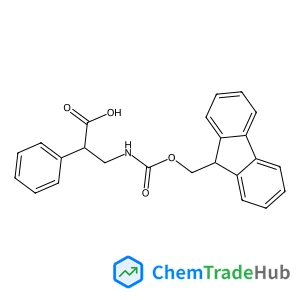
(S)-3-((((9H-Fluoren-9-yl)methoxy)carbonyl)amino)-2-phenylpropanoic acid
CAS Number:
1217663-60-9
Molecular Formula:
C24H21NO4
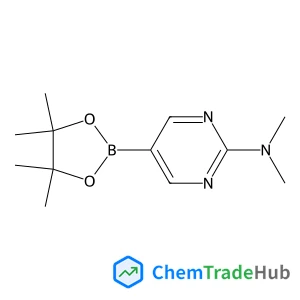
N,N-Dimethyl-5-(4,4,5,5-tetramethyl-1,3,2-dioxaborolan-2-yl)-2-pyrimidinamine
CAS Number:
1032759-30-0
Molecular Formula:
C12H20BN3O2
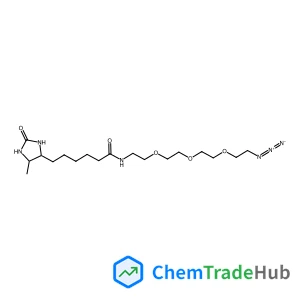
Recommended Suppliers





Disclaimer
This page provides academic journal information for reference and research purposes only. We are not affiliated with any journal publishers and do not handle publication submissions. For publication-related inquiries, please contact the respective journal publishers directly.
If you notice any inaccuracies in the information displayed, please contact us at support@chemtradehub.com. We will promptly review and address your concerns.