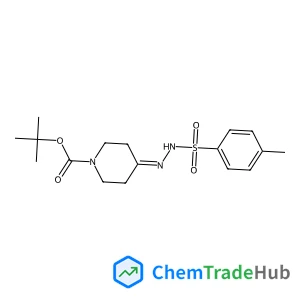
tert-Butyl 4-(2-(p-Tolylsulfonyl)hydrazono)piperidine-1-carboxylate
CAS Number:
1046478-89-0
Molecular Formula:
C17H25N3O4S
Seungeui Choi, Saravanan Parameswaran, Jun-Ho Choi
Under ambient conditions, methanol and ethanol are miscible in water at all concentrations, while n-butanol is partially miscible. This is the first study to quantitatively examine the miscibility of butanol and compare with miscible alcohols by employing molecular dynamics simulations and graph theoretical analysis of three water-alcohol mixtures at various concentrations. We show how distinct alcohol aggregates are formed, thereby affecting the water structure, which established the relationship between the morphological structure of the aggregates and the miscibility of the alcohol in aqueous solution. The aggregates of methanol and ethanol in highly concentrated solutions form an extended H-bond network that intertwines well with the H-bond network of water. n-Butanol tends to self-associate and form large aggregates, while such aggregates are segregated from water. Graph theoretical analysis revealed that the alcohol aggregates of methanol and ethanol solutions have a morphological structure different from that of n-butanol, although there is no significant difference in morphology between the three pure alcohols. These two distinct alcohol aggregates are classified as water-compatible and water-incompatible depending upon their interaction with the water H-bond network, and their effect on the water structure was investigated. Our study reveals that the water-compatible network of alcohol aggregates in methanol and ethanol solutions disrupts the water H-bond networks, while the water-incompatible network of n-butanol aggregates does not considerably alter the water structure, which is consistent with the experimental results. Furthermore, we propose that miscible alcohols form water-compatible networks in binary aqueous systems while partially miscible alcohols form water-incompatible networks. The bifurcating hypothesis on the alcohol aggregation behavior in liquid water is of critical use to understand the fundamental issues such as solubility and phase separation in solution systems.
Oksana Travnikova, Svante Svensson, Denis Céolin, Zhuo Bao, Maria Novella Piancastelli
DOI: 10.1039/B805912H
Juan J. Nájera, Andrew B. Horn
DOI: 10.1039/B812182F
Stepan Sklenak, Jiří Dědeček, Chengbin Li, Blanka Wichterlová, Vendula Gábová, Marek Sierka, Joachim Sauer
DOI: 10.1039/B807755J
Ewald Pauwels, Henk Vrielinck, Einar Sagstuen, Sabine Van Doorslaer, Freddy Callens, Michel Waroquier
DOI: 10.1039/B816641B
Ville-Veikko Telkki, Jukka Jokisaari
DOI: 10.1039/B817727A
Nathanael Guigo, Alice Mija, Luc Vincent, Nicolas Sbirrazzuoli
DOI: 10.1039/B812512K
Seung-Do Oh, Yung Doug Suh, Hiroyuki Yoshikawa, Minjoong Yoon
DOI: 10.1039/B812361F
Giuliano Alagona, Caterina Ghio
DOI: 10.1039/B813464B
James Highfield, Tao Liu, Yook Si Loo, Benjamin Grushko, Armando Borgna
DOI: 10.1039/B811775F
When considering alternatives to 1-(4-Chlorophenyl)-N-hydroxymethanimine (CAS: 3...
This compound should be stored in a cool, dry place away from direct sunlight. I...
3-(4-Bromophenyl)-5-(2-fluorophenyl)-1,2,4-oxadiazole is synthesized through a m...
5-Chloro-2-(4-chlorophenyl)-4-methyl-6-[3-(1-piperidinyl)propoxy]pyrimidine (CAS...
2-Chloro-4-(difluoromethoxy)pyridine is used in the pharmaceutical industry for ...
3-Chloro-6-methylpyridazine (CAS: 1121-79-5) is classified under the Globally Ha...
Several alternatives can be used in the synthesis of Methyl 4,5-dimethyl-2-nitro...
Alternatives to (2E,2'E)-3,3'-(1,4-Phenylene)bisacrylaldehyde include other acry...
3-Amino-5-chloropyridin-2-ol hydrochloride is an organic compound with the CAS n...
When handling 6,7-Difluoro-2,3-dihydro-4H-chromen-4-one, it is essential to wear...

Physical Chemistry Chemical Physics (PCCP) is an international journal co-owned by 19 physical chemistry and physics societies from around the world. This journal publishes original, cutting-edge research in physical chemistry, chemical physics and biophysical chemistry. To be suitable for publication in PCCP, articles must include significant innovation and/or insight into physical chemistry; this is the most important criterion that reviewers and Editors will judge against when evaluating submissions. The journal has a broad scope and welcomes contributions spanning experiment, theory, computation and data science. Topical coverage includes spectroscopy, dynamics, kinetics, statistical mechanics, thermodynamics, electrochemistry, catalysis, surface science, quantum mechanics, quantum computing and machine learning. Interdisciplinary research areas such as polymers and soft matter, materials, nanoscience, energy, surfaces/interfaces, and biophysical chemistry are welcomed if they demonstrate significant innovation and/or insight into physical chemistry. Joined experimental/theoretical studies are particularly appreciated when complementary and based on up-to-date approaches.
![6-Bromo-2,3-dihydro-1H-pyrido[2,3-b][1,4]oxazine structure](https://static.chemtradehub.com/structs/120/1203499-17-5-b4d1.webp "6-Bromo-2,3-dihydro-1H-pyrido[2,3-b][1,4]oxazine structure")