












Excited-state proton transfer in protonated adrenaline revealed by cryogenic UV photodissociation spectroscopy
Literature Information
Publication Date
2020-04-28
DOI
10.1039/D0CP01127D
Impact Factor
3.676
Authors
Jordan Dezalay, Michel Broquier, Satchin Soorkia
View Original
Abstract
We report a comprehensive study of the structures and deactivation processes of protonated adrenaline through cryogenic UV photodissociation spectroscopy. Single UV and double-resonance UV-UV hole burning spectroscopies have been performed and compared to coupled-cluster SCS-CC2 calculations performed on the ground and first electronic states. Three conformers were assigned, two lowest energy gauche conformers along with a higher energy conformer with an extended structure which is indeed the global minimum in solution. This demonstrates the kinetic trapping of this high energy gas phase conformer during the electrospray process. At the band origin of all conformers, the main fragmentation channel is the Cα–Cβ bond cleavage, triggered by an excited state proton transfer to the catechol ring. Internal conversion leading to the water loss channel competes with the direct dissociation and tends to prevail with the increase of excess energy brought by the UV laser. Picosecond time-resolved pump–probe spectroscopy was performed to measure the excited state lifetimes of the three conformers of AdH+, which decay with the increase of excess energy in the ππ* state, from 2 ns at the band origin down to few hundreds of picoseconds 0.5 eV to the blue. Finally, about 0.8 eV above the band origin, the πσ* state is directly reached, leading to the opening of the H-loss channel.
Related Literature
Poly(fluoroacrylate)s with tunable surface hydrophobicity via radical copolymerization of 2,2,2-trifluoroethyl α-fluoroacrylate and 2-(trifluoromethyl)acrylic acid
Sanjib Banerjee, Bhausaheb V. Tawade, Vincent Ladmiral, Lionel X. Dupuy, Bruno Améduri
2017-03-07
Paper
DOI: 10.1039/C7PY00209B
Poly(acrylate) with a tetraphenylethene pendant with aggregation-induced emission (AIE) characteristics: highly stable AIE-active polymer nanoparticles for effective detection of nitro compounds
Hui Zhou, Jiesheng Li, Ming Hui Chua, Hong Yan, Beng Zhong Tang, Jianwei Xu
2014-05-30
Paper
DOI: 10.1039/C4PY00518J
Macroporous uniform azide- and alkyne-functional polymer microspheres with tuneable surface area: synthesis, in-depth characterization and click-modification
Marco Albuszis, Peter J. Roth, Werner Pauer, Hans-Ulrich Moritz
2014-06-17
Paper
DOI: 10.1039/C4PY00709C
Cononsolvency in the ‘drunken’ state: the thermoresponsiveness of a new acrylamide copolymer in water–alcohol mixtures
Niklas Lucht, Steffen Eggers
2017-01-03
Paper
DOI: 10.1039/C6PY01751G
CO2-Responsive graft copolymers: synthesis and characterization
Shaojian Lin, Anindita Das, Patrick Theato
2017-01-03
Paper
DOI: 10.1039/C6PY01996J
Copolymers of carbazole and phenazine derivatives: minor structural modification, but totally different photodetector performance
Shuang Li, Xianyu Deng, Lei Feng, Xincheng Miao, Kuangyi Tang, Qianqian Li, Zhen Li
2016-12-21
Paper
DOI: 10.1039/C6PY01733A
Ultra-pH-sensitive polypeptide micelles with large fluorescence off/on ratio in near infrared range
Liyi Fu, Pan Yuan, Zheng Ruan, Le Liu, Tuanwei Li, Lifeng Yan
2016-12-16
Paper
DOI: 10.1039/C6PY01818A
Differences in electroactive terpolymers based on VDF, TrFE and 2,3,3,3-tetrafluoropropene prepared by batch solution and semi-continuous aqueous suspension polymerizations
Vincent Ladmiral, Thierry Lannuzel, Fabrice Domingues Dos Santos, Bruno Améduri
2016-12-14
Paper
DOI: 10.1039/C6PY01874B
Synthetic strategies for the generation of ABCA' type asymmetric tetrablock terpolymers
Siddharth Chanpuriya, Marc A. Hillmyer, Frank S. Bates
2014-06-13
Paper
DOI: 10.1039/C4PY00614C
You might also like
Compound Q&A
What are the main uses of 4-Nitrophenyl phosphate disodium salt hexahydrate (CAS: 333338-18-4)?
4-Nitrophenyl phosphate disodium salt hexahydrate is primarily used as a substra...
333338-18-44-Nitrophenyl phosph...
Compound Q&A
What are the main uses of 2-(Trifluoromethyl)-1,3-oxazole-4-carboxylic Acid (CAS: 1060816-01-4)?
2-(Trifluoromethyl)-1,3-oxazole-4-carboxylic Acid (CAS: 1060816-01-4) is widely ...
1060816-01-42-(Trifluoromethyl)-...
Compound Q&A
How should 2-Fluoro-4-biphenylcarboxylic acid (CAS: 137045-30-8) be stored?
2-Fluoro-4-biphenylcarboxylic acid should be stored in a cool, dry place at room...
137045-30-82-Fluoro-4-biphenylc...
Compound Q&A
What industries use Prednisolone-21-Carboxylic Acid (CAS: 61549-70-0)?
Prednisolone-21-Carboxylic Acid is primarily used in the pharmaceutical industry...
61549-70-0Prednisolone-21-Carb...
Compound Q&A
How should 4-(Hydrazinomethyl)-1,2,3-benzenetriol (CAS: 3614-72-0) be stored?
4-(Hydrazinomethyl)-1,2,3-benzenetriol (CAS: 3614-72-0) should be stored in a co...
3614-72-04-(Hydrazinomethyl)-...
Compound Q&A
What industries use 4-Amino-1-methyl-1H-pyrazole-5-carboxylic acid hydrochloride (CAS: 92534-70-8)?
4-Amino-1-methyl-1H-pyrazole-5-carboxylic acid hydrochloride (CAS: 92534-70-8) i...
92534-70-84-Amino-1-methyl-1H-...
Compound Q&A
What regulatory guidelines apply to dehydropachymic acid (CAS: 77012-31-8)?
Dehydropachymic acid (CAS: 77012-31-8) is regulated by various agencies. It fall...
77012-31-8Dehydropachymic acid
Compound Q&A
What is the market or research trend for 6-[(2,2-Dimethylpropanoyl)amino]nicotinic acid (CAS: 898561-66-5)?
The market and research trends for 6-[(2,2-Dimethylpropanoyl)amino]nicotinic aci...
898561-66-56-[(2,2-Dimethylprop...
Compound Q&A
How should 1,10-Phenanthroline-2,9-dicarbaldehyde (CAS: 57709-62-3) be stored?
1,10-Phenanthroline-2,9-dicarbaldehyde should be stored in a cool, dry place awa...
57709-62-31,10-Phenanthroline-...
Compound Q&A
How is 5-Carbamoyl-11-oxo-10,11-dihydro-5H-dibenzo[b,f]azepin-10-yl acetate (CAS: 113952-21-9) typically synthesized?
5-Carbamoyl-11-oxo-10,11-dihydro-5H-dibenzo[b,f]azepin-10-yl acetate can be synt...
113952-21-95-Carbamoyl-11-oxo-1...
Source Journal
Physical Chemistry Chemical Physics

CiteScore:
5.5
Self-citation Rate:
10.3%
Articles per Year:
3036
Physical Chemistry Chemical Physics (PCCP) is an international journal co-owned by 19 physical chemistry and physics societies from around the world. This journal publishes original, cutting-edge research in physical chemistry, chemical physics and biophysical chemistry. To be suitable for publication in PCCP, articles must include significant innovation and/or insight into physical chemistry; this is the most important criterion that reviewers and Editors will judge against when evaluating submissions. The journal has a broad scope and welcomes contributions spanning experiment, theory, computation and data science. Topical coverage includes spectroscopy, dynamics, kinetics, statistical mechanics, thermodynamics, electrochemistry, catalysis, surface science, quantum mechanics, quantum computing and machine learning. Interdisciplinary research areas such as polymers and soft matter, materials, nanoscience, energy, surfaces/interfaces, and biophysical chemistry are welcomed if they demonstrate significant innovation and/or insight into physical chemistry. Joined experimental/theoretical studies are particularly appreciated when complementary and based on up-to-date approaches.
Recommended Compounds
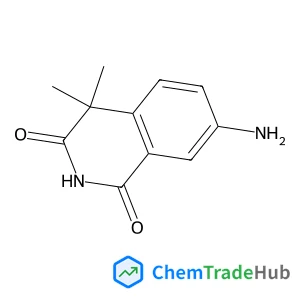
1,3(2H,4H)-Isoquinolinedione, 7-amino-4,4-dimethyl-
CAS Number:
14576-22-8
Molecular Formula:
C11H12N2O2

Recommended Suppliers




Disclaimer
This page provides academic journal information for reference and research purposes only. We are not affiliated with any journal publishers and do not handle publication submissions. For publication-related inquiries, please contact the respective journal publishers directly.
If you notice any inaccuracies in the information displayed, please contact us at support@chemtradehub.com. We will promptly review and address your concerns.