












Phosphorus-based metal-free Z-scheme 2D van der Waals heterostructures for visible-light photocatalytic water splitting: a first-principles study
Literature Information
Publication Date
2020-03-30
DOI
10.1039/D0CP00637H
Impact Factor
3.676
Authors
Junyu Lang
View Original
Abstract
Direct splitting of water over semiconductors under sunlight irradiation would be a promising approach for hydrogen production and solar energy utilization. In this work, BlueP/PN with a 2D van der Waals (vdW) heterostructure is proposed as a novel catalyst for the Z-scheme photocatalytic system. Its electronic structures, optical properties, and combined configuration were systematically evaluated by hybrid density functional theory (DFT) calculations. It was revealed that the 2D vdW heterostructure of BlueP/PN can play an important role in water splitting under visible light irradiation. This predicts a novel design of P-based vdW heterostructures for efficient photocatalysts.
Recommended Journals
Related Literature
Pronounced exciton and coherent phonon dynamics in BiI3
Mirko Scholz, Kawon Oum, Thomas Lenzer
2017-12-20
Paper
DOI: 10.1039/C7CP07729G
Gold-doped silver nanoclusters with enhanced photophysical properties
Dinesh Mishra, Vladislav Lobodin, Chengqi Zhang, Fadi Aldeek, Eric Lochner, Hedi Mattoussi
2018-04-17
Paper
DOI: 10.1039/C7CP08682B
A sinter-resistant catalyst using an alumina support recycled from AlP fumigation residue: trash to treasure
Jinshi Dong, Jun Wang, Jianqiang Wang, Guanghao Cheng, Tianming Huang
2018-03-27
Paper
DOI: 10.1039/C8CP00111A
Identifying the effective phosphorous species over modified P-ZSM-5 zeolite: a theoretical study
Yueying Chu, Xiuzhi Gao, Xin Zhang, Guangtong Xu
2018-04-04
Paper
DOI: 10.1039/C8CP00946E
In situ follow-up of hybrid alginate–silicate microbeads formation by linear rheology
F. B. Haffner, N. Canilho, B. Medronho, C. Gardiennet, A. Gansmüller, A. Pasc
2018-04-09
Paper
DOI: 10.1039/C8CP00073E
The fate of plasma-generated oxygen atoms in aqueous solutions: non-equilibrium atmospheric pressure plasmas as an efficient source of atomic O(aq)
J. Benedikt, A. Shaw, B. R. Buckley, F. Iza, S. Schäkermann, J. E. Bandow
2018-04-19
Paper
DOI: 10.1039/C8CP00197A
Unique orientations and rotational dynamics of a 1-butyl-3-methyl-imidazolium hexafluorophosphate ionic liquid at the gas–liquid interface: the effects of the hydrogen bond and hydrophobic interactions
Fangjia Fu, Li Li, Zhen Yang, Zheng Wan, Yi Luo, Na Hu, Xiangshu Chen, Guixiang Zeng
2018-04-04
Paper
DOI: 10.1039/C8CP00839F
Unifying theoretical framework for deciphering the oxygen reduction reaction on platinum
Michael Eikerling
2018-04-05
Paper
DOI: 10.1039/C8CP01315B
Time-resolved spectroscopy of the ensembled photoluminescence of nitrogen- and boron/nitrogen-doped carbon dots
Sunghu Kim, Byung-Kuk Yoo, Yuri Choi, Oh-Hoon Kwon
2018-04-11
Paper
DOI: 10.1039/C8CP01619D
You might also like
Compound Q&A
What are the main uses of 1-(3-Aminophenyl)-3-[(3R)-1-(3,3-dimethyl-2-oxobutyl)-2-oxo-5-(2-pyridinyl)-2,3-dihydro-1H-1,4-benzodiazepin-3-yl]urea (CAS: 155412-88-7)?
This compound is mainly used as an intermediate in the synthesis of antipsychoti...
155412-88-71-(3-Aminophenyl)-3-...
Compound Q&A
How should waste containing 1-(D-Ribofuranosyl)-1,4-dihydro-3-pyridinecarboxamide (CAS: 19132-12-8) be handled?
Waste containing 1-(D-Ribofuranosyl)-1,4-dihydro-3-pyridinecarboxamide (CAS: 191...
19132-12-81-(D-Ribofuranosyl)-...
Compound Q&A
What regulatory guidelines apply to 2-Methyl-2-propanyl 3-bromo-3-(hydroxymethyl)-1-azetidinecarboxylate (CAS: 2007919-81-3)?
2-Methyl-2-propanyl 3-bromo-3-(hydroxymethyl)-1-azetidinecarboxylate (CAS: 20079...
2007919-81-32-Methyl-2-propanyl ...
Compound Q&A
What is N-(4-Chloro-2-pyridinyl)acetamide (CAS: 245056-66-0)?
N-(4-Chloro-2-pyridinyl)acetamide (CAS: 245056-66-0) is a chemical compound with...
245056-66-0N-(4-Chloro-2-pyridi...
Compound Q&A
What is 5-Chloro-2-hydroxybenzoic acid (CAS: 321-14-2)?
5-Chloro-2-hydroxybenzoic acid, also known as 5-chlorosalicylic acid, is an arom...
321-14-25-Chloro-2-hydroxybe...
Compound Q&A
What precautions should be taken when handling 1,1-Dichloro-1-fluoroethane (CAS: 1717-00-6)?
When handling 1,1-Dichloro-1-fluoroethane (CAS: 1717-00-6), it is important to u...
1717-00-61,1-Dichloro-1-fluor...
Compound Q&A
What are the physical and chemical properties of Fmoc-(2S,3R)-3-phenylpyrrolidine-2-carboxylic acid (CAS: 281655-32-1)?
Fmoc-(2S,3R)-3-phenylpyrrolidine-2-carboxylic acid is a white crystalline solid ...
281655-32-1Fmoc-(2S,3R)-3-pheny...
Compound Q&A
What are the main uses of 4-Amino-5-bromo-2-pyridinecarboxylic acid (CAS: 1363381-01-4)?
4-Amino-5-bromo-2-pyridinecarboxylic acid is primarily used as a precursor in th...
1363381-01-44-Amino-5-bromo-2-py...
Compound Q&A
What precautions should be taken when handling (S)-tert-butyl 2-((2-(4-bromophenyl)-2-oxoethyl)carbamoyl)pyrrolidine-1-carboxylate (CAS: 1007881-98-2)?
Handling this compound should be done with personal protective equipment (PPE) i...
1007881-98-2(S)-tert-butyl 2-((2...
Compound Q&A
What precautions should be taken when handling 8-bromo-2,2-dimethyl-3,4-dihydro-2H-1,4-benzoxazin-3-one (CAS: 688363-73-7)?
When handling 8-bromo-2,2-dimethyl-3,4-dihydro-2H-1,4-benzoxazin-3-one, use prop...
688363-73-78-bromo-2,2-dimethyl...
Source Journal
Physical Chemistry Chemical Physics

CiteScore:
5.5
Self-citation Rate:
10.3%
Articles per Year:
3036
Physical Chemistry Chemical Physics (PCCP) is an international journal co-owned by 19 physical chemistry and physics societies from around the world. This journal publishes original, cutting-edge research in physical chemistry, chemical physics and biophysical chemistry. To be suitable for publication in PCCP, articles must include significant innovation and/or insight into physical chemistry; this is the most important criterion that reviewers and Editors will judge against when evaluating submissions. The journal has a broad scope and welcomes contributions spanning experiment, theory, computation and data science. Topical coverage includes spectroscopy, dynamics, kinetics, statistical mechanics, thermodynamics, electrochemistry, catalysis, surface science, quantum mechanics, quantum computing and machine learning. Interdisciplinary research areas such as polymers and soft matter, materials, nanoscience, energy, surfaces/interfaces, and biophysical chemistry are welcomed if they demonstrate significant innovation and/or insight into physical chemistry. Joined experimental/theoretical studies are particularly appreciated when complementary and based on up-to-date approaches.
Recommended Compounds

N,N-Diethyl-4-(4,4,5,5-tetramethyl-1,3,2-dioxaborolan-2-yl)benzamide
CAS Number:
325142-99-2
Molecular Formula:
C17H26BNO3
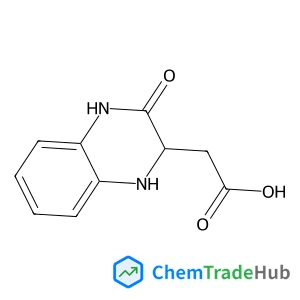
(3-Oxo-1,2,3,4-tetrahydro-2-quinoxalinyl)acetic acid
CAS Number:
136584-14-0
Molecular Formula:
C10H10N2O3
Recommended Suppliers





Disclaimer
This page provides academic journal information for reference and research purposes only. We are not affiliated with any journal publishers and do not handle publication submissions. For publication-related inquiries, please contact the respective journal publishers directly.
If you notice any inaccuracies in the information displayed, please contact us at support@chemtradehub.com. We will promptly review and address your concerns.