












In situ follow-up of hybrid alginate–silicate microbeads formation by linear rheology
Literature Information
Publication Date
2018-04-09
DOI
10.1039/C8CP00073E
Impact Factor
3.676
Authors
F. B. Haffner, N. Canilho, B. Medronho, C. Gardiennet, A. Gansmüller, A. Pasc
View Original
Abstract
Hybrid alginate–silicate microbeads of about 10–20 μm were synthesized by combining alginate crosslinking, silica condensation in a one pot approach using a food grade emulsion as template. A fine tuning of the formulation composition (alginate, silica and calcium sources) is necessary in order to obtain core–shell microbeads instead of unshaped and irregular fragments or even perforated spherical beads. Importantly, in situ linear rheology provides insights into the reaction mechanism as a result of the rheological fingerprint profile obtained during beads formation.
Related Literature
Tandem radical cyclization of N-methacryloyl benzamides with CBr4 to construct brominated isoquinolinediones
Songhai Huang, Pengfei Niu, Yingpeng Su, Dongcheng Hu, Congde Huo
2018-10-02
Paper
DOI: 10.1039/C8OB01964A
Asymmetric synthesis of β-amino ketones by using cinchona alkaloid-based chiral phase transfer catalysts
Weihua Li, Yifeng Wang, Danqian Xu
2018-11-01
Communication
DOI: 10.1039/C8OB02484G
Molecular engineering of logic gate types by module rearrangement in ‘Pourbaix Sensors’: the effect of excited-state electric fields
Jake C. Spiteri, Sergey A. Denisov, Gediminas Jonusauskas, Sylwia Klejna, Konrad Szaciłowski, Nathan D. McClenaghan, David C. Magri
2018-04-27
Paper
DOI: 10.1039/C8OB00485D
Transition-metal-free access to 2-aminopyridine derivatives from 2-fluoropyridine and acetamidine hydrochloride
Yibiao Li, Shuo Huang, Chunshu Liao, Yan Shao, Lu Chen
2018-09-28
Communication
DOI: 10.1039/C8OB02129E
Syntheses of the plant auxin conjugate 2-O-(indole-3-acetyl)-myo-inositol IAInos
Saúl Silva, Osvaldo S. Ascenso, Eva C. Lourenço, Margarida Archer, M. Rita Ventura
2018-09-12
Communication
DOI: 10.1039/C8OB02096E
Synthesis of N-arylsulfonamides through a Pd-catalyzed reduction coupling reaction of nitroarenes with sodium arylsulfinates
Bo Yang, Chang Lian, Guanglu Yue, Danyang Liu, Liyan Wei, Yi Ding, Xiancai Zheng, Kui Lu, Di Qiu, Xia Zhao
2018-10-15
Paper
DOI: 10.1039/C8OB02226G
Tetraphenylethylene conjugated p-hydroxyphenacyl: fluorescent organic nanoparticles for the release of hydrogen sulfide under visible light with real-time cellular imaging
C. Parthiban, Pavithra M., L. Vinod Kumar Reddy, Dwaipayan Sen, Melvin Samuel S., N. D. Pradeep Singh
2018-10-03
Paper
DOI: 10.1039/C8OB01629A
Recent developments in functionalization of acyclic α-keto amides
Alagesan Muthukumar, Subramani Sangeetha, Govindasamy Sekar
2018-08-06
Review Article
DOI: 10.1039/C8OB01423J
Rh-Catalyzed aminative dearomatization of 2-naphthols
Hang-Fei Tu
2018-10-31
Communication
DOI: 10.1039/C8OB02592D
You might also like
Compound Q&A
What are the main uses of 1-(3-Aminophenyl)-3-[(3R)-1-(3,3-dimethyl-2-oxobutyl)-2-oxo-5-(2-pyridinyl)-2,3-dihydro-1H-1,4-benzodiazepin-3-yl]urea (CAS: 155412-88-7)?
This compound is mainly used as an intermediate in the synthesis of antipsychoti...
155412-88-71-(3-Aminophenyl)-3-...
Compound Q&A
How should waste containing 1-(D-Ribofuranosyl)-1,4-dihydro-3-pyridinecarboxamide (CAS: 19132-12-8) be handled?
Waste containing 1-(D-Ribofuranosyl)-1,4-dihydro-3-pyridinecarboxamide (CAS: 191...
19132-12-81-(D-Ribofuranosyl)-...
Compound Q&A
What regulatory guidelines apply to 2-Methyl-2-propanyl 3-bromo-3-(hydroxymethyl)-1-azetidinecarboxylate (CAS: 2007919-81-3)?
2-Methyl-2-propanyl 3-bromo-3-(hydroxymethyl)-1-azetidinecarboxylate (CAS: 20079...
2007919-81-32-Methyl-2-propanyl ...
Compound Q&A
What is N-(4-Chloro-2-pyridinyl)acetamide (CAS: 245056-66-0)?
N-(4-Chloro-2-pyridinyl)acetamide (CAS: 245056-66-0) is a chemical compound with...
245056-66-0N-(4-Chloro-2-pyridi...
Compound Q&A
What is 5-Chloro-2-hydroxybenzoic acid (CAS: 321-14-2)?
5-Chloro-2-hydroxybenzoic acid, also known as 5-chlorosalicylic acid, is an arom...
321-14-25-Chloro-2-hydroxybe...
Compound Q&A
What precautions should be taken when handling 1,1-Dichloro-1-fluoroethane (CAS: 1717-00-6)?
When handling 1,1-Dichloro-1-fluoroethane (CAS: 1717-00-6), it is important to u...
1717-00-61,1-Dichloro-1-fluor...
Compound Q&A
What are the physical and chemical properties of Fmoc-(2S,3R)-3-phenylpyrrolidine-2-carboxylic acid (CAS: 281655-32-1)?
Fmoc-(2S,3R)-3-phenylpyrrolidine-2-carboxylic acid is a white crystalline solid ...
281655-32-1Fmoc-(2S,3R)-3-pheny...
Compound Q&A
What are the main uses of 4-Amino-5-bromo-2-pyridinecarboxylic acid (CAS: 1363381-01-4)?
4-Amino-5-bromo-2-pyridinecarboxylic acid is primarily used as a precursor in th...
1363381-01-44-Amino-5-bromo-2-py...
Compound Q&A
What precautions should be taken when handling (S)-tert-butyl 2-((2-(4-bromophenyl)-2-oxoethyl)carbamoyl)pyrrolidine-1-carboxylate (CAS: 1007881-98-2)?
Handling this compound should be done with personal protective equipment (PPE) i...
1007881-98-2(S)-tert-butyl 2-((2...
Compound Q&A
What precautions should be taken when handling 8-bromo-2,2-dimethyl-3,4-dihydro-2H-1,4-benzoxazin-3-one (CAS: 688363-73-7)?
When handling 8-bromo-2,2-dimethyl-3,4-dihydro-2H-1,4-benzoxazin-3-one, use prop...
688363-73-78-bromo-2,2-dimethyl...
Source Journal
Physical Chemistry Chemical Physics

CiteScore:
5.5
Self-citation Rate:
10.3%
Articles per Year:
3036
Physical Chemistry Chemical Physics (PCCP) is an international journal co-owned by 19 physical chemistry and physics societies from around the world. This journal publishes original, cutting-edge research in physical chemistry, chemical physics and biophysical chemistry. To be suitable for publication in PCCP, articles must include significant innovation and/or insight into physical chemistry; this is the most important criterion that reviewers and Editors will judge against when evaluating submissions. The journal has a broad scope and welcomes contributions spanning experiment, theory, computation and data science. Topical coverage includes spectroscopy, dynamics, kinetics, statistical mechanics, thermodynamics, electrochemistry, catalysis, surface science, quantum mechanics, quantum computing and machine learning. Interdisciplinary research areas such as polymers and soft matter, materials, nanoscience, energy, surfaces/interfaces, and biophysical chemistry are welcomed if they demonstrate significant innovation and/or insight into physical chemistry. Joined experimental/theoretical studies are particularly appreciated when complementary and based on up-to-date approaches.
Recommended Compounds
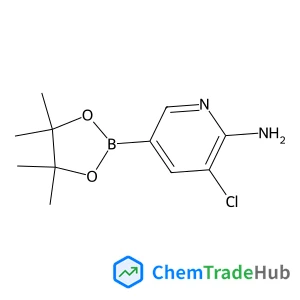
3-Chloro-5-(4,4,5,5-tetramethyl-1,3,2-dioxaborolan-2-yl)-2-pyridinamine
CAS Number:
1032758-99-8
Molecular Formula:
C11H16BClN2O2
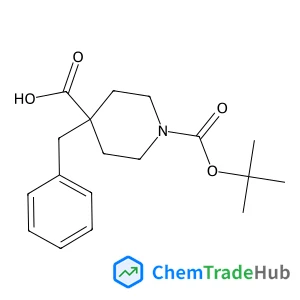
4-Benzyl-1-(tert-butoxycarbonyl)piperidine-4-carboxylic acid
CAS Number:
170838-87-6
Molecular Formula:
C18H25NO4
Recommended Suppliers







Disclaimer
This page provides academic journal information for reference and research purposes only. We are not affiliated with any journal publishers and do not handle publication submissions. For publication-related inquiries, please contact the respective journal publishers directly.
If you notice any inaccuracies in the information displayed, please contact us at support@chemtradehub.com. We will promptly review and address your concerns.