












Tunable electronic properties of the novel g-ZnO/1T-TiS2 vdW heterostructure by electric field and strain: crossovers in bandgap and band alignment types
Literature Information
Publication Date
2020-03-20
DOI
10.1039/D0CP00524J
Impact Factor
3.676
Authors
View Original
Abstract
A relatively new and promising method to tune properties of monolayers is by forming a heterostructure of them. Here, the van der Waals heterostructure of graphene-like zinc oxide (g-ZnO) and 1-trigonal titanium disulfide (1T-TiS2) was formed and its structural, electronic, and optical properties were studied in the framework of density functional theory. The dynamical stability of the heterostructure was confirmed based on its phonon band structure. An indirect (Γ → M) bandgap of 0.65 eV, a large built-in electric field (or a large potential drop of 3.12 eV), a type-II (staggered) band alignment, and a large conduction band offset of 2.94 eV were found to form across the interface, which are all desirable for potentially efficient separation of charge carriers. We showed also that the formation of the heterostructure largely enhances the almost-zero optical absorption of g-ZnO in visible and near-infrared regions, which is desirable for optoelectronic applications. By applying a perpendicular electric field, we could tune the bandgap value and the band alignment type (type-II → type-I) of the heterostructure. Finally, we showed that by applying compressive strain, one can change the band alignment type (type-II → type-I) and by applying tensile strain, the bandgap value could be tuned and a crossover occurs in the bandgap type (indirect → direct → indirect).
Related Literature
Quantum anomalous/valley Hall effect and tunable quantum state in hydrogenated arsenene decorated with a transition metal
Jian-Zhou Zhao, Cui-E Hu, Xiang-Rong Chen, Xiao-Lin Zhou
2018-04-23
Paper
DOI: 10.1039/C8CP00005K
Modeling study of the anti-knock tendency of substituted phenols as additives: an application of the reaction mechanism generator (RMG)
Peng Zhang, Nathan W. Yee, Sorin V. Filip, Casey E. Hetrick, Bin Yang, William H. Green
2018-01-02
Paper
DOI: 10.1039/C7CP07058F
Direct observation of stepwise intermolecular proton and hydrogen transfer between alcohols and the triplet state of 4-nitro-1-naphthol
Fengjin Zhang, Di Zhang, Yong Du, Peipei Jin, Yanying Zhao, Xuming Zheng, Jiadan Xue
2018-04-17
Paper
DOI: 10.1039/C8CP00484F
Electron-stimulated reactions in nanoscale water films adsorbed on α-Al2O3(0001)
Nikolay G. Petrik, Greg A. Kimmel
2018-04-11
Paper
DOI: 10.1039/C8CP01284A
Rationalisation of the optical signatures of nor-dihydroxanthene-hemicyanine fused near-infrared fluorophores by first-principle tools
Cloé Azarias, Isabelle Navizet, Paul Fleurat-Lessard, Boris Le Guennic, Jean-Alexandre Richard, Denis Jacquemin
2018-04-03
Paper
DOI: 10.1039/C8CP01587B
Phase diagram and oxygen–vacancy ordering in the CeO2–Gd2O3 system: a theoretical study
2018-04-05
Paper
DOI: 10.1039/C8CP01029C
Newly proposed proton-abstraction roundabout with backside attack mechanism for the SN2 reaction at the nitrogen center in F− + NH2Cl
Yongfang Li, Dunyou Wang
2018-04-04
Paper
DOI: 10.1039/C8CP01201F
Time-resolved spectroscopy of the ensembled photoluminescence of nitrogen- and boron/nitrogen-doped carbon dots
Sunghu Kim, Byung-Kuk Yoo, Yuri Choi, Oh-Hoon Kwon
2018-04-11
Paper
DOI: 10.1039/C8CP01619D
You might also like
Compound Q&A
What are the main uses of 1-(3-Aminophenyl)-3-[(3R)-1-(3,3-dimethyl-2-oxobutyl)-2-oxo-5-(2-pyridinyl)-2,3-dihydro-1H-1,4-benzodiazepin-3-yl]urea (CAS: 155412-88-7)?
This compound is mainly used as an intermediate in the synthesis of antipsychoti...
155412-88-71-(3-Aminophenyl)-3-...
Compound Q&A
How should waste containing 1-(D-Ribofuranosyl)-1,4-dihydro-3-pyridinecarboxamide (CAS: 19132-12-8) be handled?
Waste containing 1-(D-Ribofuranosyl)-1,4-dihydro-3-pyridinecarboxamide (CAS: 191...
19132-12-81-(D-Ribofuranosyl)-...
Compound Q&A
What regulatory guidelines apply to 2-Methyl-2-propanyl 3-bromo-3-(hydroxymethyl)-1-azetidinecarboxylate (CAS: 2007919-81-3)?
2-Methyl-2-propanyl 3-bromo-3-(hydroxymethyl)-1-azetidinecarboxylate (CAS: 20079...
2007919-81-32-Methyl-2-propanyl ...
Compound Q&A
What is N-(4-Chloro-2-pyridinyl)acetamide (CAS: 245056-66-0)?
N-(4-Chloro-2-pyridinyl)acetamide (CAS: 245056-66-0) is a chemical compound with...
245056-66-0N-(4-Chloro-2-pyridi...
Compound Q&A
What is 5-Chloro-2-hydroxybenzoic acid (CAS: 321-14-2)?
5-Chloro-2-hydroxybenzoic acid, also known as 5-chlorosalicylic acid, is an arom...
321-14-25-Chloro-2-hydroxybe...
Compound Q&A
What precautions should be taken when handling 1,1-Dichloro-1-fluoroethane (CAS: 1717-00-6)?
When handling 1,1-Dichloro-1-fluoroethane (CAS: 1717-00-6), it is important to u...
1717-00-61,1-Dichloro-1-fluor...
Compound Q&A
What are the physical and chemical properties of Fmoc-(2S,3R)-3-phenylpyrrolidine-2-carboxylic acid (CAS: 281655-32-1)?
Fmoc-(2S,3R)-3-phenylpyrrolidine-2-carboxylic acid is a white crystalline solid ...
281655-32-1Fmoc-(2S,3R)-3-pheny...
Compound Q&A
What are the main uses of 4-Amino-5-bromo-2-pyridinecarboxylic acid (CAS: 1363381-01-4)?
4-Amino-5-bromo-2-pyridinecarboxylic acid is primarily used as a precursor in th...
1363381-01-44-Amino-5-bromo-2-py...
Compound Q&A
What precautions should be taken when handling (S)-tert-butyl 2-((2-(4-bromophenyl)-2-oxoethyl)carbamoyl)pyrrolidine-1-carboxylate (CAS: 1007881-98-2)?
Handling this compound should be done with personal protective equipment (PPE) i...
1007881-98-2(S)-tert-butyl 2-((2...
Compound Q&A
What precautions should be taken when handling 8-bromo-2,2-dimethyl-3,4-dihydro-2H-1,4-benzoxazin-3-one (CAS: 688363-73-7)?
When handling 8-bromo-2,2-dimethyl-3,4-dihydro-2H-1,4-benzoxazin-3-one, use prop...
688363-73-78-bromo-2,2-dimethyl...
Source Journal
Physical Chemistry Chemical Physics

CiteScore:
5.5
Self-citation Rate:
10.3%
Articles per Year:
3036
Physical Chemistry Chemical Physics (PCCP) is an international journal co-owned by 19 physical chemistry and physics societies from around the world. This journal publishes original, cutting-edge research in physical chemistry, chemical physics and biophysical chemistry. To be suitable for publication in PCCP, articles must include significant innovation and/or insight into physical chemistry; this is the most important criterion that reviewers and Editors will judge against when evaluating submissions. The journal has a broad scope and welcomes contributions spanning experiment, theory, computation and data science. Topical coverage includes spectroscopy, dynamics, kinetics, statistical mechanics, thermodynamics, electrochemistry, catalysis, surface science, quantum mechanics, quantum computing and machine learning. Interdisciplinary research areas such as polymers and soft matter, materials, nanoscience, energy, surfaces/interfaces, and biophysical chemistry are welcomed if they demonstrate significant innovation and/or insight into physical chemistry. Joined experimental/theoretical studies are particularly appreciated when complementary and based on up-to-date approaches.
Recommended Compounds
![Pyrazolo[1,5-a]pyridine-3-carbothioamide structure](https://static.chemtradehub.com/structs/885/885275-44-5-aae0.webp "Pyrazolo[1,5-a]pyridine-3-carbothioamide structure")

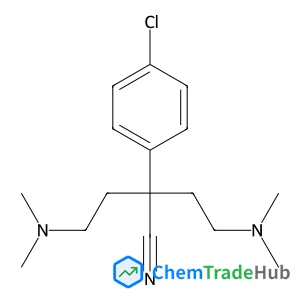
2-(4-Chlorophenyl)-4-(dimethylamino)-2-(2-(dimethylamino)ethyl)butanenitrile
CAS Number:
1246816-57-8
Molecular Formula:
C16H24ClN3
Recommended Suppliers






Disclaimer
This page provides academic journal information for reference and research purposes only. We are not affiliated with any journal publishers and do not handle publication submissions. For publication-related inquiries, please contact the respective journal publishers directly.
If you notice any inaccuracies in the information displayed, please contact us at support@chemtradehub.com. We will promptly review and address your concerns.