












QM/MM studies on the excited-state relaxation mechanism of a semisynthetic dTPT3 base
Literature Information
Publication Date
2018-01-15
DOI
10.1039/C7CP08696B
Impact Factor
3.676
Authors
Wei-Wei Guo, Teng-Shuo Zhang, Wei-Hai Fang, Ganglong Cui
View Original
Abstract
Semisynthetic alphabets can potentially increase the genetic information stored in DNA through the formation of unusual base pairs. Recent experiments have shown that near-visible-light irradiation of the dTPT3 chromophore could lead to the formation of a reactive triplet state and of singlet oxygen in high quantum yields. However, the detailed excited-state relaxation paths that populate the lowest triplet state are unclear. Herein, we have for the first time employed the QM(MS-CASPT2//CASSCF)/MM method to explore the spectroscopic properties and excited-state relaxation mechanism of the aqueous dTPT3 chromophore. On the basis of the results, we have found that (1) the S2(1ππ*) state of dTPT3 is the initially populated excited singlet state upon near-visible light irradiation; and (2) there are two efficient relaxation pathways to populate the lowest triplet state, i.e. T1(3ππ*). In the first one, the S2(1ππ*) system first decays to the S1(1nπ*) state near the S2/S1 conical intersection, which is followed by an efficient S1 → T1 intersystem crossing process at the S1/T1 crossing point; in the second one, an efficient S2 → T2 intersystem crossing takes place first, and then, the T2(3nπ*) system hops to the T1(3ππ*) state through an internal conversion process at the T2/T1 conical intersection. Moreover, an S2/S1/T2 intersection region is found to play a vital role in the excited-state relaxation. These new mechanistic insights help in understanding the photophysics and photochemistry of unusual base pairs.
Related Literature
A mobile precursor determines protein resistance on nanostructured surfaces
Kang Wang, Ye Chen, Xiangjun Gong, Jianlong Xia, Junpeng Zhao, Lei Shen
2018-04-23
Paper
DOI: 10.1039/C8CP00887F
Identification of a new substrate effect that enhances the electrocatalytic activity of dendritic tin in CO2 reduction
Xiaolong Zhang
2018-01-31
Paper
DOI: 10.1039/C7CP07723H
Halogen-like properties of the Al13 cluster mimicking astatine
B. Molina, J. R. Soto, J. J. Castro
2018-04-04
Communication
DOI: 10.1039/C8CP00494C
A DFT+U study of the catalytic degradation of 1,2-dichloroethane over CeO2
Guanzhong Lu
2018-01-22
Paper
DOI: 10.1039/C7CP08322J
Precursor non-stoichiometry to enable improved CH3NH3PbBr3 nanocrystal LED performance
Sjoerd A. Veldhuis, Xin Yu Chin, Natalia Yantara, Xiaodong Chen
2018-01-24
Paper
DOI: 10.1039/C7CP07827G
Energy dispersive spectrometry and first principles studies on the oxidation of pentlandite
Xiaolu Xiong, Guangshi Li, Hongwei Cheng, Qian Xu
2018-04-03
Paper
DOI: 10.1039/C8CP00873F
Study of low temperature chlorine atom initiated oxidation of methyl and ethyl butyrate using synchrotron photoionization TOF-mass spectrometry
Joseph Czekner, Craig A. Taatjes, David L. Osborn, Giovanni Meloni
2018-02-01
Paper
DOI: 10.1039/C7CP08221E
Gas phase kinetics of the OH + CH3CH2OH reaction at temperatures of the interstellar medium (T = 21–107 K)
A. J. Ocaña, S. Blázquez, A. Canosa, M. Antiñolo
2018-01-31
Paper
DOI: 10.1039/C7CP07868D
Size-dependent magnetic and inductive heating properties of Fe3O4 nanoparticles: scaling laws across the superparamagnetic size
Jeotikanta Mohapatra, Fanhao Zeng, Kevin Elkins, Meiying Xing, Madhav Ghimire, Sunghyun Yoon, Sanjay R. Mishra, J. Ping Liu
2018-04-06
Paper
DOI: 10.1039/C7CP08631H
Computational analysis of carbohydrate recognition based on hybrid QM/MM modeling: a case study of norovirus capsid protein in complex with Lewis antigen
2018-01-09
Paper
DOI: 10.1039/C7CP07701G
You might also like
Compound Q&A
What are the main uses of 1-(3-Aminophenyl)-3-[(3R)-1-(3,3-dimethyl-2-oxobutyl)-2-oxo-5-(2-pyridinyl)-2,3-dihydro-1H-1,4-benzodiazepin-3-yl]urea (CAS: 155412-88-7)?
This compound is mainly used as an intermediate in the synthesis of antipsychoti...
155412-88-71-(3-Aminophenyl)-3-...
Compound Q&A
How should waste containing 1-(D-Ribofuranosyl)-1,4-dihydro-3-pyridinecarboxamide (CAS: 19132-12-8) be handled?
Waste containing 1-(D-Ribofuranosyl)-1,4-dihydro-3-pyridinecarboxamide (CAS: 191...
19132-12-81-(D-Ribofuranosyl)-...
Compound Q&A
What regulatory guidelines apply to 2-Methyl-2-propanyl 3-bromo-3-(hydroxymethyl)-1-azetidinecarboxylate (CAS: 2007919-81-3)?
2-Methyl-2-propanyl 3-bromo-3-(hydroxymethyl)-1-azetidinecarboxylate (CAS: 20079...
2007919-81-32-Methyl-2-propanyl ...
Compound Q&A
What is N-(4-Chloro-2-pyridinyl)acetamide (CAS: 245056-66-0)?
N-(4-Chloro-2-pyridinyl)acetamide (CAS: 245056-66-0) is a chemical compound with...
245056-66-0N-(4-Chloro-2-pyridi...
Compound Q&A
What is 5-Chloro-2-hydroxybenzoic acid (CAS: 321-14-2)?
5-Chloro-2-hydroxybenzoic acid, also known as 5-chlorosalicylic acid, is an arom...
321-14-25-Chloro-2-hydroxybe...
Compound Q&A
What precautions should be taken when handling 1,1-Dichloro-1-fluoroethane (CAS: 1717-00-6)?
When handling 1,1-Dichloro-1-fluoroethane (CAS: 1717-00-6), it is important to u...
1717-00-61,1-Dichloro-1-fluor...
Compound Q&A
What are the physical and chemical properties of Fmoc-(2S,3R)-3-phenylpyrrolidine-2-carboxylic acid (CAS: 281655-32-1)?
Fmoc-(2S,3R)-3-phenylpyrrolidine-2-carboxylic acid is a white crystalline solid ...
281655-32-1Fmoc-(2S,3R)-3-pheny...
Compound Q&A
What are the main uses of 4-Amino-5-bromo-2-pyridinecarboxylic acid (CAS: 1363381-01-4)?
4-Amino-5-bromo-2-pyridinecarboxylic acid is primarily used as a precursor in th...
1363381-01-44-Amino-5-bromo-2-py...
Compound Q&A
What precautions should be taken when handling (S)-tert-butyl 2-((2-(4-bromophenyl)-2-oxoethyl)carbamoyl)pyrrolidine-1-carboxylate (CAS: 1007881-98-2)?
Handling this compound should be done with personal protective equipment (PPE) i...
1007881-98-2(S)-tert-butyl 2-((2...
Compound Q&A
What precautions should be taken when handling 8-bromo-2,2-dimethyl-3,4-dihydro-2H-1,4-benzoxazin-3-one (CAS: 688363-73-7)?
When handling 8-bromo-2,2-dimethyl-3,4-dihydro-2H-1,4-benzoxazin-3-one, use prop...
688363-73-78-bromo-2,2-dimethyl...
Source Journal
Physical Chemistry Chemical Physics

CiteScore:
5.5
Self-citation Rate:
10.3%
Articles per Year:
3036
Physical Chemistry Chemical Physics (PCCP) is an international journal co-owned by 19 physical chemistry and physics societies from around the world. This journal publishes original, cutting-edge research in physical chemistry, chemical physics and biophysical chemistry. To be suitable for publication in PCCP, articles must include significant innovation and/or insight into physical chemistry; this is the most important criterion that reviewers and Editors will judge against when evaluating submissions. The journal has a broad scope and welcomes contributions spanning experiment, theory, computation and data science. Topical coverage includes spectroscopy, dynamics, kinetics, statistical mechanics, thermodynamics, electrochemistry, catalysis, surface science, quantum mechanics, quantum computing and machine learning. Interdisciplinary research areas such as polymers and soft matter, materials, nanoscience, energy, surfaces/interfaces, and biophysical chemistry are welcomed if they demonstrate significant innovation and/or insight into physical chemistry. Joined experimental/theoretical studies are particularly appreciated when complementary and based on up-to-date approaches.
Recommended Compounds
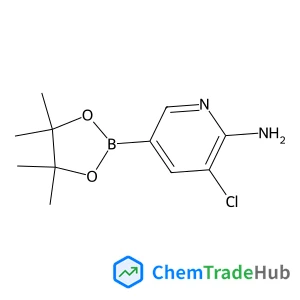
3-Chloro-5-(4,4,5,5-tetramethyl-1,3,2-dioxaborolan-2-yl)-2-pyridinamine
CAS Number:
1032758-99-8
Molecular Formula:
C11H16BClN2O2
![Pyrazolo[1,5-a]pyridine-3-carbothioamide structure](https://static.chemtradehub.com/structs/885/885275-44-5-aae0.webp "Pyrazolo[1,5-a]pyridine-3-carbothioamide structure")
![2,6-Di(thiophen-2-yl)dithieno[3,2-b:2',3'-d]thiophene structure](https://static.chemtradehub.com/structs/910/910788-24-8-5b70.webp "2,6-Di(thiophen-2-yl)dithieno[3,2-b:2',3'-d]thiophene structure")
2,6-Di(thiophen-2-yl)dithieno[3,2-b:2',3'-d]thiophene
CAS Number:
910788-24-8
Molecular Formula:
C16H8S5

Recommended Suppliers





Disclaimer
This page provides academic journal information for reference and research purposes only. We are not affiliated with any journal publishers and do not handle publication submissions. For publication-related inquiries, please contact the respective journal publishers directly.
If you notice any inaccuracies in the information displayed, please contact us at support@chemtradehub.com. We will promptly review and address your concerns.