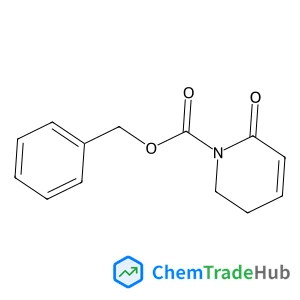
Benzyl 6-oxo-3,6-dihydro-1(2H)-pyridinecarboxylate
CAS Number:
725746-35-0
Molecular Formula:
C13H13NO3
A. Maignan
Ba2CoS3 is the first example of an inorganic solid containing one-dimensional corner-sharing [Co2+–anion] chains, which leads to one-dimensional cooperative antiferromagnetism.
J. C. J. Camp, J. McGregor, I. M. Watson, R. A. Cox, M. Kalberer, A. D. Ward, F. D. Pope
DOI: 10.1039/C4CP00994K
Filipa Gonçalves de Azevedo, John F. Griffiths, Silvana S. S. Cardoso
DOI: 10.1039/C4CP02990A
Vijay Reddy Jupally, Amala Dass
DOI: 10.1039/C3CP54343A
Xiangying Lv, Xiaogang Xue, Yang Huang, Zanyong Zhuang, Zhang Lin
DOI: 10.1039/C4CP00765D
T. Inakhunbi Chanu, Thangavelu Muthukumar, Periakaruppan T. Manoharan
DOI: 10.1039/C4CP03393K
Hyun S. Park, Chong-Yong Lee, Erwin Reisner
DOI: 10.1039/C4CP03883E
Elayaraja Kolanthai, Rajib Kalsar, Suryasarathi Bose, Satyam Suwas, Kaushik Chatterjee
DOI: 10.1039/C4CP02815E
Yu. I. Prylutskyy, I. S. Pashkova, D. Wyrzykowski, A. Woziwodzka, G. Gołuński, J. Piosik, V. V. Cherepanov, U. Ritter
DOI: 10.1039/C4CP03367A
DOI: 10.1039/C4CP03065F
J. E. Newton, J. A. Preece, N. V. Rees, S. L. Horswell
DOI: 10.1039/C4CP00991F
N-(4-Methoxybenzyl)-2-pyridinamine (CAS: 52818-63-0) is increasingly being used ...
When handling Ethyl 4-(2-chlorophenyl)-1,3-thiazole-2-carboxylate, appropriate p...
Diethyldiselane (CAS: 628-39-7) is classified under the Globally Harmonized Syst...
The market for oxocopper (CAS: 12053-18-8) is primarily driven by its use in cat...
The market for 5-{[(2-Methyl-2-propanyl)oxy]carbonyl}-5-azaspiro[2.4]heptane-7-c...
2-(1-Pyrrolidinyl)-4-pyridinamine is a chemical compound with the CAS number 359...
2-(3-Pyridinyl)-1-azabicyclo[2.2.2]octane (CAS: 91556-75-1) is a crystalline sol...
(S)-Alpha-allyl-proline hydrochloride is usually synthesized via a Wittig reacti...
3-Methyl-1,2-oxazole-5-carboxylic acid (CAS: 4857-42-5) is an organic compound w...
Lys-SMCC-DM1 is synthesized via a multi-step process involving the coupling of S...

ChemComm publishes urgent research which is of outstanding significance and interest to experts in the field, while also appealing to the journal’s broad chemistry readership. Our communication format is ideally suited to short, urgent studies that are of such importance that they require accelerated publication. Our scope covers all topics in chemistry, and research at the interface of chemistry and other disciplines (such as materials science, nanoscience, physics, engineering and biology) where there is a significant novelty in the chemistry aspects. Major topic areas covered include: Analytical Chemistry Catalysis Chemical Biology and medicinal chemistry Computational Chemistry and Machine Learning Energy and sustainable chemistry Environmental Chemistry Green Chemistry Inorganic Chemistry Materials Chemistry Nanoscience Organic Chemistry Physical Chemistry Polymer Chemistry Supramolecular Chemistry

![N-{15-[(2,5-Dioxo-1-pyrrolidinyl)oxy]-15-oxo-3,6,9,12-tetraoxapentadec-1-yl}-2-(2-propyn-1-yloxy)acetamide structure](https://static.chemtradehub.com/structs/210/2101206-92-0-2eb5.webp "N-{15-[(2,5-Dioxo-1-pyrrolidinyl)oxy]-15-oxo-3,6,9,12-tetraoxapentadec-1-yl}-2-(2-propyn-1-yloxy)acetamide structure")