












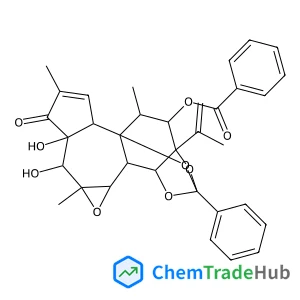
Contents pages
Literature Information
Publication Date
DOI
10.1039/CS98110FP007
Impact Factor
54.564
Authors
View Original
Abstract
The first page of this article is displayed as the abstract.
Related Literature
Miyaura borylation/Suzuki–Miyaura coupling (MBSC) sequence of 4-bromo-2,4′-bithiazoles with halides: straightforward access to a heterocylic cluster of d-series of thiopeptide GE2270
Pierrik Lassalas, Christophe Berini, Jean-Baptiste E. Y. Rouchet, Jonathan Hédouin, Francis Marsais, Cédric Schneider, Christine Baudequin, Christophe Hoarau
2018-01-02
Communication
DOI: 10.1039/C7OB02866K
Efficient construction of bioactive trans-5A5B6C spirolactones via bicyclo[4.3.0] α-hydroxy ketones
Y. J. Zhu, J. Q. Huo, Q. F. Wu, X. Li, S. Zhou, L. X. Xiong, T. Kalinina, T. Glukhareva
2018-01-18
Paper
DOI: 10.1039/C7OB02701J
A nickel catalyzed acceptorless dehydrogenative approach to quinolines
Seuli Parua, Rina Sikari, Suman Sinha, Siuli Das, Gargi Chakraborty, Nanda D. Paul
2017-12-05
Paper
DOI: 10.1039/C7OB02670F
Synthesis of azulene-substituted benzofurans and isocoumarins via intramolecular cyclization of 1-ethynylazulenes, and their structural and optical properties
Taku Shoji, Miwa Tanaka, Sho Takagaki, Kota Miura, Akira Ohta, Ryuta Sekiguchi, Shunji Ito, Shigeki Mori, Tetsuo Okujima
2017-12-08
Paper
DOI: 10.1039/C7OB02861J
Tailoring the properties of a hypoxia-responsive 1,8-naphthalimide for imaging applications
Kylie Yang, Kathryn G. Leslie, Sally Y. Kim, Bill Kalionis
2018-01-05
Paper
DOI: 10.1039/C7OB03164E
Pyrazole synthesis via a cascade Sonogashira coupling/cyclization of N-propargyl sulfonylhydrazones
Ying Yang, Zi-Lin Hu, Ren-Hao Li, Yi-Hui Chen, Zhuang-Ping Zhan
2017-11-29
Communication
DOI: 10.1039/C7OB02576A
Exploring bis-(amino)cyclopropenylidene as a non-covalent Brønsted base catalyst in conjugate addition reactions
Gurdeep Singh, Prithwish Goswami, Ramasamy Vijaya Anand
2017-12-11
Communication
DOI: 10.1039/C7OB02882B
Side chain-specific 11/9-helix propensity of α/β-peptides with alternating residue types
Jaeyeon Lee, Jihyun Shim, Philjae Kang, Moon-Gun Choi, Soo Hyuk Choi
2017-12-07
Paper
DOI: 10.1039/C7OB02816D
The role of catalytic residue pKa on the hydrolysis/transglycosylation partition in family 3 β-glucosidases
Inacrist Geronimo, Christina M. Payne, Mats Sandgren
2017-12-18
Paper
DOI: 10.1039/C7OB02558K
Electrochemical oxidative synthesis of 1,3,4-thiadiazoles from isothiocyanates and hydrazones
Zhongxiao Ma, Xiao Hu, Yanni Li, Deqiang Liang, Ying Dong, Baoling Wang, Weili Li
2021-03-04
Research Article
DOI: 10.1039/D1QO00168J
You might also like
Compound Q&A
What are the main uses of (3.beta.)-3-Hydroxy-N,N-dimethyl-chol-5-en-24-amide (CAS: 79066-03-8)?
(3.beta.)-3-Hydroxy-N,N-dimethyl-chol-5-en-24-amide (CAS: 79066-03-8) is primari...
79066-03-8(3.beta.)-3-Hydroxy-...
Compound Q&A
What regulatory guidelines apply to 5-(aminomethyl)-2-methoxyphenol (CAS: 89702-89-6)?
5-(Aminomethyl)-2-methoxyphenol (CAS: 89702-89-6) is classified under GHS as a s...
89702-89-65-(aminomethyl)-2-me...
Compound Q&A
What is Thieno[2,3-c]pyridin-7(6H)-one (CAS: 28981-13-7)?
Thieno[2,3-c]pyridin-7(6H)-one (CAS: 28981-13-7) is a heterocyclic organic compo...
28981-13-7Thieno[2,3-c]pyridin...
Compound Q&A
Is 1-[(6-Methoxy-3-pyridinyl)methyl]-4-piperidinamine dihydrochloride (CAS: 1185311-28-7) safe?
1-[(6-Methoxy-3-pyridinyl)methyl]-4-piperidinamine dihydrochloride is generally ...
1185311-28-71-[(6-Methoxy-3-pyri...
Compound Q&A
What regulatory guidelines apply to [(2E)-3-Phenyl-2-propen-1-yl]phosphonic acid (CAS: 146404-58-2)?
[(2E)-3-Phenyl-2-propen-1-yl]phosphonic acid (CAS: 146404-58-2) is regulated und...
146404-58-2[(2E)-3-Phenyl-2-pro...
Compound Q&A
What regulatory guidelines apply to 6-Bromo-7-methoxyquinoline (CAS: 1620515-86-7)?
6-Bromo-7-methoxyquinoline (CAS: 1620515-86-7) falls under the scope of the Glob...
1620515-86-76-Bromo-7-methoxyqui...
Compound Q&A
What industries use (2R)-1-(1-Benzofuran-2-yl)-N-propyl-2-pentanamine (CAS: 260550-89-8)?
This compound is primarily used in the pharmaceutical industry for the developme...
260550-89-8(2R)-1-(1-Benzofuran...
Compound Q&A
What are the main uses of 1-Ethyl-7-[2-methyl-6-(4H-1,2,4-triazol-3-yl)-3-pyridinyl]-3,5-dihydropyrazino[2,3-b]pyrazin-2(1H)-one (CAS: 1228013-15-7)?
1-Ethyl-7-[2-methyl-6-(4H-1,2,4-triazol-3-yl)-3-pyridinyl]-3,5-dihydropyrazino[2...
1228013-15-71-Ethyl-7-[2-methyl-...
Compound Q&A
Are there alternatives to {5-(Acryloylamino)-2-[(dimethylamino)methyl]phenyl}boronic acid (CAS: 1217500-78-1) in synthesis?
Alternative reagents such as 2-[(dimethylamino)methyl]phenylboronic acid or rela...
1217500-78-1{5-(Acryloylamino)-2...
Compound Q&A
What is 3-(Piperidin-4-yloxy)pyridine (CAS: 310881-48-2)?
3-(Piperidin-4-yloxy)pyridine (CAS: 310881-48-2) is an organic compound with the...
310881-48-23-(Piperidin-4-yloxy...
Source Journal
Chemical Society Reviews

CiteScore:
80.8
Self-citation Rate:
1.2%
Articles per Year:
250
Chem Soc Rev publishes review articles covering important topics at the forefront of the chemical sciences. Reviews should be of the very highest quality and international impact. We particularly encourage international and multidisciplinary collaborations among our authors. Our scope covers the breadth of the chemical sciences, including interdisciplinary topics where the article has a basis in chemistry. Topics include: Analytical chemistry Biomaterials chemistry Bioorganic/medicinal chemistry Catalysis Chemical Biology Coordination Chemistry Crystal Engineering Energy Sustainable chemistry Green chemistry Inorganic chemistry Inorganic materials Main group chemistry Nanoscience Organic chemistry Organic materials Organometallics Physical chemistry Supramolecular chemistry Synthetic methodology Theoretical and computational chemistry
Recommended Compounds
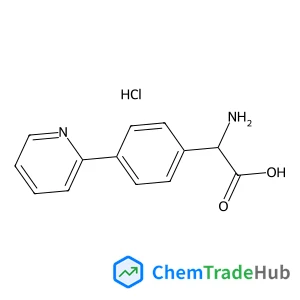
2-Amino-2-(4-(pyridin-2-YL)phenyl)acetic acid hydrochloride
CAS Number:
1135818-89-1
Molecular Formula:
C13H13ClN2O2
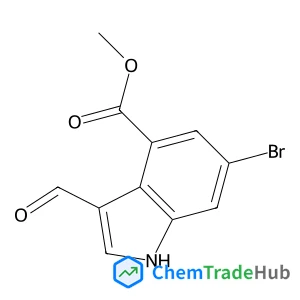
methyl 6-bromo-3-formyl-1H-indole-4-carboxylate
CAS Number:
1353636-63-1
Molecular Formula:
C11H8BrNO3
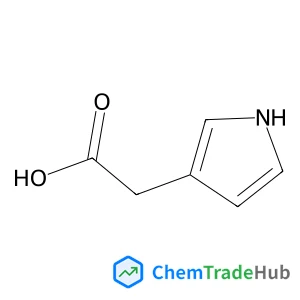
Recommended Suppliers







Disclaimer
This page provides academic journal information for reference and research purposes only. We are not affiliated with any journal publishers and do not handle publication submissions. For publication-related inquiries, please contact the respective journal publishers directly.
If you notice any inaccuracies in the information displayed, please contact us at support@chemtradehub.com. We will promptly review and address your concerns.