












Generation of guanine–amino acid cross-links by a free radical combination mechanism
Literature Information
Publication Date
2014-04-25
DOI
10.1039/C4CP00675E
Impact Factor
3.676
Authors
Yuriy Uvaydov, Nicholas E. Geacintov, Vladimir Shafirovich
View Original
Abstract
A direct method has been developed for the in vitro synthesis of stable DNA–protein cross-links (DPC's) between guanine and amino acids (lysine and arginine). This method employs the combination of guanine neutral radicals, G(–H)˙, and side-chain C-centered amino acid radicals. The latter were generated indirectly after first causing the selective photoionization of 2-aminopurine (2AP) embedded in the oligonucleotide, 5′-d(CC[2AP]TCGCTACC), by intense nanosecond 308 nm excimer laser pulses. The 2AP radical cation deprotonates rapidly to form the 2AP(–H)˙ neutral radical which, in turn, oxidizes the nearby guanine to form the neutral guanine G(–H)˙ radical, as described previously (Shafirovich et al., J. Phys. Chem. B, 2001, 105, 8431). In parallel, the hydrated electrons, generated by the photoionization of 2AP, are scavenged by nitrous oxide to generate hydroxyl radicals. In the presence of a large excess of the amino acids, the hydroxyl radicals oxidize the latter to produce C-centered amino acid radicals that combine with the G(–H)˙ radicals to form the guanine–amino acid cross-linked oligonucleotide product. Analogous products were generated by photoionizing the free nucleoside, 2′,3′,5′-tri-O-acetylguanosine, (tri-O-Ac-Guo), using intense nanosecond 266 nm Nd:YAG laser pulse irradiation. The guanine–amino acid cross-links thus produced site-specifically positioned either in oligonucleotides, or in the free nucleoside tri-O-Ac-Guo were isolated by HPLC methods and identified by high resolution LC-TOF/MS and LC-MS/MS methods. The possibility that analogous guanine–amino acid cross-linked products could be formed in vivo using single hit radical generation mechanisms during oxidative stress is discussed.
Recommended Journals
Related Literature
Bis(diethylamino)carbene and the mechanism of dimerisation for simple diaminocarbenes
Roger W. Alder, Leila Chaker, François P. V. Paolini
2004-08-20
Communication
DOI: 10.1039/B409112D
A metallo-capped polyrotaxane containing calix[4]arenes and cyclodextrins and its highly selective binding for Ca2+
Yu Liu, Hao Wang, Heng-Yi Zhang, Peng Liang
2004-09-06
Communication
DOI: 10.1039/B409356A
Water-in-water mesophases for templating inorganics
Andreas Taubert, Ernst Furrer, Wolfgang Meier
2004-09-02
Communication
DOI: 10.1039/B405610H
A C3-symmetric molecular scaffold for the construction of large receptors
Gebhard Haberhauer, Thomas Oeser, Frank Rominger
2004-08-06
Communication
DOI: 10.1039/B406335J
Ionic hydrogenation of C-20, 22-ketene dithioacetal: stereoselective synthesis of steroidal C (20R) aldehydes
Bapurao B. Shingate, Braja G. Hazra, Vandana S. Pore, Rajesh G. Gonnade, Mohan M. Bhadbhade
2004-08-19
Communication
DOI: 10.1039/B407952C
Mono- and bis(tetrathiafulvaleno)hexadehydro[12]annulenes
Kenji Hara, Masashi Hasegawa, Yoshiyuki Kuwatani, Hideo Enozawa, Masahiko Iyoda
2004-08-13
Communication
DOI: 10.1039/B407200F
Aminooxazolinate; a chiral amidinate analogue
Ian J. Munslow, Andrew R. Wade, Robert J. Deeth, Peter Scott
2004-09-30
Communication
DOI: 10.1039/B409113B
Unsaturated 1,2-amino alcohols and ethers from aziridines and organolithiums
David M. Hodgson, Bogdan Štefane, Timothy J. Miles, Jason Witherington
2004-08-24
Communication
DOI: 10.1039/B409486G
Efficient boron removal by using mesoporous matrices grafted with saccharides
Gertrudis Rodríguez-López, M. Dolores Marcos, Ramón Martínez-Máñez, Félix Sancenón, Juan Soto, Luis A. Villaescusa, Danile Beltrán, Pedro Amorós
2004-08-19
Communication
DOI: 10.1039/B406611A
New Pb–Pb bonds: syntheses and molecular structures of hexabiphenyldiplumbane and tri(trisbiphenylplumbyl)plumbate
Yuzhong Wang, Brandon Quillian, Pingrong Wei, Xiao-Juan Yang, Gregory H. Robinson
2004-08-20
Communication
DOI: 10.1039/B408860N
You might also like
Compound Q&A
How should waste containing 6-Chloro-5-(2'-hydroxy-3'-methoxy-4-biphenylyl)-3-(3-methoxyphenyl)-1H-pyrrolo[3,2-d]pyrimidine-2,4(3H,5H)-dione (CAS: 1346607-05-3) be handled?
Waste containing 6-Chloro-5-(2'-hydroxy-3'-methoxy-4-biphenylyl)-3-(3-methoxyphe...
1346607-05-36-Chloro-5-(2'-hydro...
Compound Q&A
What are the main uses of (3alpha,5alpha)-3-Hydroxypregnane-11,20-dione (CAS: 23930-19-0)?
(3alpha,5alpha)-3-Hydroxypregnane-11,20-dione is primarily used in the pharmaceu...
23930-19-0(3alpha,5alpha)-3-Hy...
Compound Q&A
What is the market or research trend for 4-Amino-6-chloro-2-pyridinecarboxylic acid (CAS: 546141-56-4)?
The market for 4-Amino-6-chloro-2-pyridinecarboxylic acid (CAS: 546141-56-4) is ...
546141-56-44-Amino-6-chloro-2-p...
Compound Q&A
Are there alternatives to (2-Benzoylethyl)trimethylammonium chloride (CAS: 24472-88-6) in synthesis?
Alternatives to (2-Benzoylethyl)trimethylammonium chloride (CAS: 24472-88-6) in ...
24472-88-6(2-Benzoylethyl)trim...
Compound Q&A
Is N-[4-Nitro-3-(trifluoromethyl)phenyl]acetamide (CAS: 393-12-4) safe?
N-[4-Nitro-3-(trifluoromethyl)phenyl]acetamide (CAS: 393-12-4) is generally safe...
393-12-4N-[4-Nitro-3-(triflu...
Compound Q&A
Are there alternatives to [(4R,5R,6S)-5-hydroxy-10-imino-3,7-dioxa-1,9-diazatricyclo[6.4.0.02,6]dodeca-8,11-dien-4-yl]methyl dihydrogen phosphate (CAS: 39679-56-6) in synthesis?
Alternative reagents such as other phosphates or similar functional groups can b...
39679-56-6[(4R,5R,6S)-5-hydrox...
Compound Q&A
Are there alternatives to N,N'-Bis(3-aminopropyl)-1,3-propanediamine (CAS: 4605-14-5) in synthesis?
There are alternatives to N,N'-Bis(3-aminopropyl)-1,3-propanediamine (CAS: 4605-...
4605-14-5N,N'-Bis(3-aminoprop...
Compound Q&A
What precautions should be taken when handling Aluminium trihexadecanoate (CAS: 555-35-1)?
When handling Aluminium trihexadecanoate, it is important to use appropriate per...
555-35-1Aluminium trihexadec...
Compound Q&A
What is (1,1-Dioxido-3-oxo-1,2-benzothiazol-2(3H)-yl)acetic acid (CAS: 52188-11-1)?
(1,1-Dioxido-3-oxo-1,2-benzothiazol-2(3H)-yl)acetic acid is a chemical compound ...
52188-11-1(1,1-Dioxido-3-oxo-1...
Compound Q&A
Are there alternatives to 5,5-dimethyloxolan-2-one (CAS: 3123-97-5) in synthesis?
Several alternatives to 5,5-dimethyloxolan-2-one (CAS: 3123-97-5) can be used in...
3123-97-55,5-dimethyloxolan-2...
Source Journal
Physical Chemistry Chemical Physics

CiteScore:
5.5
Self-citation Rate:
10.3%
Articles per Year:
3036
Physical Chemistry Chemical Physics (PCCP) is an international journal co-owned by 19 physical chemistry and physics societies from around the world. This journal publishes original, cutting-edge research in physical chemistry, chemical physics and biophysical chemistry. To be suitable for publication in PCCP, articles must include significant innovation and/or insight into physical chemistry; this is the most important criterion that reviewers and Editors will judge against when evaluating submissions. The journal has a broad scope and welcomes contributions spanning experiment, theory, computation and data science. Topical coverage includes spectroscopy, dynamics, kinetics, statistical mechanics, thermodynamics, electrochemistry, catalysis, surface science, quantum mechanics, quantum computing and machine learning. Interdisciplinary research areas such as polymers and soft matter, materials, nanoscience, energy, surfaces/interfaces, and biophysical chemistry are welcomed if they demonstrate significant innovation and/or insight into physical chemistry. Joined experimental/theoretical studies are particularly appreciated when complementary and based on up-to-date approaches.
Recommended Compounds
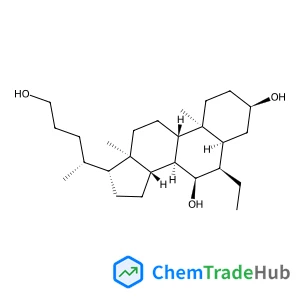
(3alpha,5beta,6alpha,7alpha)-6-Ethylcholane-3,7,24-triol
CAS Number:
1537866-49-1
Molecular Formula:
C26H46O3
![N-{[(2-Methyl-2-propanyl)oxy]carbonyl}-L-methionylglycine structure](https://static.chemtradehub.com/structs/234/23446-03-9-e1e5.webp "N-{[(2-Methyl-2-propanyl)oxy]carbonyl}-L-methionylglycine structure")
N-{[(2-Methyl-2-propanyl)oxy]carbonyl}-L-methionylglycine
CAS Number:
23446-03-9
Molecular Formula:
C12H22N2O5S
![1,10-bis(3,5-dimethylphenyl)-12-hydroxy-4,5,6,7-tetrahydroiindeno[7,1-de:1',7'-fg][1,3,2]dioxaphosphocine 12-oxide structure](https://static.chemtradehub.com/structs/141/1412439-82-7-b9a9.webp "1,10-bis(3,5-dimethylphenyl)-12-hydroxy-4,5,6,7-tetrahydroiindeno[7,1-de:1',7'-fg][1,3,2]dioxaphosphocine 12-oxide structure")
1,10-bis(3,5-dimethylphenyl)-12-hydroxy-4,5,6,7-tetrahydroiindeno[7,1-de:1',7'-fg][1,3,2]dioxaphosphocine 12-oxide
CAS Number:
1412439-82-7
Molecular Formula:
C33H31O4P
Recommended Suppliers






Disclaimer
This page provides academic journal information for reference and research purposes only. We are not affiliated with any journal publishers and do not handle publication submissions. For publication-related inquiries, please contact the respective journal publishers directly.
If you notice any inaccuracies in the information displayed, please contact us at support@chemtradehub.com. We will promptly review and address your concerns.