













![4,10-Dihydroxy-3H-pyrano[3,4,5-kl]xanthen-3-one structure](https://static.chemtradehub.com/structs/125/1259330-61-4-de48.webp "4,10-Dihydroxy-3H-pyrano[3,4,5-kl]xanthen-3-one structure")
An advanced and highly efficient Ce assisted NiFe-LDH electrocatalyst for overall water splitting
Literature Information
Publication Date
2019-10-16
DOI
10.1039/C9SE00700H
Impact Factor
6.367
Authors
Harsharaj S. Jadhav, Animesh Roy, Bezawit Z. Desalegan, Jeong Gil Seo
View Original
Abstract
Design and synthesis of highly catalytically active, low-cost, and stable electrocatalysts for the oxygen evolution reaction (OER) and hydrogen evolution reaction (HER) are the greatest challenges in electrochemical water splitting. In this work, we synthesized an efficient Ce-doped NiFe-layered double hydroxide (LDH) electrocatalyst directly on a nickel foam (NF) substrate at room temperature using an electrodeposition technique. A well-connected nanosheet array forming a three-dimensional (3D) network on the substrate provided a large electrochemical surface area with abundant catalytically active sites. Ce doping in the NiFe-LDH electrocatalyst was vital to enhancing its catalytic performance for the OER and HER. The optimized Ce-doped NiFe-LDH required overpotentials of 175 and 147 mV for the OER and HER, respectively, to achieve a current density of 10 mA cm−2 in 1 M KOH. The Ce-doped electrocatalyst outperformed bare NiFe-LDH, which required overpotentials of 197 and 175 mV for the OER and HER, respectively. However, when Ce-doped NiFe-LDH was used as a bifunctional catalyst for full water splitting, it needed only 1.59 V to achieve a current density of 10 mA cm−2 and exhibited excellent stability over 40 hours at 20 mA cm−2. The enhanced electrochemical performance of Ce-doped NiFe-LDH was ascribed primarily to its unique 3D network, which increased the electrochemical surface area, and to the number of active sites created with Ce doping. The route used in the present study to enhance the catalytic activity of NiFe-LDH can be used to develop various electrocatalysts for water splitting and other catalytic applications.
Recommended Journals
Related Literature
Magnetic energy harvesting with magnetoelectrics: an emerging technology for self-powered autonomous systems
Venkateswarlu Annapureddy, Haribabu Palneedi, Geon-Tae Hwang, Mahesh Peddigari, Dae-Yong Jeong, Woon-Ha Yoon, Kwang-Ho Kim, Jungho Ryu
2017-10-03
Review Article
DOI: 10.1039/C7SE00403F
Identification of major histocompatibility complex class II-associated peptides derived from freshly prepared rat Langerhans cells using MALDI-PSD and Edman degradation
Albert Sickmann, Martin Blüggel, Michael Kulke, Holger Kremmin, Alexandra Marx, Konrad Reske, Helmut E. Meyer
2000-03-21
Paper
DOI: 10.1039/A909229C
Suppressing intrinsic self-doping of CsPbIBr2 films for high-performance all-inorganic, carbon-based perovskite solar cells
Zeyang Zhang, Weidong Zhu, Dandan Chen, Wenming Chai, Dazheng Chen, He Xi, Jincheng Zhang, Chunfu Zhang, Yue Hao
2020-06-22
Paper
DOI: 10.1039/D0SE00774A
Ultrafast high-resolution magic-angle-spinning NMR spectroscopy
Marion André, Jean-Nicolas Dumez
2015-04-30
Communication
DOI: 10.1039/C5AN00653H
Sensitive and direct electrochemical detection of double-stranded DNA utilizing alkaline phosphatase-labelled zinc finger proteins
Soodong Noh, Dat Thinh Ha, Haesik Yang, Moon-Soo Kim
2015-05-13
Communication
DOI: 10.1039/C5AN00623F
Photoelectrochemical H2 evolution using TiO2-coated CaFe2O4 without an external applied bias under visible light irradiation at 470 nm based on device modeling
Takamitsu Futagami, Takaaki Sakai, Motonori Watanabe
2017-03-09
Paper
DOI: 10.1039/C7SE00084G
Efficient and stable cycling of lithium metal enabled by a conductive carbon primer layer
Sheng S. Zhang, Xiulin Fan, Chunsheng Wang
2017-09-18
Paper
DOI: 10.1039/C7SE00391A
A novel bifunctional microencapsulated phase change material loaded with ZnO for thermal energy storage and light–thermal energy conversion
Chaowei Huang, Qiuting Li, Yubin Yang, Sheng Wei, Rong Ji, Qingfeng Zhang, Yucao Zhu, Yongpeng Xia
2020-07-25
Paper
DOI: 10.1039/D0SE00718H
Boric acid: the first effective inorganic promoter for methane hydrate formation under static conditions
Yanxian Zeng, Xiaochun Niu, Dongjun Lei, Zhengwen Liu, Zhengmei Zhu, Weixing Wang
2020-07-10
Communication
DOI: 10.1039/D0SE00640H
You might also like
Compound Q&A
Is 2-(2-chloroacetamido)-3-phenylpropanoic acid (CAS: 7765-11-9) safe?
2-(2-Chloroacetamido)-3-phenylpropanoic acid (CAS: 7765-11-9) is generally consi...
7765-11-92-(2-chloroacetamido...
Compound Q&A
Is 2-(Benzyloxy)-5-bromobenzoic acid (CAS: 62176-31-2) safe?
2-(Benzyloxy)-5-bromobenzoic acid can be handled safely if appropriate precautio...
62176-31-22-(Benzyloxy)-5-brom...
Compound Q&A
What is (4-Methyl-1,2,5-oxadiazol-3-yl)methanamine hydrochloride (CAS: 1159825-48-5)?
(4-Methyl-1,2,5-oxadiazol-3-yl)methanamine hydrochloride is a chemical compound ...
1159825-48-5(4-Methyl-1,2,5-oxad...
Compound Q&A
What is 2-(5-Hexylthiophen-2-yl)-4,4,5,5-tetramethyl-1,3,2-dioxaborolane (CAS: 917985-54-7)?
2-(5-Hexylthiophen-2-yl)-4,4,5,5-tetramethyl-1,3,2-dioxaborolane (CAS: 917985-54...
917985-54-72-(5-Hexylthiophen-2...
Compound Q&A
Are there alternatives to 4-(8-Methyl-9H-1,3-dioxolo[4,5-h][2,3]benzodiazepin-5-yl)benzenamine (CAS: 102771-26-6) in synthesis?
While 4-(8-Methyl-9H-1,3-dioxolo[4,5-h][2,3]benzodiazepin-5-yl)benzenamine (CAS:...
102771-26-64-(8-Methyl-9H-1,3-d...
Compound Q&A
What is the market or research trend for tert-butyl 3-hydroxy-4,5,7,8-tetrahydro-2H-pyrazolo[3,4-d]azepine-6-carboxylate (CAS: 851376-80-2)?
The market for tert-butyl 3-hydroxy-4,5,7,8-tetrahydro-2H-pyrazolo[3,4-d]azepine...
851376-80-2tert-butyl 3-hydroxy...
Compound Q&A
How should waste containing 3,5-Diamino-1H-pyrazole-4-carbonitrile (CAS: 6844-58-2) be handled?
Waste containing 3,5-Diamino-1H-pyrazole-4-carbonitrile (CAS: 6844-58-2) should ...
6844-58-23,5-Diamino-1H-pyraz...
Compound Q&A
How is (6-Fluoro-3-pyridinyl)boronic acid (CAS: 351019-18-6) typically synthesized?
(6-Fluoro-3-pyridinyl)boronic acid can be synthesized through the reaction of 6-...
351019-18-6(6-Fluoro-3-pyridiny...
Compound Q&A
What industries use Dibenzyl carbonimidoylbiscarbamate (CAS: 10065-79-9)?
Dibenzyl carbonimidoylbiscarbamate (CAS: 10065-79-9) finds applications in vario...
10065-79-9Dibenzyl carbonimido...
Compound Q&A
What is the market or research trend for (beta,beta,2,3,4,5,6-~2~H_7_)Phenylalanine (CAS: 74228-83-4)?
The market for (beta,beta,2,3,4,5,6-~2~H_7_)Phenylalanine (CAS: 74228-83-4) is g...
74228-83-4(beta,beta,2,3,4,5,6...
Source Journal
Recommended Compounds
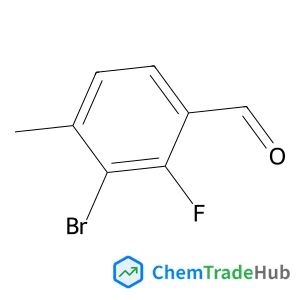
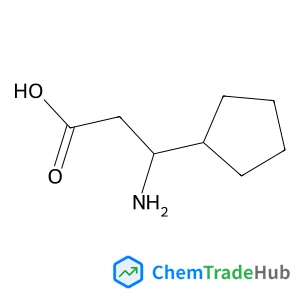
![2-Azaspiro[4.5]decane-3,8-dione structure](https://static.chemtradehub.com/structs/914/914780-96-4-e94b.webp "2-Azaspiro[4.5]decane-3,8-dione structure")
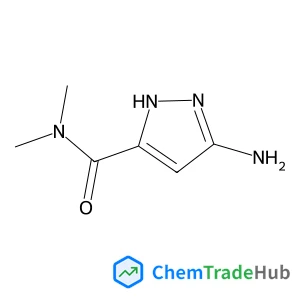
Recommended Suppliers





Disclaimer
This page provides academic journal information for reference and research purposes only. We are not affiliated with any journal publishers and do not handle publication submissions. For publication-related inquiries, please contact the respective journal publishers directly.
If you notice any inaccuracies in the information displayed, please contact us at support@chemtradehub.com. We will promptly review and address your concerns.