













![4,10-Dihydroxy-3H-pyrano[3,4,5-kl]xanthen-3-one structure](https://static.chemtradehub.com/structs/125/1259330-61-4-de48.webp "4,10-Dihydroxy-3H-pyrano[3,4,5-kl]xanthen-3-one structure")
Suppressing intrinsic self-doping of CsPbIBr2 films for high-performance all-inorganic, carbon-based perovskite solar cells
Literature Information
Publication Date
2020-06-22
DOI
10.1039/D0SE00774A
Impact Factor
6.367
Authors
Zeyang Zhang, Weidong Zhu, Dandan Chen, Wenming Chai, Dazheng Chen, He Xi, Jincheng Zhang, Chunfu Zhang, Yue Hao
View Original
Abstract
CsPbIBr2 is promising for all-inorganic, carbon-based perovskite solar cells (PSCs), owing to its quite balanced bandgap and stability characteristics. However, the serious self-doping phenomenon in one-step solution-processed CsPbIBr2 films that causes decreased built-in potentials (Vbis) and intensified carrier recombination hinders further performance optimization of the resulting PSCs. Herein, we demonstrate that such an obstacle can be overcome through rationally tailoring CsPbIBr2 precursor stoichiometry. Experimental results consistently show that a PbBr2-rich precursor tends to reinforce self-doping in the CsPbIBr2 film, while a CsI-rich one helps to weaken it. Thus, CsPbIBr2 films with a much lower self-doping level are achieved based on the CsI-rich precursor with an optimized CsI/PbBr2 stoichiometric ratio of 1.1 : 1.0. The films possess a pure phase, much fewer compositional defects, and increased work function, resulting in suppressed carrier recombination and extended Vbi of the final PSCs. Consequently, their average efficiency is boosted to (9.92 ± 0.56)%, far exceeding those of films fabricated with a stoichiometric precursor with the value of (8.32 ± 0.61)%. Particularly, the champion CsPbIBr2 PSC delivers a superior efficiency of 10.48% and an outstanding photovoltage of 1.32 V. This work represents a major leap for CsPbIBr2 PSCs and paves the way for their further exploration to achieve better performance.
Recommended Journals
Related Literature
A robust platform for functional microgels via thiol–ene chemistry with reactive polyether-based nanoparticles
Jeffrey Gopez, Pontus Lundberg, Helmut Ritter, Kato L. Killops, Craig J. Hawker, Daniel Klinger
2015-01-14
Paper
DOI: 10.1039/C4PY01766H
The use of electrostatic association for rapid RAFT synthesis of histamine polyelectrolyte in aqueous solutions at and below 25 °C
Tao Huang, Zhigang Cui, Yi Ding, Xinhua Lu, Yuanli Cai
2015-10-16
Paper
DOI: 10.1039/C5PY01524C
The synthesis, characterization and flexible OFET application of three (Z)-1,2-bis(4-(tert-butyl)phenyl)ethane based copolymers
Yuli Huang, Wei Huang, Junwei Yang, Ji Ma, Moyun Chen, Haoyun Zhu, Weizhi Wang
2015-11-03
Paper
DOI: 10.1039/C5PY01647A
Side-chain manipulation on accepting units of two-dimensional benzo[1,2-b:4,5-b′]dithiophene polymers for organic photovoltaics
Zhongsheng Xu, Guoping Luo, Jiangsheng Yu, Xinxing Yin, Enwei Zhu, Fujun Zhang, Hongbin Wu, Weihua Tang
2015-12-28
Paper
DOI: 10.1039/C5PY01632K
An azo-linked porous triptycene network as an absorbent for CO2 and iodine uptake
Qin-Qin Dang, Xiao-Min Wang, Yu-Fen Zhan, Xian-Ming Zhang
2015-11-23
Paper
DOI: 10.1039/C5PY01671A
One-pot sequential multicomponent reaction and a multicomponent polymerization method for the synthesis of topologically different polymers
Ze Zhang, Zi-Bin Tan, Chun-Yan Hong, De-Cheng Wu, Ye-Zi You
2016-01-08
Paper
DOI: 10.1039/C5PY01758K
High performance thin film transistors based on bi-thieno[3,4-c]pyrrole-4,6-dione-containing copolymers: tuning the face-on and edge-on packing orientations
Xiaolan Qiao, Qinghe Wu, Hongzhuo Wu, Deliang Wang, Hongxiang Li
2015-12-29
Paper
DOI: 10.1039/C5PY01995H
Organic–inorganic polyimides with double decker silsesquioxane in the main chains
Ning Liu, Kun Wei, Lei Wang, Sixun Zheng
2016-01-06
Paper
DOI: 10.1039/C5PY01827G
Preparation of inverse polymerized high internal phase emulsions using an amphiphilic macro-RAFT agent as sole stabilizer
Aminreza Khodabandeh, R. Dario Arrua, Christopher T. Desire, Thomas Rodemann, Stefan A. F. Bon, Stuart C. Thickett, Emily F. Hilder
2016-01-26
Paper
DOI: 10.1039/C5PY02012C
You might also like
Compound Q&A
Is 2-(2-chloroacetamido)-3-phenylpropanoic acid (CAS: 7765-11-9) safe?
2-(2-Chloroacetamido)-3-phenylpropanoic acid (CAS: 7765-11-9) is generally consi...
7765-11-92-(2-chloroacetamido...
Compound Q&A
Is 2-(Benzyloxy)-5-bromobenzoic acid (CAS: 62176-31-2) safe?
2-(Benzyloxy)-5-bromobenzoic acid can be handled safely if appropriate precautio...
62176-31-22-(Benzyloxy)-5-brom...
Compound Q&A
What is (4-Methyl-1,2,5-oxadiazol-3-yl)methanamine hydrochloride (CAS: 1159825-48-5)?
(4-Methyl-1,2,5-oxadiazol-3-yl)methanamine hydrochloride is a chemical compound ...
1159825-48-5(4-Methyl-1,2,5-oxad...
Compound Q&A
What is 2-(5-Hexylthiophen-2-yl)-4,4,5,5-tetramethyl-1,3,2-dioxaborolane (CAS: 917985-54-7)?
2-(5-Hexylthiophen-2-yl)-4,4,5,5-tetramethyl-1,3,2-dioxaborolane (CAS: 917985-54...
917985-54-72-(5-Hexylthiophen-2...
Compound Q&A
Are there alternatives to 4-(8-Methyl-9H-1,3-dioxolo[4,5-h][2,3]benzodiazepin-5-yl)benzenamine (CAS: 102771-26-6) in synthesis?
While 4-(8-Methyl-9H-1,3-dioxolo[4,5-h][2,3]benzodiazepin-5-yl)benzenamine (CAS:...
102771-26-64-(8-Methyl-9H-1,3-d...
Compound Q&A
What is the market or research trend for tert-butyl 3-hydroxy-4,5,7,8-tetrahydro-2H-pyrazolo[3,4-d]azepine-6-carboxylate (CAS: 851376-80-2)?
The market for tert-butyl 3-hydroxy-4,5,7,8-tetrahydro-2H-pyrazolo[3,4-d]azepine...
851376-80-2tert-butyl 3-hydroxy...
Compound Q&A
How should waste containing 3,5-Diamino-1H-pyrazole-4-carbonitrile (CAS: 6844-58-2) be handled?
Waste containing 3,5-Diamino-1H-pyrazole-4-carbonitrile (CAS: 6844-58-2) should ...
6844-58-23,5-Diamino-1H-pyraz...
Compound Q&A
How is (6-Fluoro-3-pyridinyl)boronic acid (CAS: 351019-18-6) typically synthesized?
(6-Fluoro-3-pyridinyl)boronic acid can be synthesized through the reaction of 6-...
351019-18-6(6-Fluoro-3-pyridiny...
Compound Q&A
What industries use Dibenzyl carbonimidoylbiscarbamate (CAS: 10065-79-9)?
Dibenzyl carbonimidoylbiscarbamate (CAS: 10065-79-9) finds applications in vario...
10065-79-9Dibenzyl carbonimido...
Compound Q&A
What is the market or research trend for (beta,beta,2,3,4,5,6-~2~H_7_)Phenylalanine (CAS: 74228-83-4)?
The market for (beta,beta,2,3,4,5,6-~2~H_7_)Phenylalanine (CAS: 74228-83-4) is g...
74228-83-4(beta,beta,2,3,4,5,6...
Source Journal
Recommended Compounds
![2-(5-Bromo-1H-pyrrolo[2,3-B]pyridin-3-YL)acetic acid structure](https://static.chemtradehub.com/structs/106/1060795-03-0-0589.webp "2-(5-Bromo-1H-pyrrolo[2,3-B]pyridin-3-YL)acetic acid structure")
2-(5-Bromo-1H-pyrrolo[2,3-B]pyridin-3-YL)acetic acid
CAS Number:
1060795-03-0
Molecular Formula:
C9H7BrN2O2
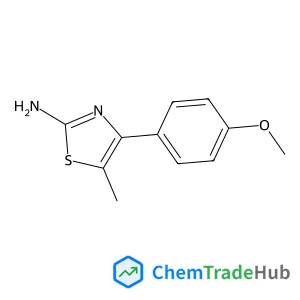
4-(4-Methoxyphenyl)-5-methyl-1,3-thiazol-2-amine
CAS Number:
105512-88-7
Molecular Formula:
C11H12N2OS
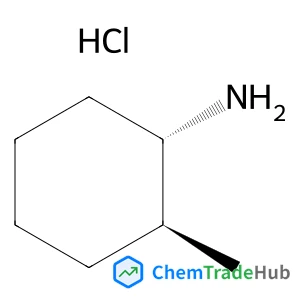
(1R,2R)-2-Methylcyclohexanamine hydrochloride (1:1)
CAS Number:
39558-31-1
Molecular Formula:
C7H16ClN
Recommended Suppliers





Disclaimer
This page provides academic journal information for reference and research purposes only. We are not affiliated with any journal publishers and do not handle publication submissions. For publication-related inquiries, please contact the respective journal publishers directly.
If you notice any inaccuracies in the information displayed, please contact us at support@chemtradehub.com. We will promptly review and address your concerns.